
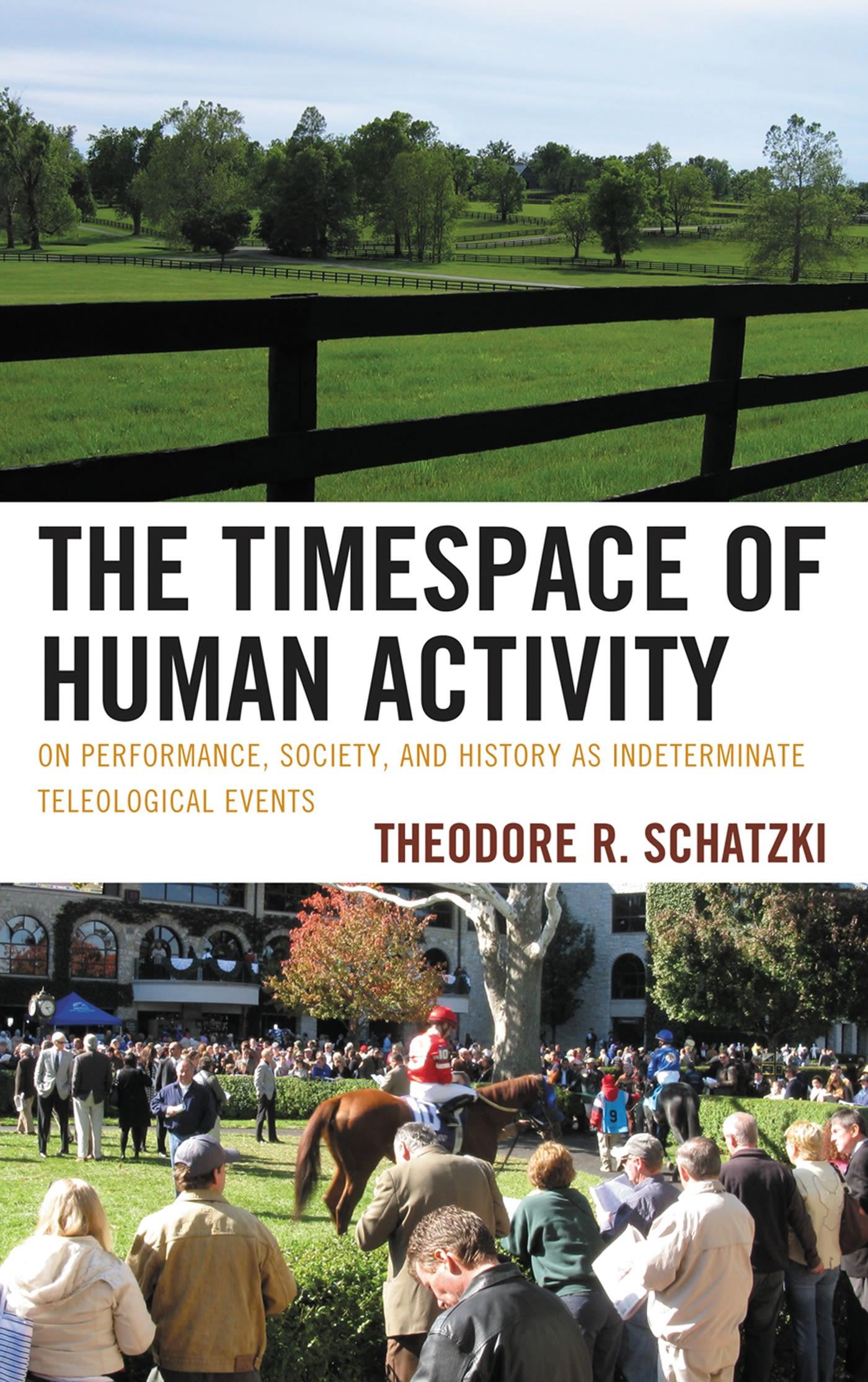
This book shows that a concept of activity timespace drawn from the work of Martin Heidegger provides new insights into the nature of activity, society, and history. Although the book is a work of theory, it has significant implications for the determination and course, not just of activity, but of sociohistorical change as well.
Drawing on empirical examples, the book argues (1) that timespace is a key component of the overall space and time of social life, (2) that interwoven timespaces form an essential infrastructure of important social phenomena such as power, coordinated actions, social organizations, and social systems, and (3) that history encompasses constellations of indeterminate temporalspatial events. The latter conception of history in turn yields a propitious account of how the past exists in the present. In addition, because the concept of activity timespace highlights the teleological character of human action, the book contains an extensive defense of the teleological character of such allegedly ateleological forms of activity as emotional and ceremonial actions. Since, finally, the book's ideas about timespace and activity as an indeterminate event derive from an interpretation of Heidegger, the work furthers understanding of the relevance of his thought for social and historical theory.
The book combines textual interpretation, theoretical argumentation, and empirical substantiation. Many of its empirical examples are taken from the Blue Grass Horse Country around Lexington, Kentucky, where the author resides.
Drawing on empirical examples, the book argues (1) that timespace is a key component of the overall space and time of social life, (2) that interwoven timespaces form an essential infrastructure of important social phenomena such as power, coordinated actions, social organizations, and social systems, and (3) that history encompasses constellations of indeterminate temporalspatial events. The latter conception of history in turn yields a propitious account of how the past exists in the present. In addition, because the concept of activity timespace highlights the teleological character of human action, the book contains an extensive defense of the teleological character of such allegedly ateleological forms of activity as emotional and ceremonial actions. Since, finally, the book's ideas about timespace and activity as an indeterminate event derive from an interpretation of Heidegger, the work furthers understanding of the relevance of his thought for social and historical theory.
The book combines textual interpretation, theoretical argumentation, and empirical substantiation. Many of its empirical examples are taken from the Blue Grass Horse Country around Lexington, Kentucky, where the author resides.
Paga fácilmente con tarjeta, Klarna, Apple Pay o Google Pay. ¿No estás contento? Siempre tienes 14 días de garantía de devolución. Lee más en nuestros términos. Si tienes preguntas, escríbenos a hello@memmo.org.
Memmo hace que estudiar sea más fácil, estés donde estés. Aquí tienes tus libros de texto y herramientas de estudio inteligentes en un solo lugar: resúmenes, quizzes, podcasts y flashcards. Y también a Ted, tu compañero de estudio que responde a todo lo que te preguntes. Más de 50 000 estudiantes ya estudian aquí. Está hecho para que aprendas más rápido y te estreses menos.