
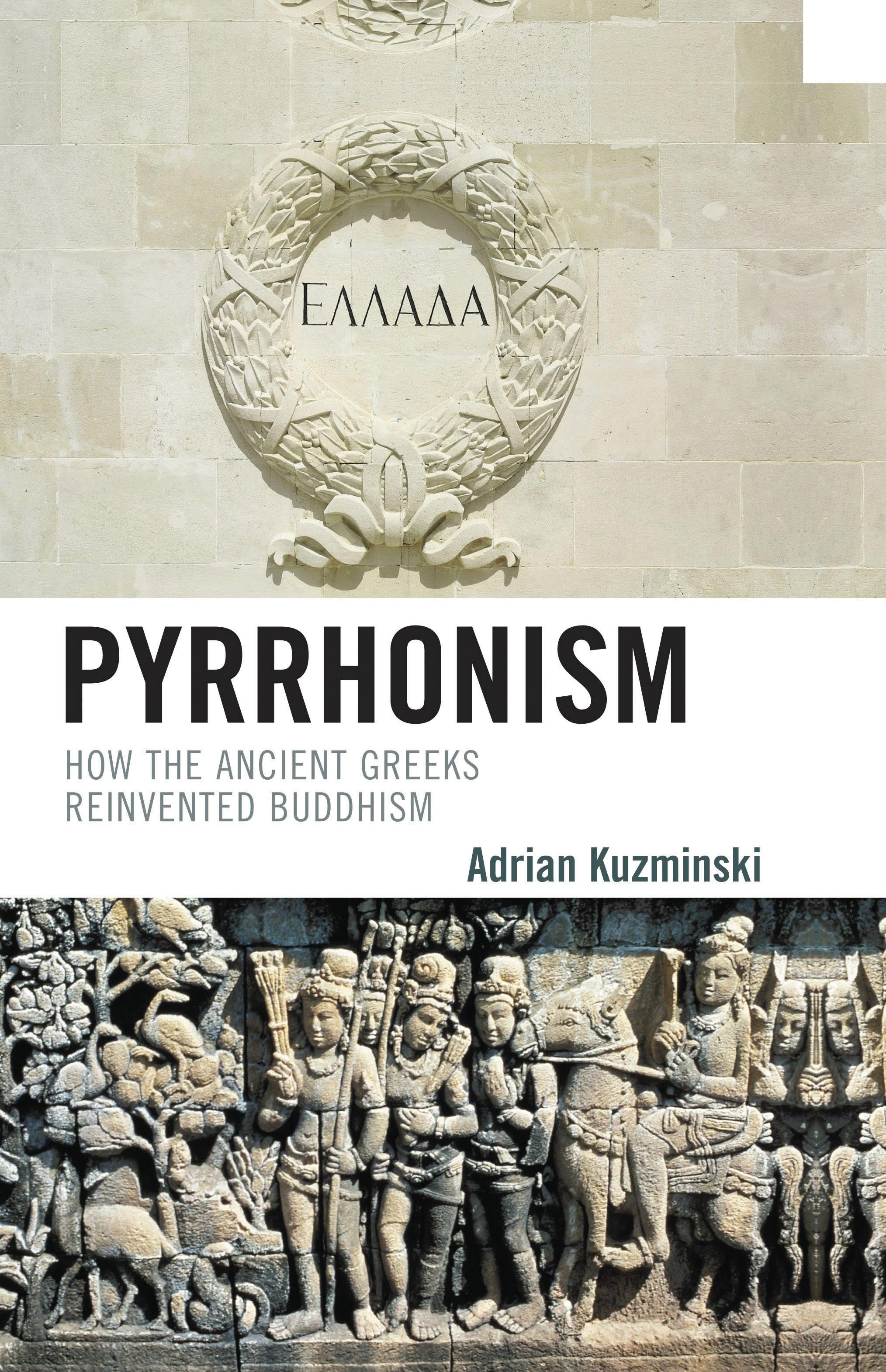
Pyrrhonism is commonly confused with scepticism in Western philosophy. Unlike sceptics, who believe there are no true beliefs, Pyrrhonists suspend judgment about all beliefs, including the belief that there are no true beliefs. Pyrrhonism was developed by a line of ancient Greek philosophers, from its founder Pyrrho of Elis in the fourth century BCE through Sextus Empiricus in the second century CE. Pyrrhonists offer no view, theory, or knowledge about the world, but recommend instead a practice, a distinct way of life, designed to suspend beliefs and ease suffering. Adrian Kuzminski examines Pyrrhonism in terms of its striking similarity to some Eastern non-dogmatic soteriological traditions-particularly Madhyamaka Buddhism. He argues that its origin can plausibly be traced to the contacts between Pyrrho and the sages he encountered in India, where he traveled with Alexander the Great. Although Pyrrhonism has not been practiced in the West since ancient times, its insights have occasionally been independently recovered, most recently in the work of Ludwig Wittgenstein. Kuzminski shows that Pyrrhonism remains relevant perhaps more than ever as an antidote to today's cultures of belief.
Paga fácilmente con tarjeta, Klarna, Apple Pay o Google Pay. ¿No estás contento? Siempre tienes 14 días de garantía de devolución. Lee más en nuestros términos. Si tienes preguntas, escríbenos a hello@memmo.org.
Memmo hace que estudiar sea más fácil, estés donde estés. Aquí tienes tus libros de texto y herramientas de estudio inteligentes en un solo lugar: resúmenes, quizzes, podcasts y flashcards. Y también a Ted, tu compañero de estudio que responde a todo lo que te preguntes. Más de 50 000 estudiantes ya estudian aquí. Está hecho para que aprendas más rápido y te estreses menos.