
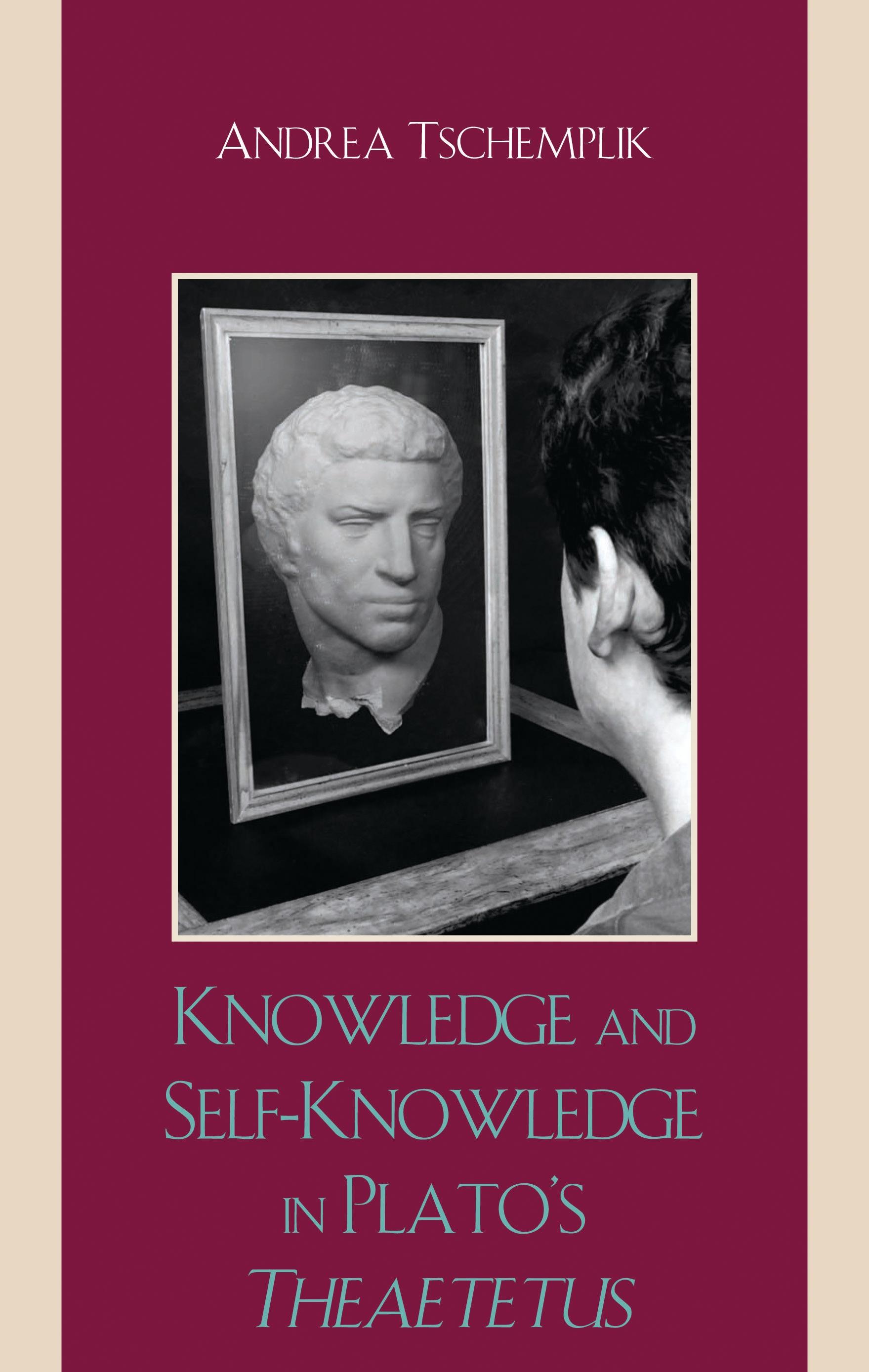
Knowledge and Self-Knowledge in Plato's Theaetetus advances a new explanation for the apparent failure of the Theaetetus to come to a satisfactory conclusion about the definition of knowledge. Tschemplik argues that understanding this aporetic dialogue in light of the fact that it was conducted with two noted mathematicians shows that for Plato, mathematics was not the paradigm for philosophy. She points out that, although mathematics is clearly an important part of the philosopher's training, as the educational outline of the Republic makes clear, the point on which the mathematician falls short is the central role that self-knowledge plays in philosophical investigation. Theaetetus betrays this deficiency and is led by Socrates to an understanding of the benefits of self-knowledge understood as the knowledge of ignorance. Tschemplik concludes that it is the absence of self-knowledge in the Theaetetus which leads to its closing impasse regarding knowledge.
This book will be of interest to scholars and graduate students in the history of philosophy with a special interest in ancient philosophy, and will also be accessible to upper-level undergraduates in ancient philosophy.
This book will be of interest to scholars and graduate students in the history of philosophy with a special interest in ancient philosophy, and will also be accessible to upper-level undergraduates in ancient philosophy.
Paga fácilmente con tarjeta, Klarna, Apple Pay o Google Pay. ¿No estás contento? Siempre tienes 14 días de garantía de devolución. Lee más en nuestros términos. Si tienes preguntas, escríbenos a hello@memmo.org.
Memmo hace que estudiar sea más fácil, estés donde estés. Aquí tienes tus libros de texto y herramientas de estudio inteligentes en un solo lugar: resúmenes, quizzes, podcasts y flashcards. Y también a Ted, tu compañero de estudio que responde a todo lo que te preguntes. Más de 50 000 estudiantes ya estudian aquí. Está hecho para que aprendas más rápido y te estreses menos.