
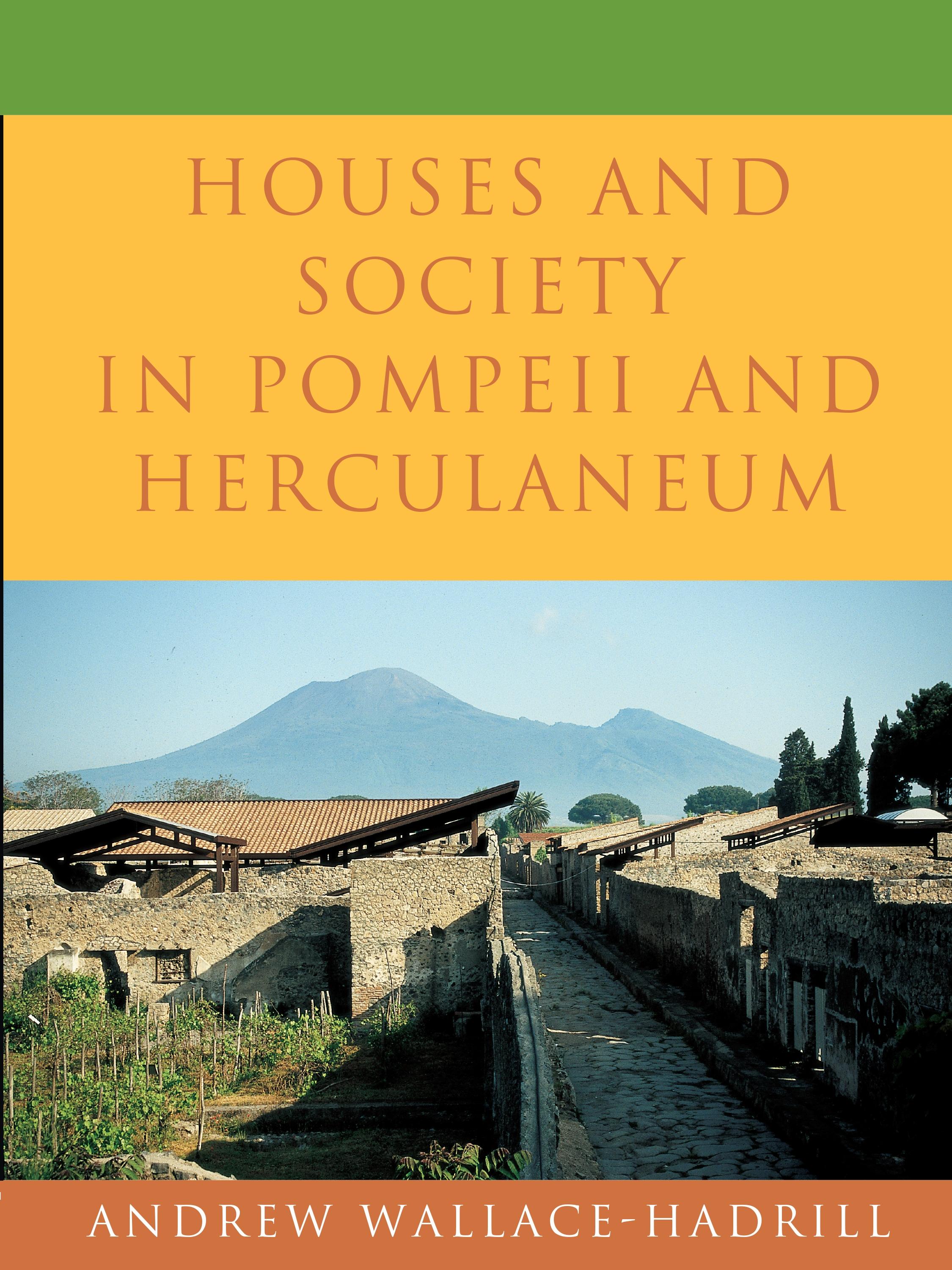
Few sources reveal the life of the ancient Romans as vividly as do the houses preserved by the eruption of Vesuvius. Wealthy Romans lavished resources on shaping their surroundings to impress their crowds of visitors. The fashions they set were taken up and imitated by ordinary citizens. In this illustrated book, Andrew Wallace-Hadrill explores the rich potential of the houses of Pompeii and Herculaneum to offer new insights into Roman social life. Exposing misconceptions derived from contemporary culture, he shows the close interconnection of spheres we take as discrete: public and private, family and outsiders, work and leisure.
Combining archaeological evidence with Roman texts and comparative material from other cultures, Wallace-Hadrill raises a range of new questions. How did the organization of space and the use of decoration help to structure social encounters between owner and visitor, man and woman, master and slave? What sort of "households" did the inhabitants of the Roman house form? How did the world of work relate to that of entertainment and leisure? How widely did the luxuries of the rich spread among the houses of craftsmen and shopkeepers? Through analysis of the remains of over two hundred houses, Wallace-Hadrill reveals the remarkably dynamic social environment of early imperial Italy, and the vital part that houses came to play in defining what it meant "to live as a Roman."
Paga fácilmente con tarjeta, Klarna, Apple Pay o Google Pay. ¿No estás contento? Siempre tienes 14 días de garantía de devolución. Lee más en nuestros términos. Si tienes preguntas, escríbenos a hello@memmo.org.
Memmo hace que estudiar sea más fácil, estés donde estés. Aquí tienes tus libros de texto y herramientas de estudio inteligentes en un solo lugar: resúmenes, quizzes, podcasts y flashcards. Y también a Ted, tu compañero de estudio que responde a todo lo que te preguntes. Más de 50 000 estudiantes ya estudian aquí. Está hecho para que aprendas más rápido y te estreses menos.