
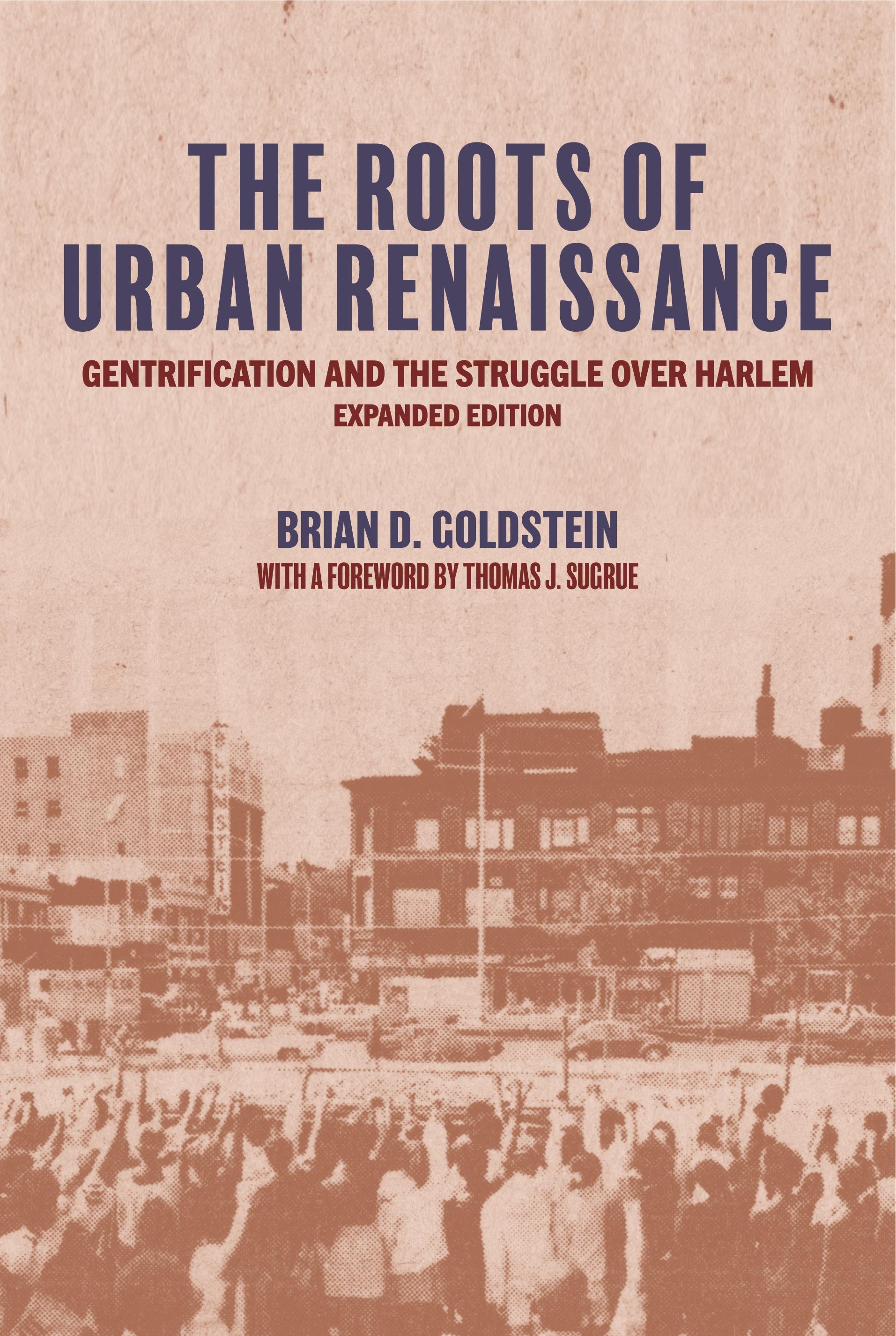
An acclaimed history of Harlem’s journey from urban crisis to urban renaissance
With its gleaming shopping centers and refurbished row houses, today’s Harlem bears little resemblance to the neighborhood of the midcentury urban crisis. Brian Goldstein traces Harlem’s Second Renaissance to a surprising source: the radical social movements of the 1960s that resisted city officials and fought to give Harlemites control of their own destiny. Young Harlem activists, inspired by the civil rights movement, envisioned a Harlem built by and for its low-income, predominantly African American population. In the succeeding decades, however, the community-based organizations they founded came to pursue a very different goal: a neighborhood with national retailers and increasingly affluent residents. The Roots of Urban Renaissance demonstrates that gentrification was not imposed on an unwitting community by unscrupulous developers or opportunistic outsiders. Rather, it grew from the neighborhood’s grassroots, producing a legacy that benefited some longtime residents and threatened others.
Paga fácilmente con tarjeta, Klarna, Apple Pay o Google Pay. ¿No estás contento? Siempre tienes 14 días de garantía de devolución. Lee más en nuestros términos. Si tienes preguntas, escríbenos a hello@memmo.org.
Memmo hace que estudiar sea más fácil, estés donde estés. Aquí tienes tus libros de texto y herramientas de estudio inteligentes en un solo lugar: resúmenes, quizzes, podcasts y flashcards. Y también a Ted, tu compañero de estudio que responde a todo lo que te preguntes. Más de 50 000 estudiantes ya estudian aquí. Está hecho para que aprendas más rápido y te estreses menos.