
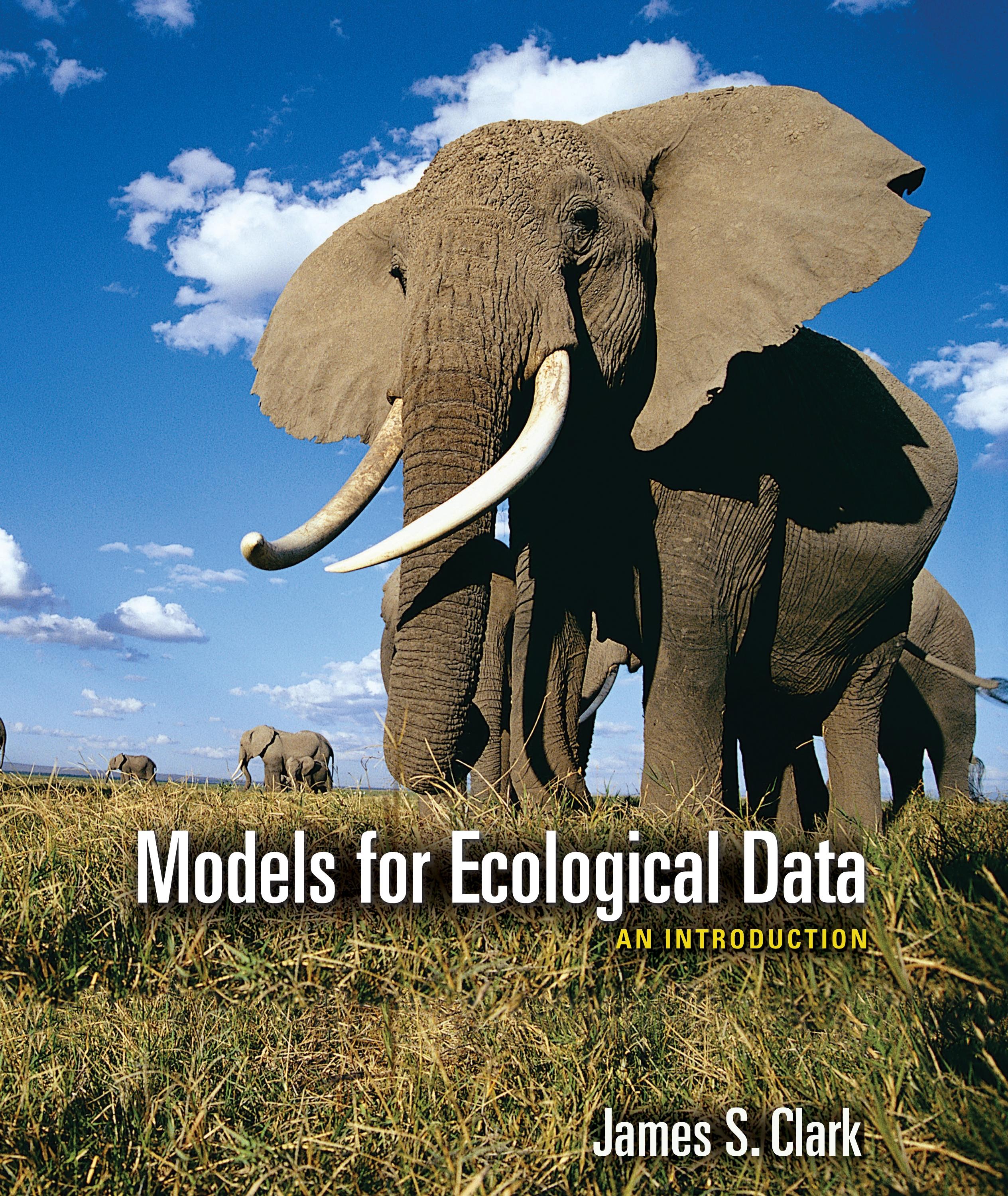
The environmental sciences are undergoing a revolution in the use of models and data. Facing ecological data sets of unprecedented size and complexity, environmental scientists are struggling to understand and exploit powerful new statistical tools for making sense of ecological processes.
In Models for Ecological Data, James Clark introduces ecologists to these modern methods in modeling and computation. Assuming only basic courses in calculus and statistics, the text introduces readers to basic maximum likelihood and then works up to more advanced topics in Bayesian modeling and computation. Clark covers both classical statistical approaches and powerful new computational tools and describes how complexity can motivate a shift from classical to Bayesian methods. Through an available lab manual, the book introduces readers to the practical work of data modeling and computation in the language R. Based on a successful course at Duke University and National Science Foundation-funded institutes on hierarchical modeling, Models for Ecological Data will enable ecologists and other environmental scientists to develop useful models that make sense of ecological data.
- Consistent treatment from classical to modern Bayes
- Underlying distribution theory to algorithm development
- Many examples and applications
- Does not assume statistical background
- Extensive supporting appendixes
- Lab manual in R is available separately
Paga fácilmente con tarjeta, Klarna, Apple Pay o Google Pay. ¿No estás contento? Siempre tienes 14 días de garantía de devolución. Lee más en nuestros términos. Si tienes preguntas, escríbenos a hello@memmo.org.
Memmo hace que estudiar sea más fácil, estés donde estés. Aquí tienes tus libros de texto y herramientas de estudio inteligentes en un solo lugar: resúmenes, quizzes, podcasts y flashcards. Y también a Ted, tu compañero de estudio que responde a todo lo que te preguntes. Más de 50 000 estudiantes ya estudian aquí. Está hecho para que aprendas más rápido y te estreses menos.