
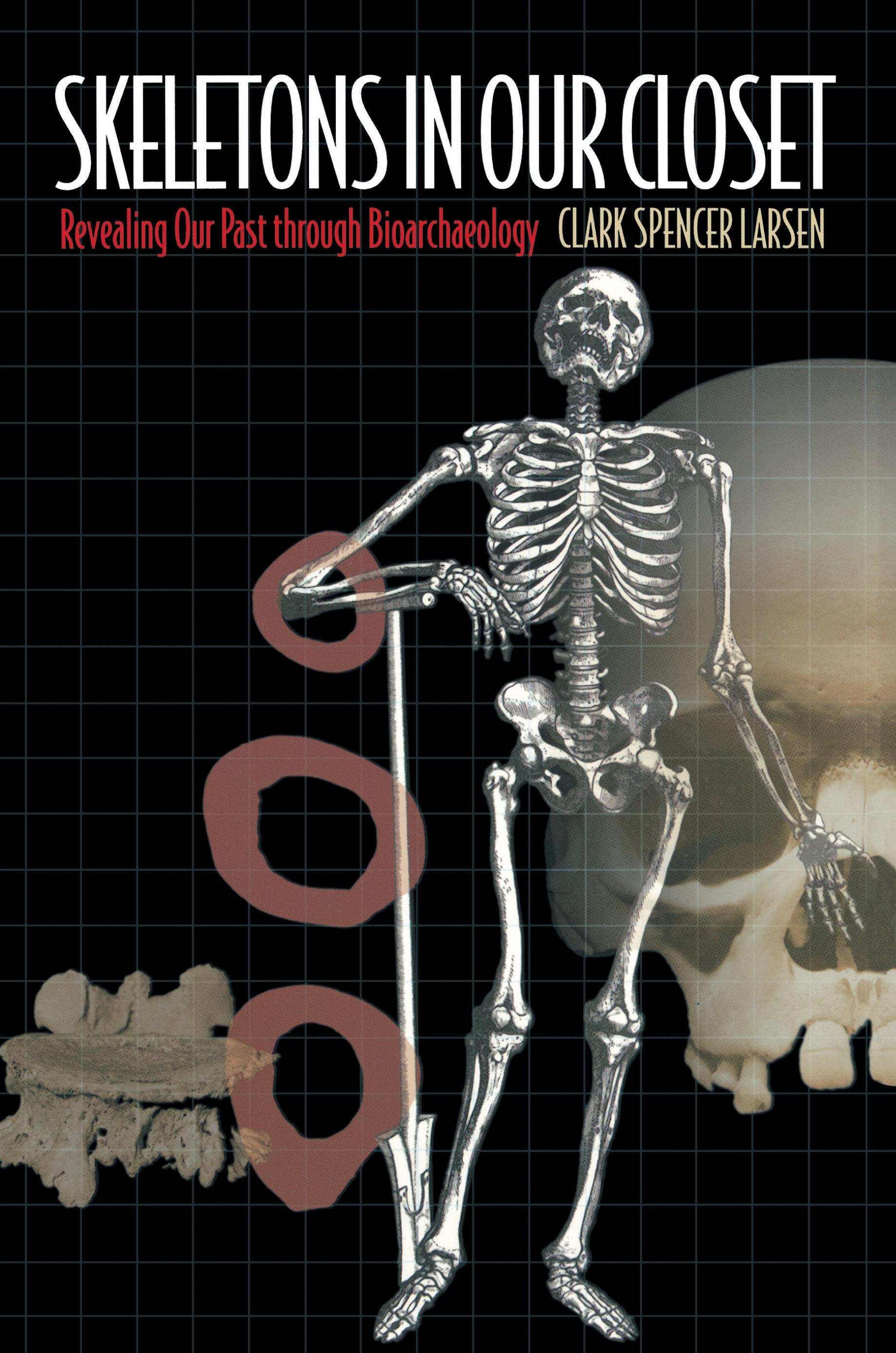
The dead tell no tales. Or do they? In this fascinating book, Clark Spencer Larsen shows that the dead can speak to us--about their lives, and ours--through the remarkable insights of bioarchaeology, which reconstructs the lives and lifestyles of past peoples based on the study of skeletal remains. The human skeleton is an amazing storehouse of information. It records the circumstances of our growth and development as reflected in factors such as disease, stress, diet, nutrition, climate, activity, and injury. Bioarchaeologists, by combining the methods of forensic science and archaeology, along with the resources of many other disciplines (including chemistry, geology, physics, and biology), "read" the information stored in bones to understand what life was really like for our human ancestors. They are unearthing some surprises.
For instance, the shift from hunting and gathering to agriculture approximately 10,000 years ago has commonly been seen as a major advancement in the course of human evolution. However, as Larsen provocatively shows, this change may not have been so positive. Compared to their hunter-gatherer ancestors, many early farmers suffered more disease, had to work harder, and endured a poorer quality of life due to poorer diets and more marginal living conditions. Moreover, the past 10,000 years have seen dramatic changes in the human physiognomy as a result of alterations in our diet and lifestyle. Some modern health problems, including obesity and chronic disease, may also have their roots in these earlier changes.
Drawing on vivid accounts from his own experiences as a bioarchaeologist, Larsen guides us through some of the key developments in recent human evolution, including the adoption of agriculture, the arrival of Europeans in the Americas and the biological consequences of this contact, and the settlement of the American West in the eighteenth and nineteenth centuries. Written in a lively and engaging manner, this book is for anyone interested in what the dead have to tell us about the living.
Paga fácilmente con tarjeta, Klarna, Apple Pay o Google Pay. ¿No estás contento? Siempre tienes 14 días de garantía de devolución. Lee más en nuestros términos. Si tienes preguntas, escríbenos a hello@memmo.org.
Memmo hace que estudiar sea más fácil, estés donde estés. Aquí tienes tus libros de texto y herramientas de estudio inteligentes en un solo lugar: resúmenes, quizzes, podcasts y flashcards. Y también a Ted, tu compañero de estudio que responde a todo lo que te preguntes. Más de 50 000 estudiantes ya estudian aquí. Está hecho para que aprendas más rápido y te estreses menos.