
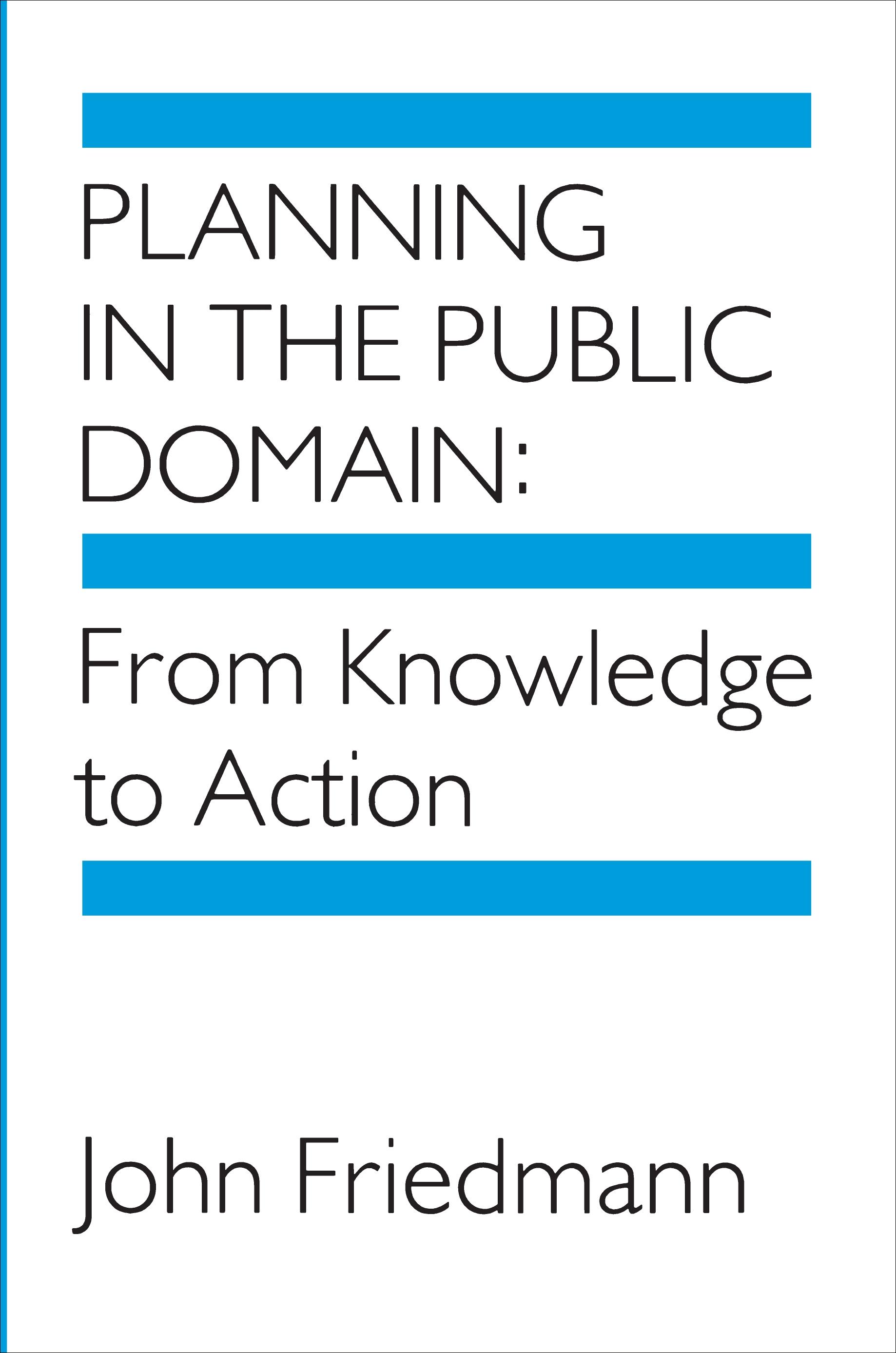
John Friedmann addresses a central question of Western political theory: how, and to what extent, history can be guided by reason. In this comprehensive treatment of the relation of knowledge to action, which he calls planning, he traces the major intellectual traditions of planning thought and practice. Three of these--social reform, policy analysis, and social learning--are primarily concerned with public management. The fourth, social mobilization, draws on utopianism, anarchism, historical materialism, and other radical thought and looks to the structural transformation of society "from below." After developing a basic vocabulary in Part One, the author proceeds in Part Two to a critical history of each of the four planning traditions. The story begins with the prophetic visions of Saint-Simon and assesses the contributions of such diverse thinkers as Comte, Marx, Dewey, Mannheim, Tugwell, Mumford, Simon, and Habermas. It is carried forward in Part Three by Friedmann's own nontechnocratic, dialectical approach to planning as a method for recovering political community.
Paga fácilmente con tarjeta, Klarna, Apple Pay o Google Pay. ¿No estás contento? Siempre tienes 14 días de garantía de devolución. Lee más en nuestros términos. Si tienes preguntas, escríbenos a hello@memmo.org.
Memmo hace que estudiar sea más fácil, estés donde estés. Aquí tienes tus libros de texto y herramientas de estudio inteligentes en un solo lugar: resúmenes, quizzes, podcasts y flashcards. Y también a Ted, tu compañero de estudio que responde a todo lo que te preguntes. Más de 50 000 estudiantes ya estudian aquí. Está hecho para que aprendas más rápido y te estreses menos.