
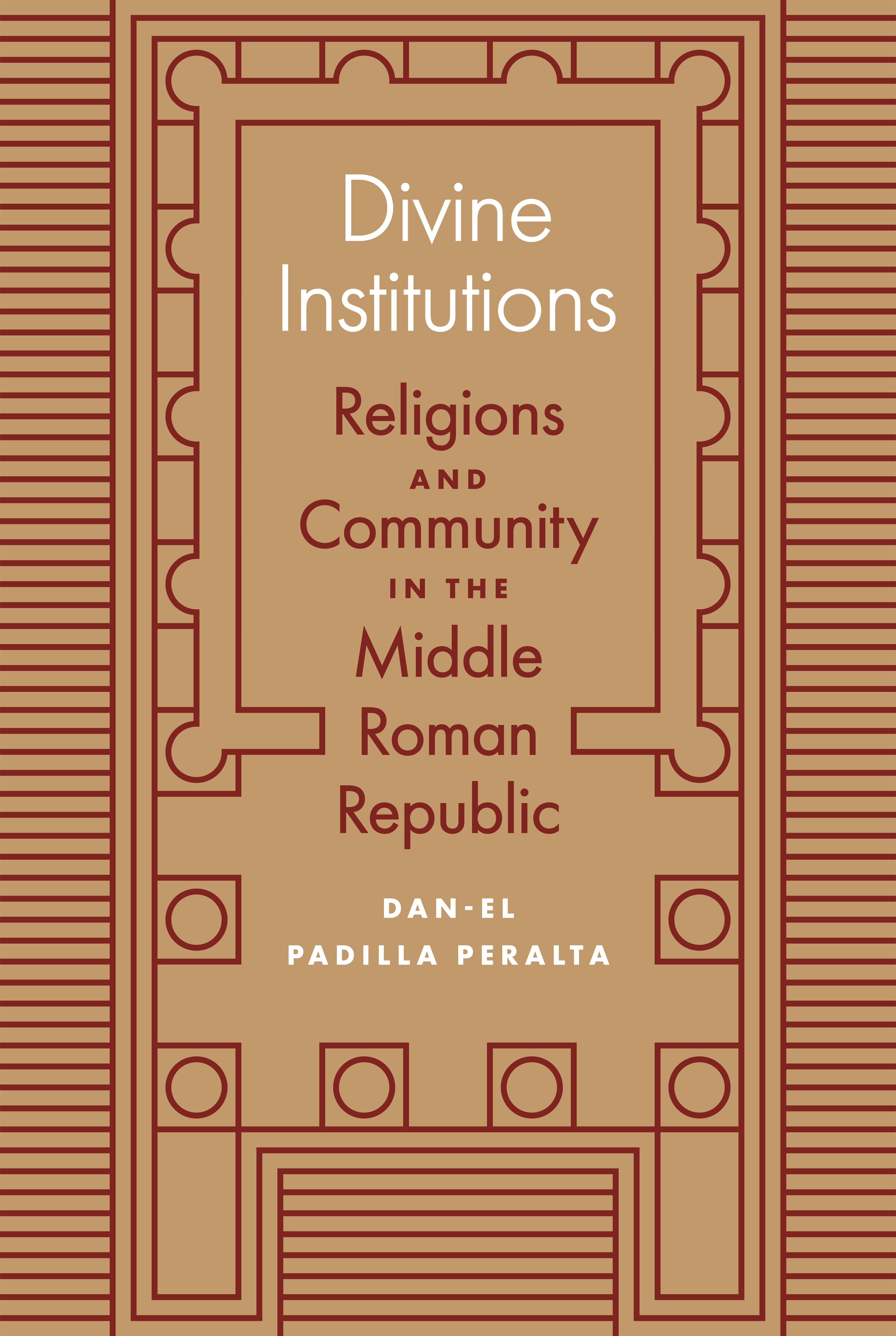
How religious ritual united a growing and diversifying Roman Republic
Many narrative histories of Rome's transformation from an Italian city-state to a Mediterranean superpower focus on political and military conflicts as the primary agents of social change. Divine Institutions places religion at the heart of this transformation, showing how religious ritual and observance held the Roman Republic together during the fourth and third centuries BCE, a period when the Roman state significantly expanded and diversified.
Blending the latest advances in archaeology with innovative sociological and anthropological methods, Dan-el Padilla Peralta takes readers from the capitulation of Rome's neighbor and adversary Veii in 398 BCE to the end of the Second Punic War in 202 BCE, demonstrating how the Roman state was redefined through the twin pillars of temple construction and pilgrimage. He sheds light on how the proliferation of temples together with changes to Rome's calendar created new civic rhythms of festival celebration, and how pilgrimage to the city surged with the increase in the number and frequency of festivals attached to Rome's temple structures.
Divine Institutions overcomes many of the evidentiary hurdles that for so long have impeded research into this pivotal period in Rome's history. This book reconstructs the scale and social costs of these religious practices and reveals how religious observance emerged as an indispensable strategy for bringing Romans of many different backgrounds to the center, both physically and symbolically.
Paga fácilmente con tarjeta, Klarna, Apple Pay o Google Pay. ¿No estás contento? Siempre tienes 14 días de garantía de devolución. Lee más en nuestros términos. Si tienes preguntas, escríbenos a hello@memmo.org.
Memmo hace que estudiar sea más fácil, estés donde estés. Aquí tienes tus libros de texto y herramientas de estudio inteligentes en un solo lugar: resúmenes, quizzes, podcasts y flashcards. Y también a Ted, tu compañero de estudio que responde a todo lo que te preguntes. Más de 50 000 estudiantes ya estudian aquí. Está hecho para que aprendas más rápido y te estreses menos.