
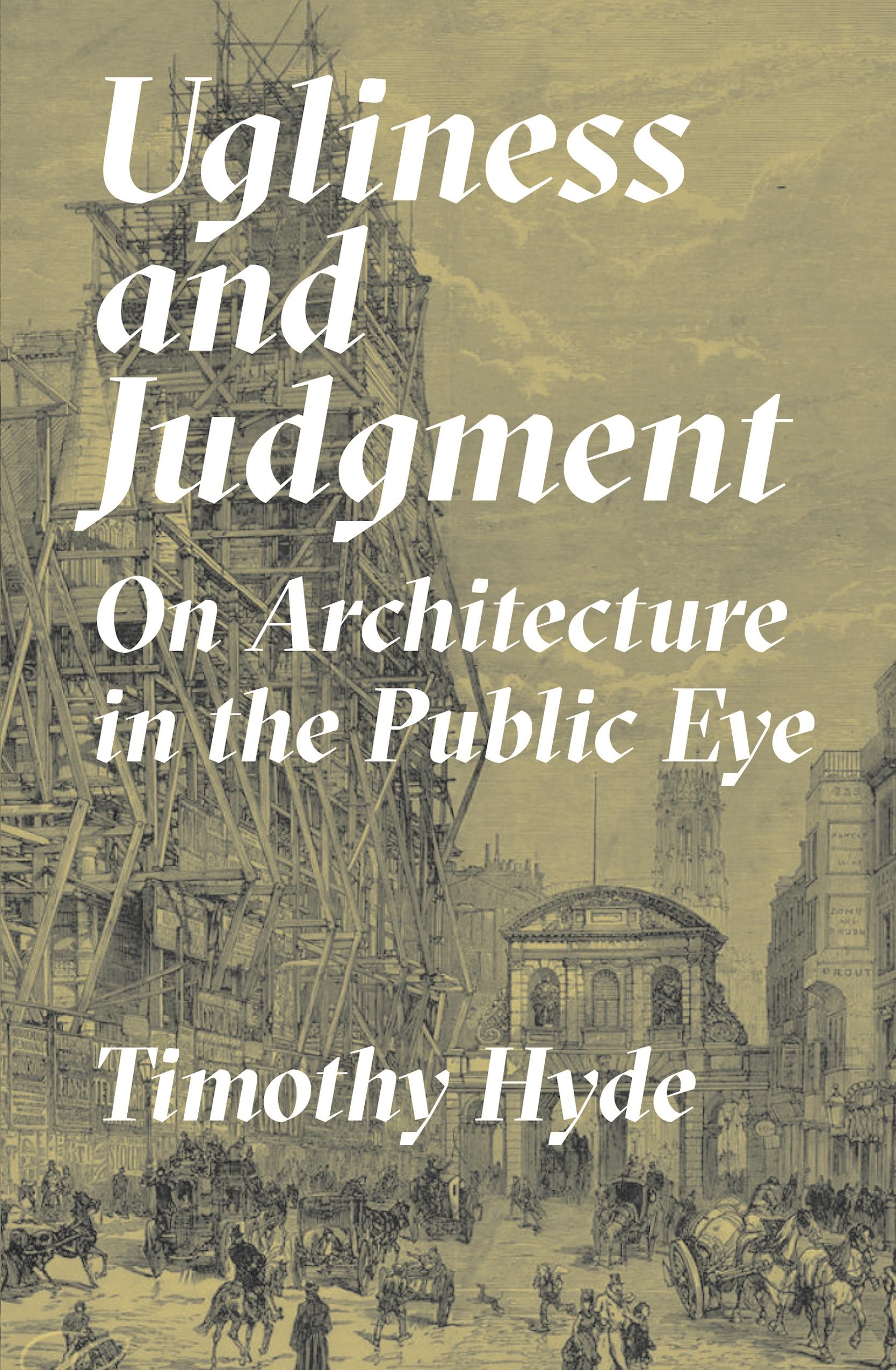
A novel interpretation of architecture, ugliness, and the social consequences of aesthetic judgment
When buildings are deemed ugly, what are the consequences? In Ugliness and Judgment, Timothy Hyde considers the role of aesthetic judgment—and its concern for ugliness—in architectural debates and their resulting social effects across three centuries of British architectural history. From eighteenth-century ideas about Stonehenge to Prince Charles’s opinions about the National Gallery, Hyde uncovers a new story of aesthetic judgment, where arguments about architectural ugliness do not pertain solely to buildings or assessments of style, but intrude into other spheres of civil society.
Hyde explores how accidental and willful conditions of ugliness—including the gothic revival Houses of Parliament, the brutalist concrete of the South Bank, and the historicist novelty of Number One Poultry—have been debated in parliamentary committees, courtrooms, and public inquiries. He recounts how architects such as Christopher Wren, John Soane, James Stirling, and Ludwig Mies van der Rohe have been summoned by tribunals of aesthetic judgment. With his novel scrutiny of lawsuits for libel, changing paradigms of nuisance law, and conventions of monarchical privilege, he shows how aesthetic judgments have become entangled in wider assessments of art, science, religion, political economy, and the state.
Moving beyond superficialities of taste in order to see how architectural improprieties enable architecture to participate in social transformations, Ugliness and Judgment sheds new light on the role of aesthetic measurement in our world.
Paga fácilmente con tarjeta, Klarna, Apple Pay o Google Pay. ¿No estás contento? Siempre tienes 14 días de garantía de devolución. Lee más en nuestros términos. Si tienes preguntas, escríbenos a hello@memmo.org.
Memmo hace que estudiar sea más fácil, estés donde estés. Aquí tienes tus libros de texto y herramientas de estudio inteligentes en un solo lugar: resúmenes, quizzes, podcasts y flashcards. Y también a Ted, tu compañero de estudio que responde a todo lo que te preguntes. Más de 50 000 estudiantes ya estudian aquí. Está hecho para que aprendas más rápido y te estreses menos.