
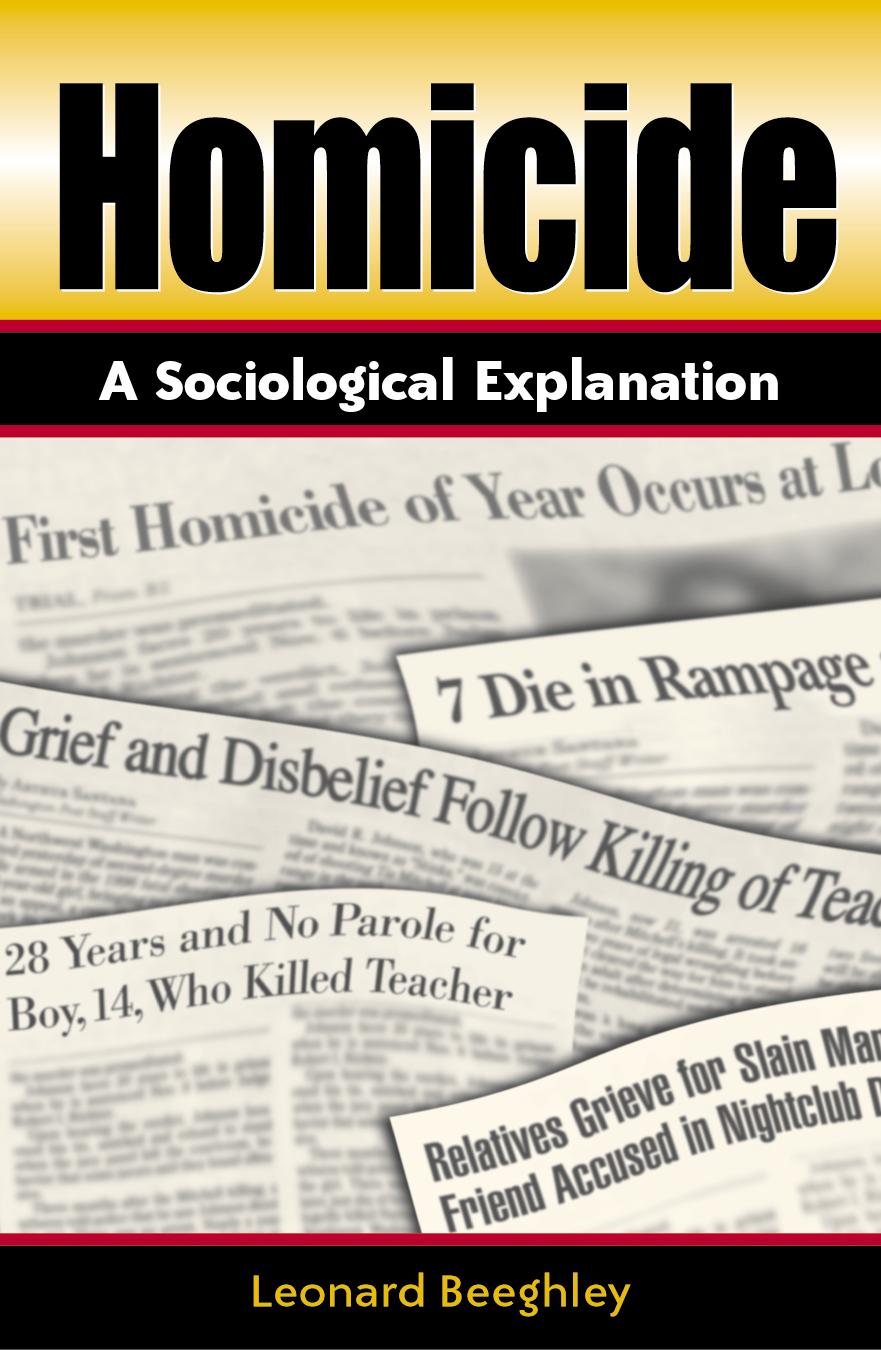
The American homicide rate remains dramatically higher than that in other Western nations. News of a murder has become a routine event. How do we explain such high levels of lethal violence in the world's leading democracy?
Echoing Durkheim's Suicide, this book focuses on one important phenomenon to explain larger currents in American society. Leonard Beeghley examines the historical and cross-national dimensions of homicides and evaluates previous attempts to explain it. He finds the sources of America's murder rate in the greater availability of guns, the expansion of illegal drug markets, greater racial discrimination, more exposure to violence, and sharper economic inequalities. He deftly blends the evidence related to each of these factors into a well-reasoned sociological analysis of the nature of American society.
Features
Highlights how sociology can be used to explain problems and seek solutions
Distinguishes between structural and social psychological levels of analysis
Provides a constrasting perspective to Messner & Rosenfeld's widely assigned Crime and the American Dream
Uses metaphors and analogies in order to make sociological ideas meaningful to students
Employs an engaging writing style to place the analysis in the scholarly literature
Offers clear explanations of Durkheim, Weber, Merton, and others, that show their usefulness for understanding modern life
Echoing Durkheim's Suicide, this book focuses on one important phenomenon to explain larger currents in American society. Leonard Beeghley examines the historical and cross-national dimensions of homicides and evaluates previous attempts to explain it. He finds the sources of America's murder rate in the greater availability of guns, the expansion of illegal drug markets, greater racial discrimination, more exposure to violence, and sharper economic inequalities. He deftly blends the evidence related to each of these factors into a well-reasoned sociological analysis of the nature of American society.
Features
Highlights how sociology can be used to explain problems and seek solutions
Distinguishes between structural and social psychological levels of analysis
Provides a constrasting perspective to Messner & Rosenfeld's widely assigned Crime and the American Dream
Uses metaphors and analogies in order to make sociological ideas meaningful to students
Employs an engaging writing style to place the analysis in the scholarly literature
Offers clear explanations of Durkheim, Weber, Merton, and others, that show their usefulness for understanding modern life
Paga fácilmente con tarjeta, Klarna, Apple Pay o Google Pay. ¿No estás contento? Siempre tienes 14 días de garantía de devolución. Lee más en nuestros términos. Si tienes preguntas, escríbenos a hello@memmo.org.
Memmo hace que estudiar sea más fácil, estés donde estés. Aquí tienes tus libros de texto y herramientas de estudio inteligentes en un solo lugar: resúmenes, quizzes, podcasts y flashcards. Y también a Ted, tu compañero de estudio que responde a todo lo que te preguntes. Más de 50 000 estudiantes ya estudian aquí. Está hecho para que aprendas más rápido y te estreses menos.