
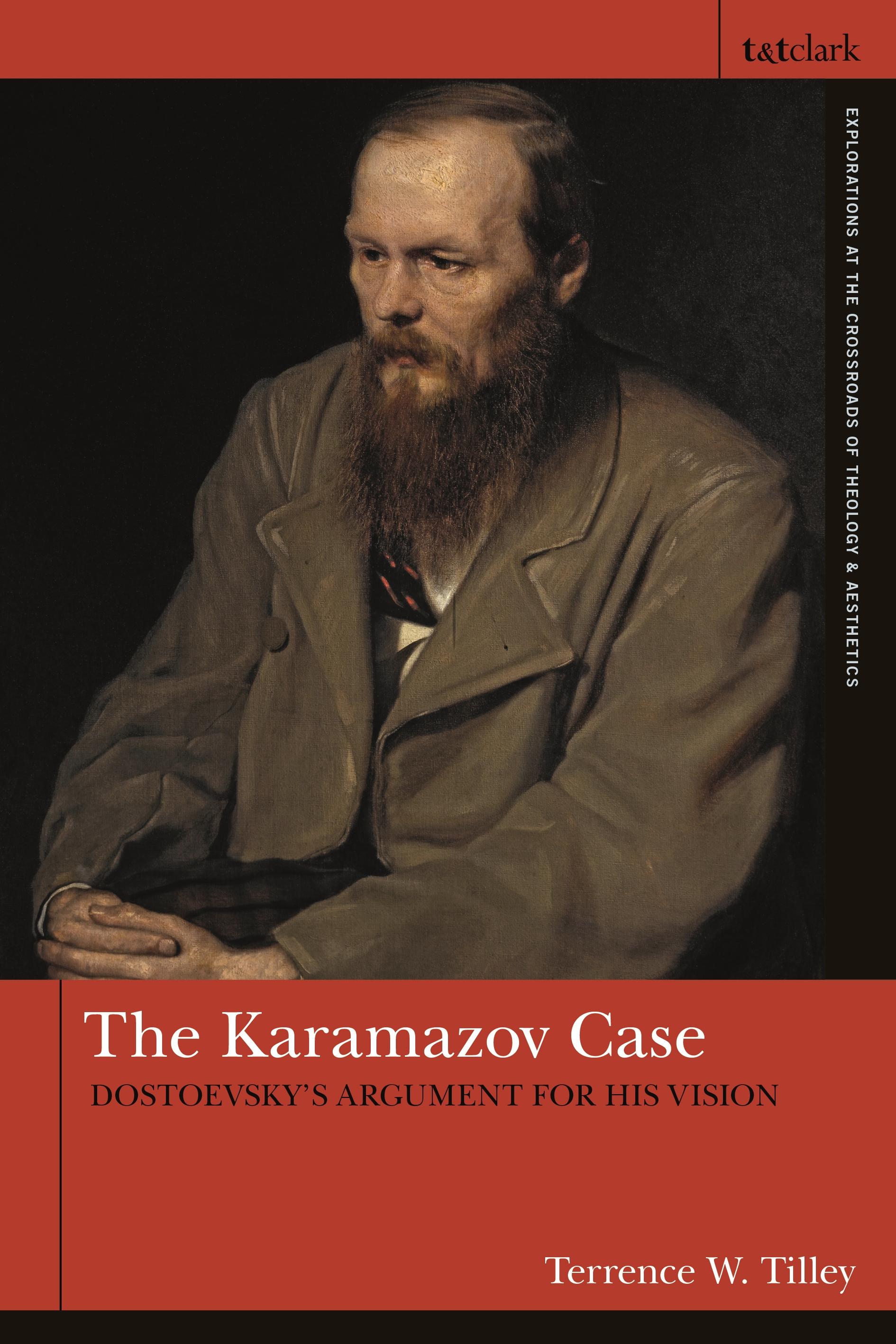
This is a new interpretation of Dostoevsky's novel The Brothers Karamazov that scrutinizes it as a performative event (the “polyphony” of the novel) revealing its religious, philosophical, and social meanings through the interplay of mentalités or worldviews that constitute an aesthetic whole. This way of discerning the novel's social vision of sobornost' (a unity between harmony and freedom), its vision of hope, and its more subtle sacramental presuppositions, raises Tilley's interpretation beyond the standard “theology and literature” treatments of the novel and interpretations that treat the novel as providing solutions to philosophical problems.
Tilley develops Bakhtin's thoughtful analysis of the polyphony of the novel using communication theory and readers/hearer response criticism, and by using Bakhtin's operatic image of polyphony to show the error of taking "faith vs. reason", argues that at the end of the novel, the characters learned to carry on, in a quiet shared commitment to memory and hope.
Tilley develops Bakhtin's thoughtful analysis of the polyphony of the novel using communication theory and readers/hearer response criticism, and by using Bakhtin's operatic image of polyphony to show the error of taking "faith vs. reason", argues that at the end of the novel, the characters learned to carry on, in a quiet shared commitment to memory and hope.
Paga fácilmente con tarjeta, Klarna, Apple Pay o Google Pay. ¿No estás contento? Siempre tienes 14 días de garantía de devolución. Lee más en nuestros términos. Si tienes preguntas, escríbenos a hello@memmo.org.
Memmo hace que estudiar sea más fácil, estés donde estés. Aquí tienes tus libros de texto y herramientas de estudio inteligentes en un solo lugar: resúmenes, quizzes, podcasts y flashcards. Y también a Ted, tu compañero de estudio que responde a todo lo que te preguntes. Más de 50 000 estudiantes ya estudian aquí. Está hecho para que aprendas más rápido y te estreses menos.