
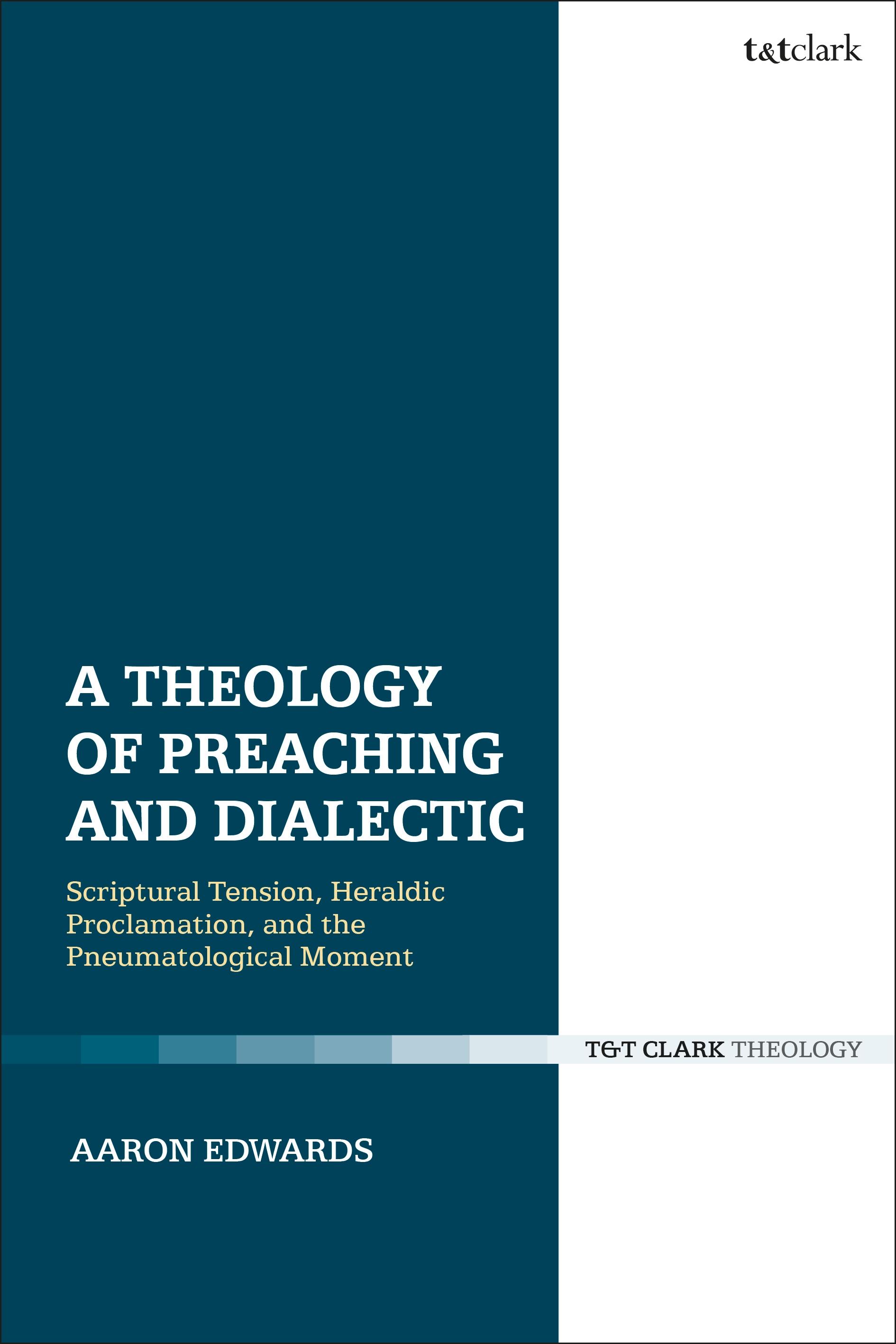
How does the preacher know what God might say now based upon the many things God said then? Preachers and theologians throughout Christian history have grappled with Scripture's diverse emphases alongside the urgent task of declaring the authoritative Word of God in the contemporary pulpit. Aaron Edwards offers a new way of engaging with this problem, by exploring the theological relationship between biblical dialectics and heraldic proclamation.
Edwards highlights the theological necessity of dialectical variety, without forfeiting assertiveness in the prophetic moment of preaching. A vast array of key voices from the theological tradition are drawn upon - including Augustine, Aquinas, Eckhart, Luther, Calvin, Hegel, Kierkegaard, Chesterton, Barth, Bultmann, Tillich, Ebeling, and others - to navigate the connection between Scriptural unity, clarity, and paradoxical plurivocality, leading to a nuanced account of dialectic. Applying this to the homiletically neglected concept of 'heraldic' confidence in preaching, Edwards examines the theological possibility of preaching in light of dialectical complexity via its 'prophetic' dimension. He shows how the uniquely revelatory relationship of Word and Spirit enables Scriptural illumination, prophetic discernment, and dialectical decisiveness in the 'momentary' encounter which undergirds all Christian proclamation.
Edwards highlights the theological necessity of dialectical variety, without forfeiting assertiveness in the prophetic moment of preaching. A vast array of key voices from the theological tradition are drawn upon - including Augustine, Aquinas, Eckhart, Luther, Calvin, Hegel, Kierkegaard, Chesterton, Barth, Bultmann, Tillich, Ebeling, and others - to navigate the connection between Scriptural unity, clarity, and paradoxical plurivocality, leading to a nuanced account of dialectic. Applying this to the homiletically neglected concept of 'heraldic' confidence in preaching, Edwards examines the theological possibility of preaching in light of dialectical complexity via its 'prophetic' dimension. He shows how the uniquely revelatory relationship of Word and Spirit enables Scriptural illumination, prophetic discernment, and dialectical decisiveness in the 'momentary' encounter which undergirds all Christian proclamation.
Paga fácilmente con tarjeta, Klarna, Apple Pay o Google Pay. ¿No estás contento? Siempre tienes 14 días de garantía de devolución. Lee más en nuestros términos. Si tienes preguntas, escríbenos a hello@memmo.org.
Memmo hace que estudiar sea más fácil, estés donde estés. Aquí tienes tus libros de texto y herramientas de estudio inteligentes en un solo lugar: resúmenes, quizzes, podcasts y flashcards. Y también a Ted, tu compañero de estudio que responde a todo lo que te preguntes. Más de 50 000 estudiantes ya estudian aquí. Está hecho para que aprendas más rápido y te estreses menos.