
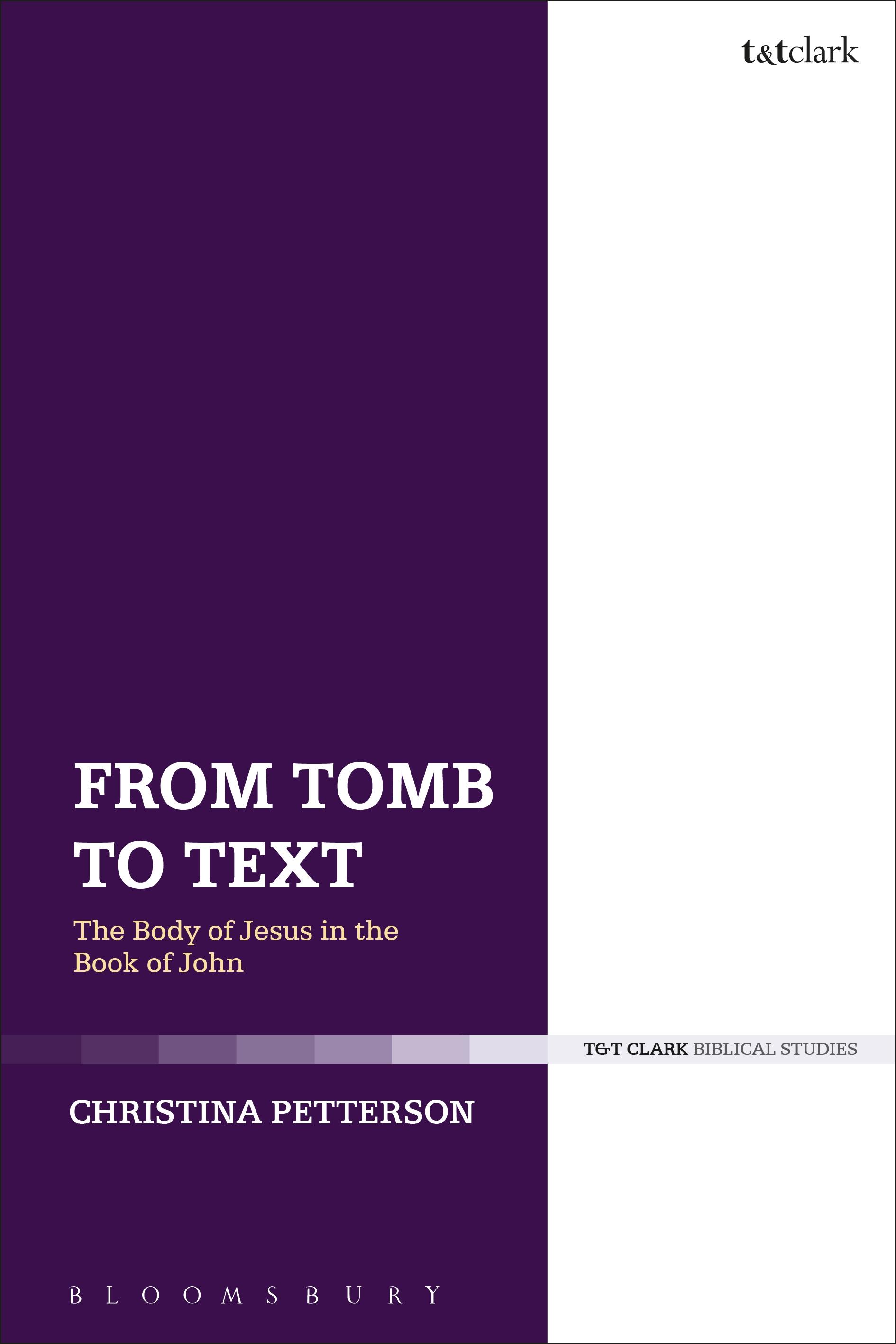
The idea of writing plays a central role in John. Apart from the many references to scriptural texts, John emphasizes the role of writing in the inscription on the cross and in its own production. Petterson's From Tomb to Text examines what this means for the understanding of the Johannine Jesus in two interrelated ways. First Petterson takes these claims to revelation through writing seriously, noting the immense effort expended by biblical scholars in order to dismiss them and to produce a canonically palatable John. With few exceptions, Johannine studies have consistently attempted to domesticate or tame John's book through reference to, and in harmony with, an externalized historical reality or with a synoptic pattern. Second, the study suggests alternative ways of understanding John once this synoptic compulsion has been dissolved.
Petterson argues that John's Jesus is unacceptable to the project for the recovery of 'Early Christianity' as imagined in Johannine research over the last 70 years or so. Instead, she shows how John produces itself as the vehicle of Jesus' revelation in place of a body. This takes place through its use of writing, its characteristic use of verbs and syntax, and its mode of revelation. The book thus situates John in a context that does not begin with, and thus attempts to be, unconstrained by fixed categories of Christ, gnosticism, Eucharist, body and flesh, and shows how such readings curtail the fullness of the text in favour of a more familiar earthly Jesus. Petterson concludes by outlining ways in which John can be read if these containment strategies are disregarded.
Petterson argues that John's Jesus is unacceptable to the project for the recovery of 'Early Christianity' as imagined in Johannine research over the last 70 years or so. Instead, she shows how John produces itself as the vehicle of Jesus' revelation in place of a body. This takes place through its use of writing, its characteristic use of verbs and syntax, and its mode of revelation. The book thus situates John in a context that does not begin with, and thus attempts to be, unconstrained by fixed categories of Christ, gnosticism, Eucharist, body and flesh, and shows how such readings curtail the fullness of the text in favour of a more familiar earthly Jesus. Petterson concludes by outlining ways in which John can be read if these containment strategies are disregarded.
Paga fácilmente con tarjeta, Klarna, Apple Pay o Google Pay. ¿No estás contento? Siempre tienes 14 días de garantía de devolución. Lee más en nuestros términos. Si tienes preguntas, escríbenos a hello@memmo.org.
Memmo hace que estudiar sea más fácil, estés donde estés. Aquí tienes tus libros de texto y herramientas de estudio inteligentes en un solo lugar: resúmenes, quizzes, podcasts y flashcards. Y también a Ted, tu compañero de estudio que responde a todo lo que te preguntes. Más de 50 000 estudiantes ya estudian aquí. Está hecho para que aprendas más rápido y te estreses menos.