
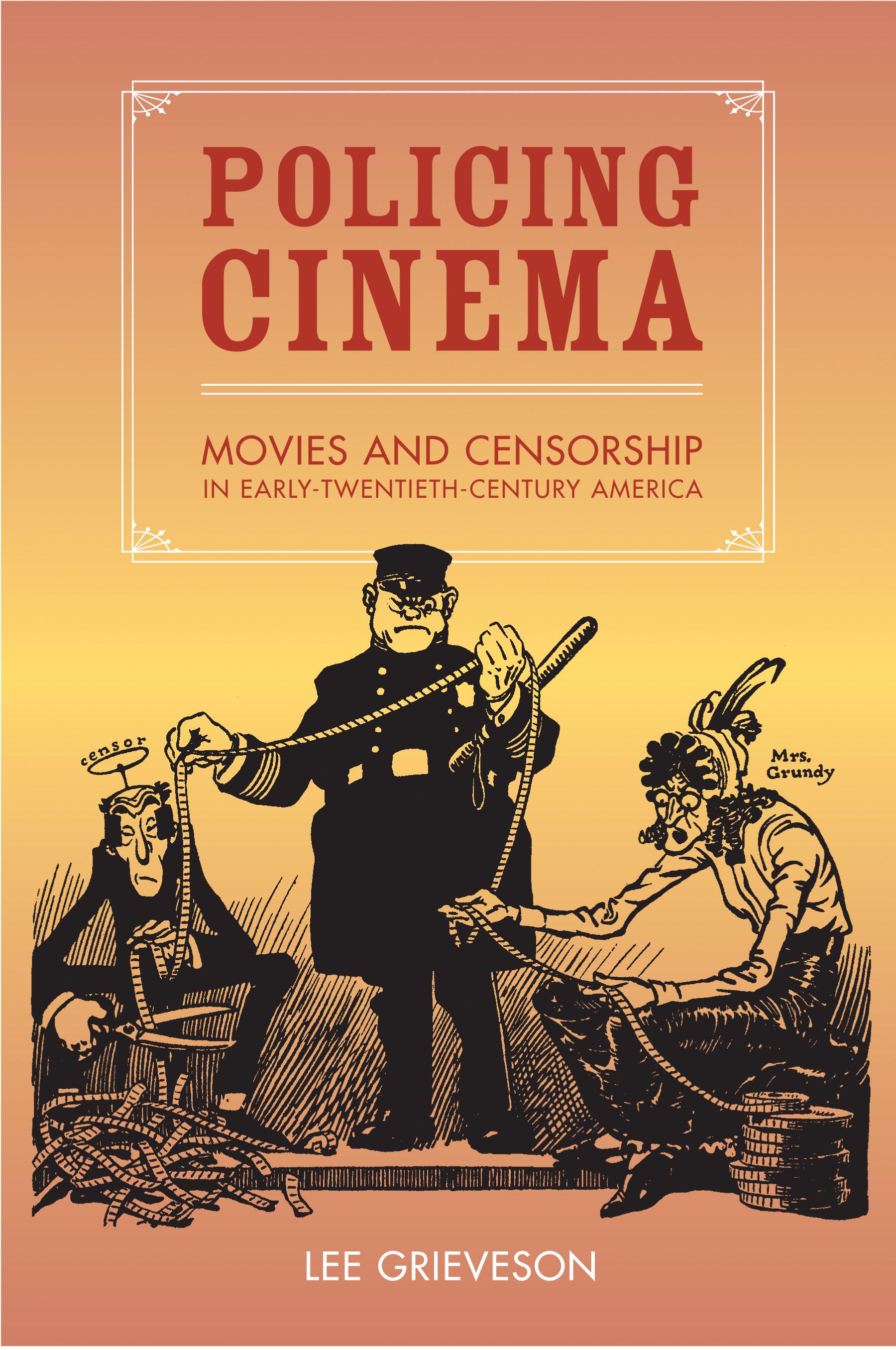
White slave films, dramas documenting sex scandals, filmed prize fights featuring the controversial African-American boxer Jack Johnson, D.W. Griffith’s The Birth of a Nation—all became objects of public concern after 1906, when the proliferation of nickelodeons brought moving pictures to a broad mass public. Lee Grieveson draws on extensive original research to examine the controversies over these films and over cinema more generally. He situates these contestations in the context of regulatory concerns about populations and governance in an early-twentieth-century America grappling with the powerful forces of modernity, in particular, immigration, class formation and conflict, and changing gender roles.
Tracing the discourses and practices of cultural and political elites and the responses of the nascent film industry, Grieveson reveals how these interactions had profound effects on the shaping of film content, form, and, more fundamentally, the proposed social function of cinema: how cinema should function in society, the uses to which it might be put, and thus what it could or would be. Policing Cinema develops new perspectives for the understanding of censorship and regulation and the complex relations between governance and culture. In this work, Grieveson offers a compelling analysis of the forces that shaped American cinema and its role in society.
Tracing the discourses and practices of cultural and political elites and the responses of the nascent film industry, Grieveson reveals how these interactions had profound effects on the shaping of film content, form, and, more fundamentally, the proposed social function of cinema: how cinema should function in society, the uses to which it might be put, and thus what it could or would be. Policing Cinema develops new perspectives for the understanding of censorship and regulation and the complex relations between governance and culture. In this work, Grieveson offers a compelling analysis of the forces that shaped American cinema and its role in society.
Paga fácilmente con tarjeta, Klarna, Apple Pay o Google Pay. ¿No estás contento? Siempre tienes 14 días de garantía de devolución. Lee más en nuestros términos. Si tienes preguntas, escríbenos a hello@memmo.org.
Memmo hace que estudiar sea más fácil, estés donde estés. Aquí tienes tus libros de texto y herramientas de estudio inteligentes en un solo lugar: resúmenes, quizzes, podcasts y flashcards. Y también a Ted, tu compañero de estudio que responde a todo lo que te preguntes. Más de 50 000 estudiantes ya estudian aquí. Está hecho para que aprendas más rápido y te estreses menos.
También te podría gustar
Comprar el libro0