
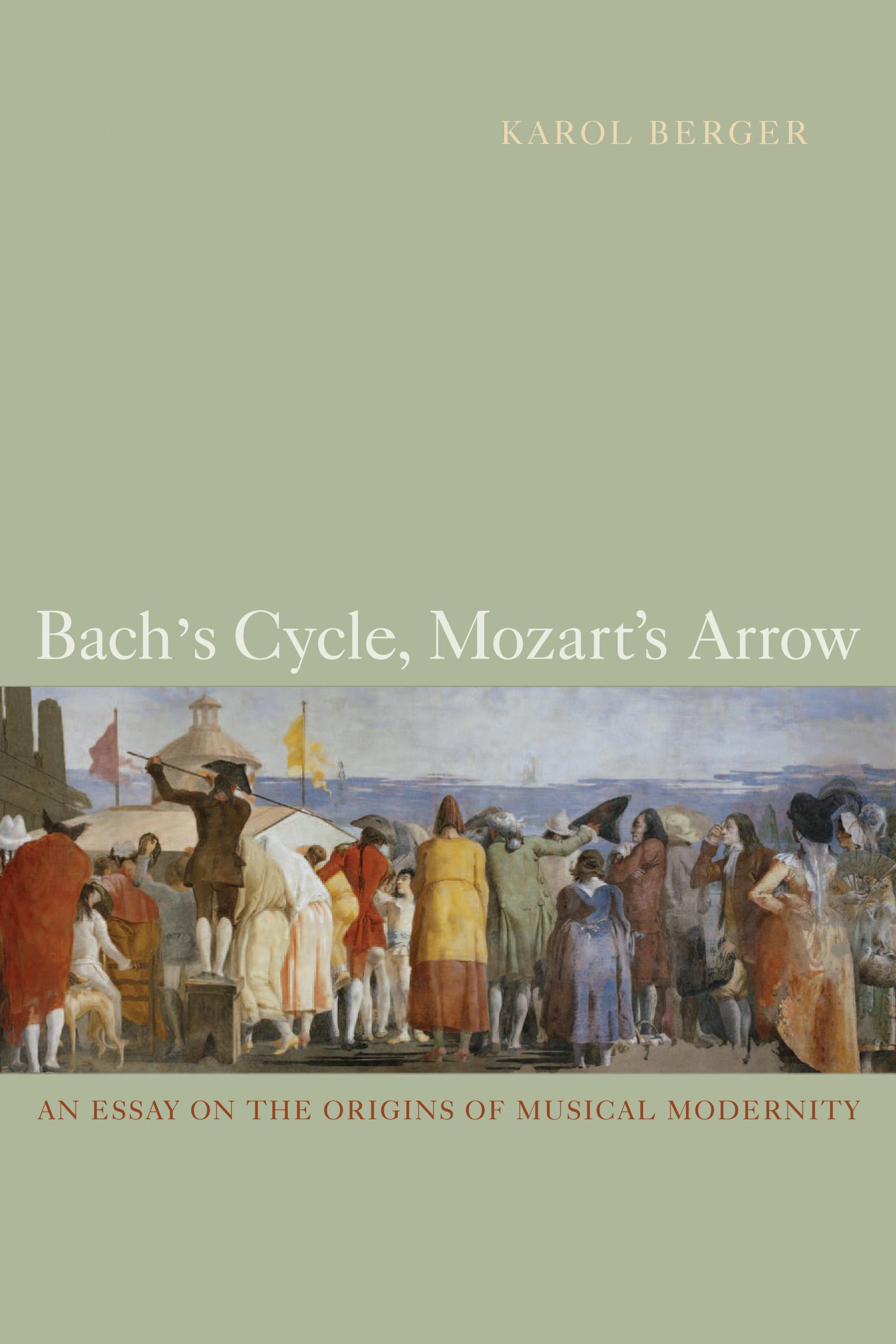
In this erudite and elegantly composed argument, Karol Berger uses the works of Monteverdi, Bach, Mozart, and Beethoven to support two groundbreaking claims: first, that it was only in the later eighteenth century that music began to take the flow of time from the past to the future seriously; second, that this change in the structure of musical time was an aspect of a larger transformation in the way educated Europeans began to imagine and think about time with the onset of modernity, a part of a shift from the premodern Christian outlook to the modern post-Christian worldview. Until this historical moment, as Berger illustrates in his analysis of Bach's St. Matthew Passion, music was simply "in time." Its successive events unfolded one after another, but the distinction between past and future, earlier and later, was not central to the way the music was experienced and understood. But after the shift, as he finds in looking at Mozart's Don Giovanni, the experience of linear time is transformed into music's essential subject matter; the cycle of time unbends and becomes an arrow. Berger complements these musical case studies with a rich survey of the philosophical, theological, and literary trends influencing artists during this period.
Paga fácilmente con tarjeta, Klarna, Apple Pay o Google Pay. ¿No estás contento? Siempre tienes 14 días de garantía de devolución. Lee más en nuestros términos. Si tienes preguntas, escríbenos a hello@memmo.org.
Memmo hace que estudiar sea más fácil, estés donde estés. Aquí tienes tus libros de texto y herramientas de estudio inteligentes en un solo lugar: resúmenes, quizzes, podcasts y flashcards. Y también a Ted, tu compañero de estudio que responde a todo lo que te preguntes. Más de 50 000 estudiantes ya estudian aquí. Está hecho para que aprendas más rápido y te estreses menos.
También te podría gustar
Comprar el libro0