
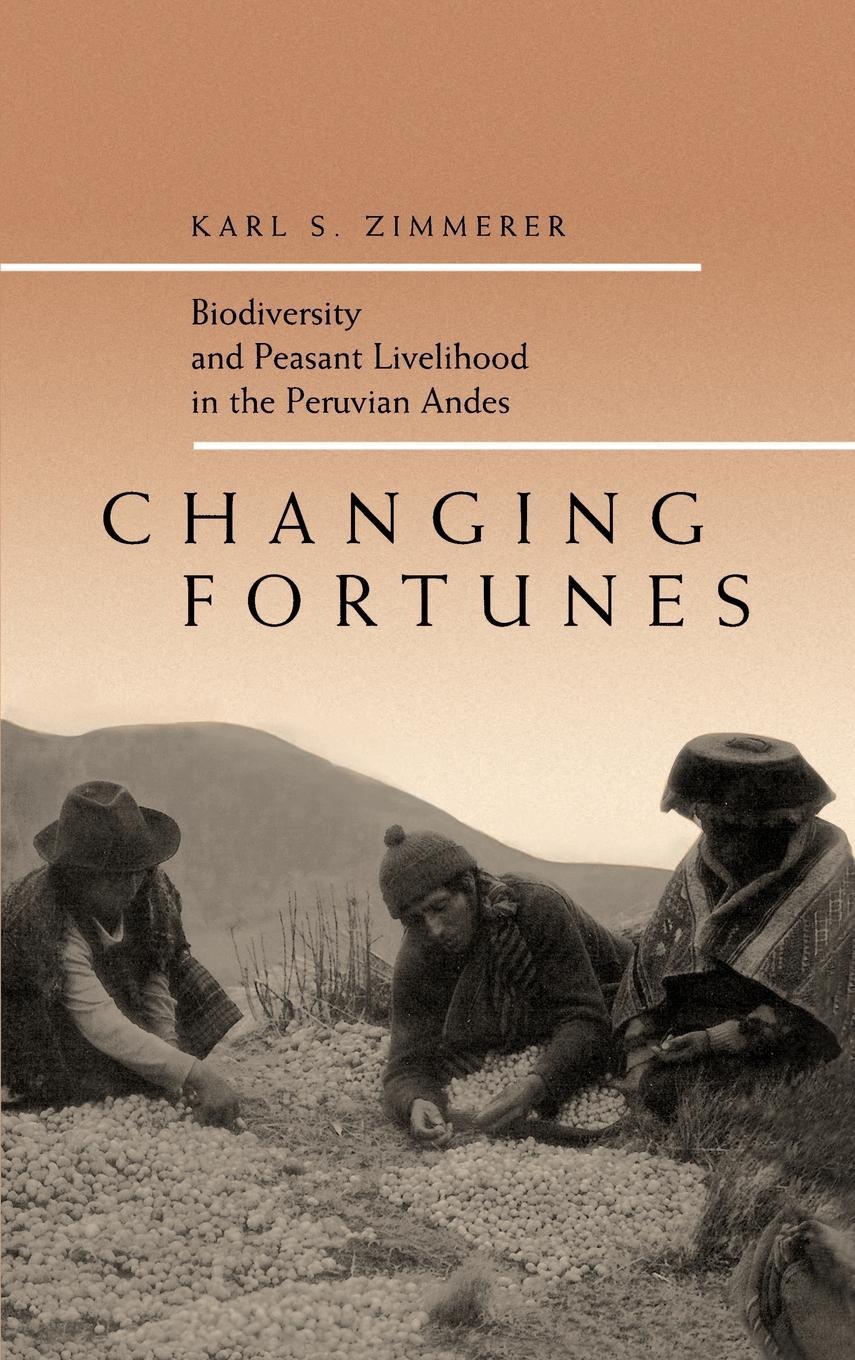
Two of the world's most pressing needs—biodiversity conservation and agricultural development in the Third World—are addressed in Karl S. Zimmerer's multidisciplinary investigation in geography. Zimmerer challenges current opinion by showing that the world-renowned diversity of crops grown in the Andes may not be as hopelessly endangered as is widely believed. He uses the lengthy history of small-scale farming by Indians in Peru, including contemporary practices and attitudes, to shed light on prospects for the future. During prolonged fieldwork among Peru's Quechua peasants and villagers in the mountains near Cuzco, Zimmerer found convincing evidence that much of the region's biodiversity is being skillfully conserved on a de facto basis, as has been true during centuries of tumultuous agrarian transitions.
Diversity occurs unevenly, however, because of the inability of poorer Quechua farmers to plant the same variety as their well-off neighbors and because land use pressures differ in different locations. Social, political, and economic upheavals have accentuated the unevenness, and Zimmerer's geographical findings are all the more important as a result. Diversity is indeed at serious risk, but not necessarily for the same reasons that have been cited by others. The originality of this study is in its correlation of ecological conservation, ethnic expression, and economic development.
Two of the world's most pressing needs—biodiversity conservation and agricultural development in the Third World—are addressed in Karl S. Zimmerer's multidisciplinary investigation in geography. Zimmerer challenges current opinion by showing that the worl
Diversity occurs unevenly, however, because of the inability of poorer Quechua farmers to plant the same variety as their well-off neighbors and because land use pressures differ in different locations. Social, political, and economic upheavals have accentuated the unevenness, and Zimmerer's geographical findings are all the more important as a result. Diversity is indeed at serious risk, but not necessarily for the same reasons that have been cited by others. The originality of this study is in its correlation of ecological conservation, ethnic expression, and economic development.
Two of the world's most pressing needs—biodiversity conservation and agricultural development in the Third World—are addressed in Karl S. Zimmerer's multidisciplinary investigation in geography. Zimmerer challenges current opinion by showing that the worl
Paga fácilmente con tarjeta, Klarna, Apple Pay o Google Pay. ¿No estás contento? Siempre tienes 14 días de garantía de devolución. Lee más en nuestros términos. Si tienes preguntas, escríbenos a hello@memmo.org.
Memmo hace que estudiar sea más fácil, estés donde estés. Aquí tienes tus libros de texto y herramientas de estudio inteligentes en un solo lugar: resúmenes, quizzes, podcasts y flashcards. Y también a Ted, tu compañero de estudio que responde a todo lo que te preguntes. Más de 50 000 estudiantes ya estudian aquí. Está hecho para que aprendas más rápido y te estreses menos.
También te podría gustar
Comprar el libro0