
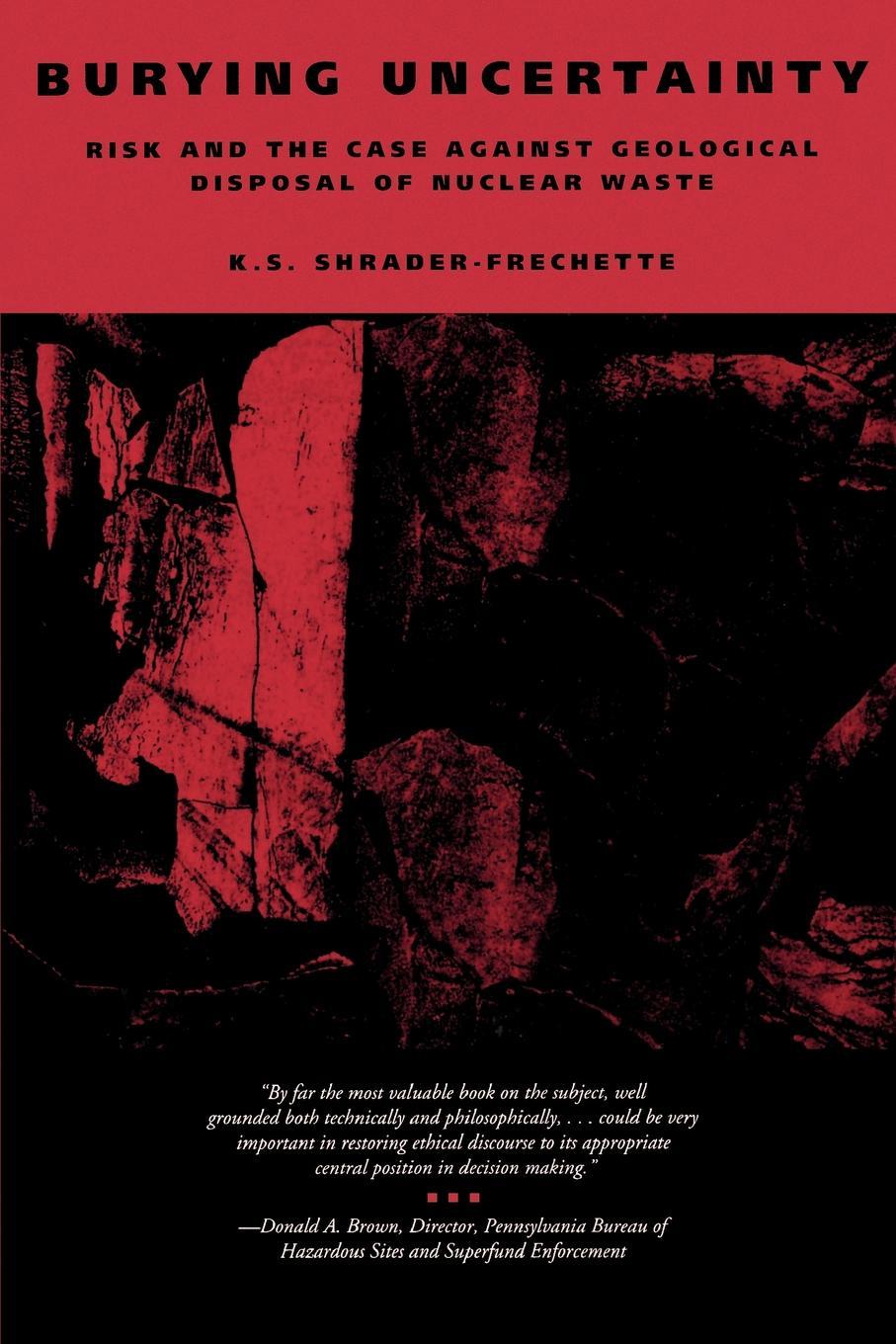
Shrader-Frechette looks at current U.S. government policy regarding the nation's high-level radioactive waste both scientifically and ethically.
What should be done with our nation's high-level radioactive waste, which will remain hazardous for thousands of years? This is one of the most pressing problems faced by the nuclear power industry, and current U.S. government policy is to bury "radwastes" in specially designed deep repositories.
K. S. Shrader-Frechette argues that this policy is profoundly misguided on both scientific and ethical grounds. Scientifically—because we cannot trust the precision of 10,000-year predictions that promise containment of the waste. Ethically—because geological disposal ignores the rights of present and future generations to equal treatment, due process, and free informed consent.
Shrader-Frechette focuses her argument on the world's first proposed high-level radioactive waste facility at Yucca Mountain, Nevada. Analyzing a mass of technical literature, she demonstrates the weaknesses in the professional risk-assessors' arguments that claim the site is sufficiently safe for such a plan. We should postpone the question of geological disposal for at least a century and use monitored, retrievable, above-ground storage of the waste until then. Her message regarding radwaste is clear: what you can't see can hurt you.
What should be done with our nation's high-level radioactive waste, which will remain hazardous for thousands of years? This is one of the most pressing problems faced by the nuclear power industry, and current U.S. government policy is to bury "radwastes" in specially designed deep repositories.
K. S. Shrader-Frechette argues that this policy is profoundly misguided on both scientific and ethical grounds. Scientifically—because we cannot trust the precision of 10,000-year predictions that promise containment of the waste. Ethically—because geological disposal ignores the rights of present and future generations to equal treatment, due process, and free informed consent.
Shrader-Frechette focuses her argument on the world's first proposed high-level radioactive waste facility at Yucca Mountain, Nevada. Analyzing a mass of technical literature, she demonstrates the weaknesses in the professional risk-assessors' arguments that claim the site is sufficiently safe for such a plan. We should postpone the question of geological disposal for at least a century and use monitored, retrievable, above-ground storage of the waste until then. Her message regarding radwaste is clear: what you can't see can hurt you.
Paga fácilmente con tarjeta, Klarna, Apple Pay o Google Pay. ¿No estás contento? Siempre tienes 14 días de garantía de devolución. Lee más en nuestros términos. Si tienes preguntas, escríbenos a hello@memmo.org.
Memmo hace que estudiar sea más fácil, estés donde estés. Aquí tienes tus libros de texto y herramientas de estudio inteligentes en un solo lugar: resúmenes, quizzes, podcasts y flashcards. Y también a Ted, tu compañero de estudio que responde a todo lo que te preguntes. Más de 50 000 estudiantes ya estudian aquí. Está hecho para que aprendas más rápido y te estreses menos.
También te podría gustar
Comprar el libro0