
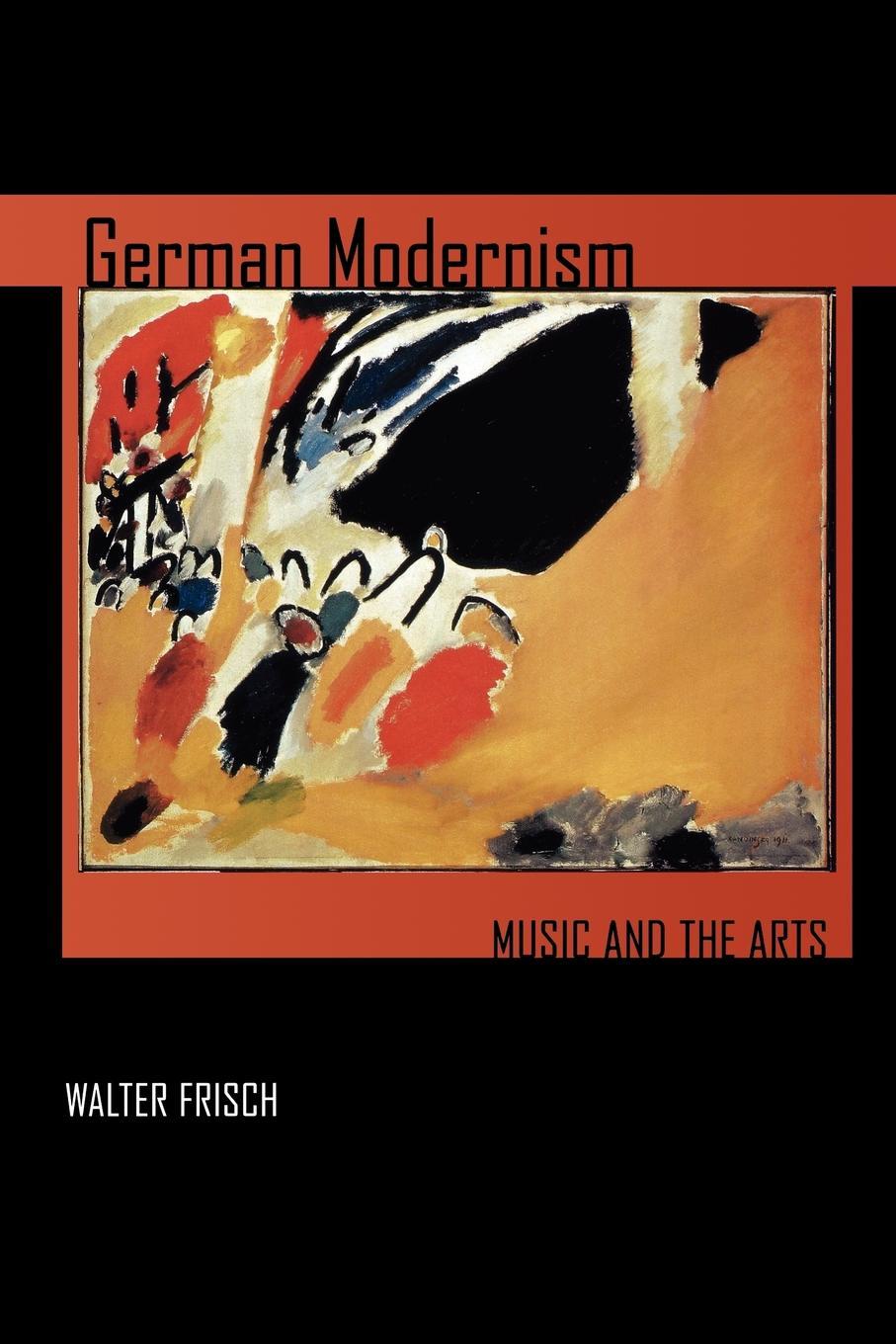
In this pioneering, erudite study of a pivotal era in the arts, Walter Frisch examines music and its relationship to early modernism in the Austro-German sphere. Seeking to explore the period on its own terms, Frisch questions the common assumption that works created from the later 1870s through World War I were transitional between late romanticism and high modernism. Drawing on a wide range of examples across different media, he establishes a cultural and intellectual context for late Richard Wagner, Richard Strauss, Gustav Mahler, and Arnold Schoenberg, as well as their less familiar contemporaries Eugen d'Albert, Hans Pfitzner, Max Reger, Max von Schillings, and Franz Schreker.
Frisch explores "ambivalent" modernism in the last quarter of the nineteenth century as reflected in the attitudes of, and relationship between, Nietzsche and Wagner. He goes on to examine how naturalism, the first self-conscious movement of German modernism, intersected with musical values and practices of the day. He proposes convergences between music and the visual arts in the works of Brahms, Max Klinger, Schoenberg, and Kandinsky. Frisch also explains how, near the turn of the century, composers drew inspiration and techniques from music of the past—the Renaissance, Bach, Mozart, and Wagner. Finally, he demonstrates how irony became a key strategy in the novels and novellas of Thomas Mann, the symphonies of Mahler, and the operas of Strauss and Hofmannsthal.
Frisch explores "ambivalent" modernism in the last quarter of the nineteenth century as reflected in the attitudes of, and relationship between, Nietzsche and Wagner. He goes on to examine how naturalism, the first self-conscious movement of German modernism, intersected with musical values and practices of the day. He proposes convergences between music and the visual arts in the works of Brahms, Max Klinger, Schoenberg, and Kandinsky. Frisch also explains how, near the turn of the century, composers drew inspiration and techniques from music of the past—the Renaissance, Bach, Mozart, and Wagner. Finally, he demonstrates how irony became a key strategy in the novels and novellas of Thomas Mann, the symphonies of Mahler, and the operas of Strauss and Hofmannsthal.
Paga fácilmente con tarjeta, Klarna, Apple Pay o Google Pay. ¿No estás contento? Siempre tienes 14 días de garantía de devolución. Lee más en nuestros términos. Si tienes preguntas, escríbenos a hello@memmo.org.
Memmo hace que estudiar sea más fácil, estés donde estés. Aquí tienes tus libros de texto y herramientas de estudio inteligentes en un solo lugar: resúmenes, quizzes, podcasts y flashcards. Y también a Ted, tu compañero de estudio que responde a todo lo que te preguntes. Más de 50 000 estudiantes ya estudian aquí. Está hecho para que aprendas más rápido y te estreses menos.
También te podría gustar
Comprar el libro0