
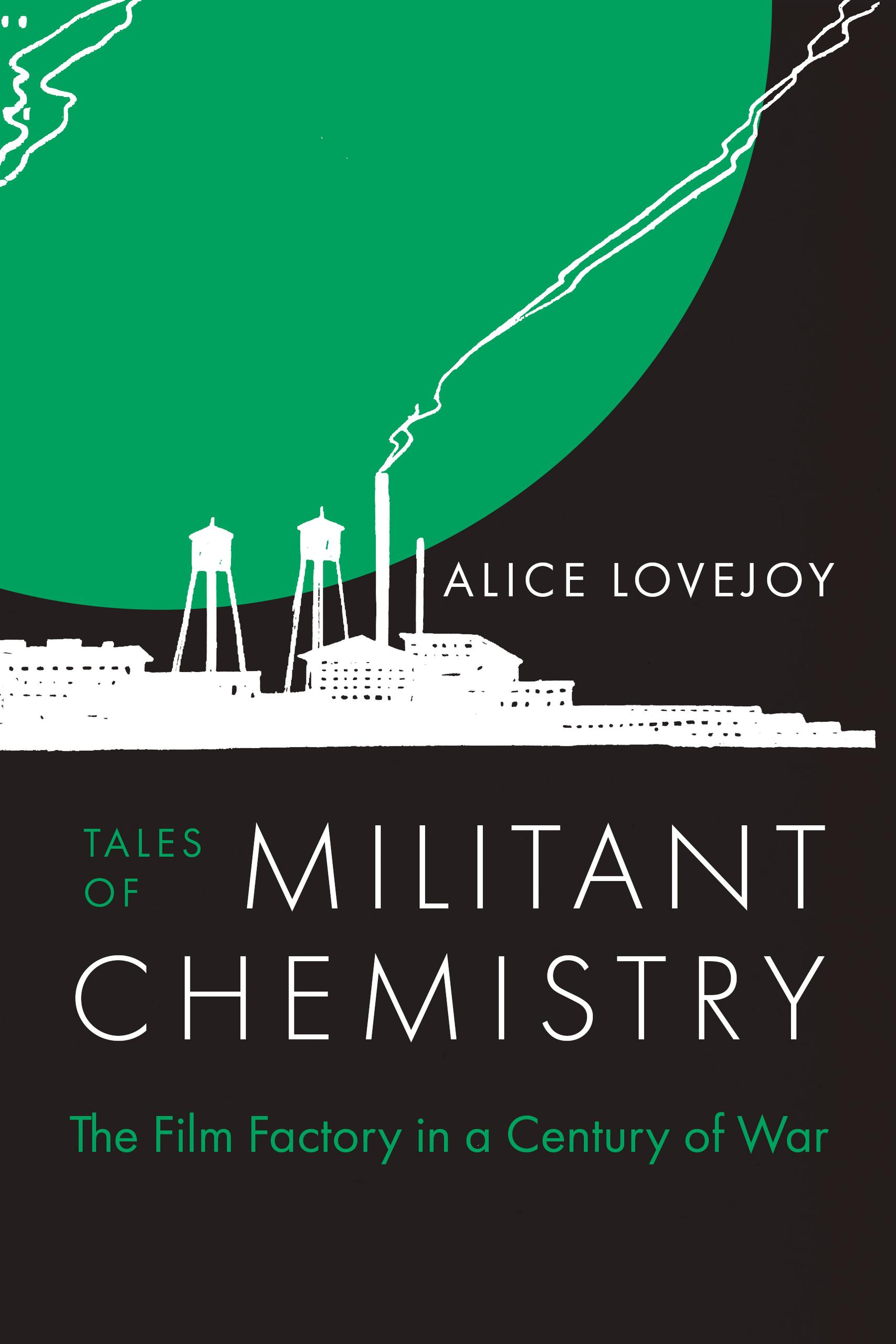
The untold story of film as a chemical cousin to poison gas and nuclear weapons, shaped by centuries of violent extraction.
The history of film calls to mind unforgettable photographs, famous directors, and the glitz and hustle of the media business. But there is another tale to tell that connects film as a material to the twentieth century’s history of war, destruction, and cruelty.
This story comes into focus during World War II at the factories of Tennessee Eastman, where photographic giant Kodak produced the rudiments of movie magic. Not far away, at Oak Ridge, Kodak was also enriching uranium for the Manhattan Project—uranium mined in the Belgian Congo and destined for the bomb that fell on Hiroshima. While the world’s largest film manufacturer transformed into a formidable military contractor, across the ocean its competitor Agfa grew entangled with Nazi Germany’s machinery of war. After 1945, Kodak’s film factories stood at the front lines of a new, colder war, as their photosensitive products became harbingers of the dangers of nuclear fallout.
Following scientists, soldiers, prisoners, and spies through Kodak’s and Agfa’s global empires, Alice Lovejoy links the golden age of cinema and photography to colonialism, the military-industrial complex, radioactive dust, and toxic waste. Revelatory and chilling,Tales of Militant Chemistry shows how film became a weapon whose chemistry irrevocably shaped the world we live in today.
The history of film calls to mind unforgettable photographs, famous directors, and the glitz and hustle of the media business. But there is another tale to tell that connects film as a material to the twentieth century’s history of war, destruction, and cruelty.
This story comes into focus during World War II at the factories of Tennessee Eastman, where photographic giant Kodak produced the rudiments of movie magic. Not far away, at Oak Ridge, Kodak was also enriching uranium for the Manhattan Project—uranium mined in the Belgian Congo and destined for the bomb that fell on Hiroshima. While the world’s largest film manufacturer transformed into a formidable military contractor, across the ocean its competitor Agfa grew entangled with Nazi Germany’s machinery of war. After 1945, Kodak’s film factories stood at the front lines of a new, colder war, as their photosensitive products became harbingers of the dangers of nuclear fallout.
Following scientists, soldiers, prisoners, and spies through Kodak’s and Agfa’s global empires, Alice Lovejoy links the golden age of cinema and photography to colonialism, the military-industrial complex, radioactive dust, and toxic waste. Revelatory and chilling,Tales of Militant Chemistry shows how film became a weapon whose chemistry irrevocably shaped the world we live in today.
Páginas: 256
Categoría: Film- & Medievetenskap
e-ISBN: 9780520402959
Peso de envío: 1.2 kg
Envío en: 1-2 días
Paga fácilmente con tarjeta, Klarna, Apple Pay o Google Pay. ¿No estás contento? Siempre tienes 14 días de garantía de devolución. Lee más en nuestros términos. Si tienes preguntas, escríbenos a hello@memmo.org.
Memmo hace que estudiar sea más fácil, estés donde estés. Aquí tienes tus libros de texto y herramientas de estudio inteligentes en un solo lugar: resúmenes, quizzes, podcasts y flashcards. Y también a Ted, tu compañero de estudio que responde a todo lo que te preguntes. Más de 50 000 estudiantes ya estudian aquí. Está hecho para que aprendas más rápido y te estreses menos.
También te podría gustar
Comprar el libro0