
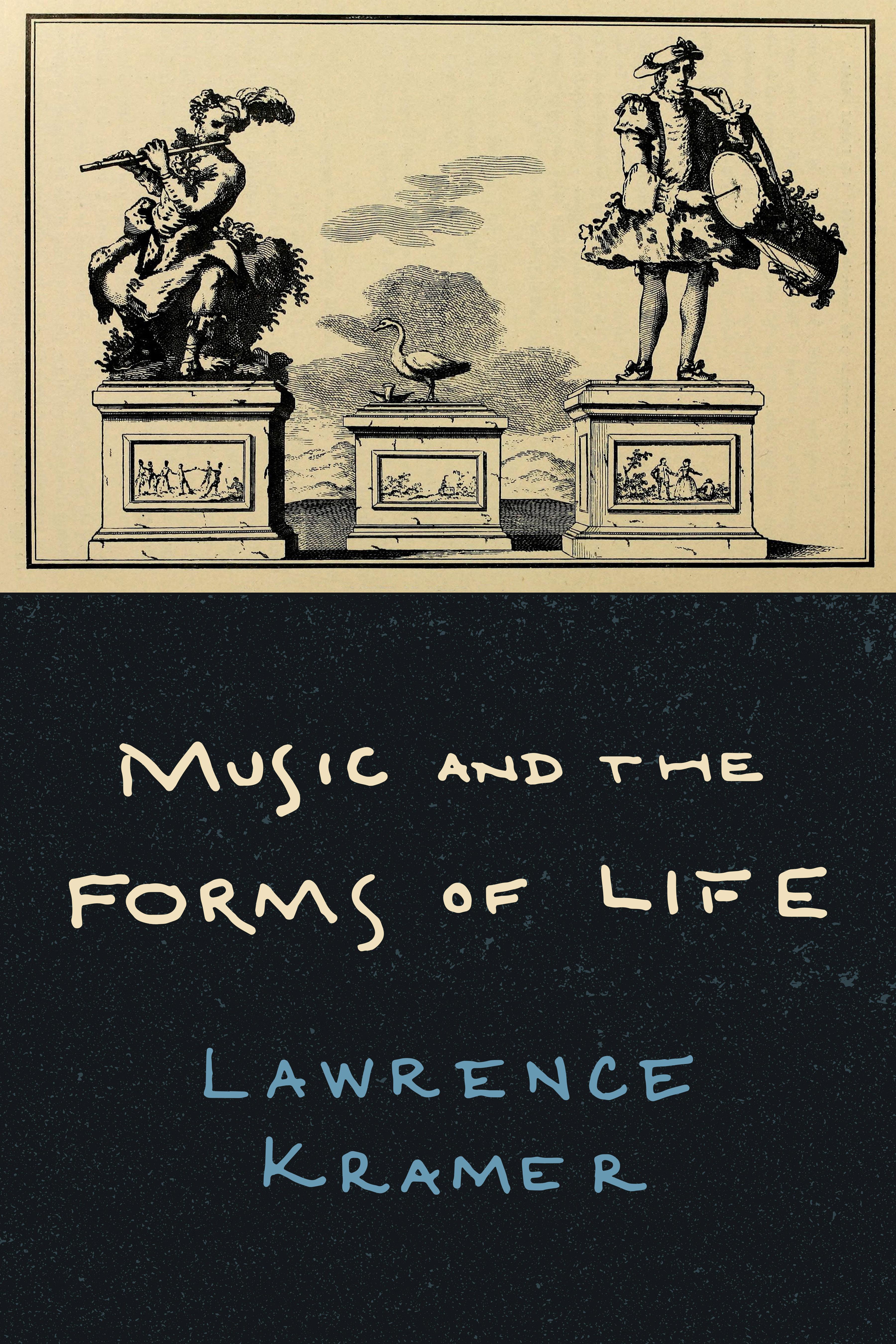
Inventors in the age of the Enlightenment created lifelike androids capable of playing music on real instruments. Music and the Forms of Life examines the link between such simulated life and music, which began in the era's scientific literature and extended into a series of famous musical works by Haydn, Mozart, and Beethoven. Music invented auditory metaphors for the scientific elements of life (drive, pulse, sensibility, irritability, even metabolism), investigated the affinities and antagonisms between life and mechanism, and explored questions of whether and how mechanisms can come to life.
The resulting changes in the conceptions of both life and music had wide cultural resonance at the time, and those concepts continued to evolve long after. A critical part of that evolution was a nineteenth-century shift in focus from moving androids to the projection of life in motion, culminating in the invention of cinema. Weaving together cultural and musical practices, Lawrence Kramer traces these developments through a collection of case studies ranging from classical symphonies to modernist projections of waltzing specters by Mahler and Ravel to a novel linking Bach's Goldberg Variations to the genetic code.
The publisher gratefully acknowledges the generous support of the AMS 75 PAYS Fund of the American Musicological Society, supported in part by the National Endowment for the Humanities and the Andrew W. Mellon Foundation.
The resulting changes in the conceptions of both life and music had wide cultural resonance at the time, and those concepts continued to evolve long after. A critical part of that evolution was a nineteenth-century shift in focus from moving androids to the projection of life in motion, culminating in the invention of cinema. Weaving together cultural and musical practices, Lawrence Kramer traces these developments through a collection of case studies ranging from classical symphonies to modernist projections of waltzing specters by Mahler and Ravel to a novel linking Bach's Goldberg Variations to the genetic code.
The publisher gratefully acknowledges the generous support of the AMS 75 PAYS Fund of the American Musicological Society, supported in part by the National Endowment for the Humanities and the Andrew W. Mellon Foundation.
Paga fácilmente con tarjeta, Klarna, Apple Pay o Google Pay. ¿No estás contento? Siempre tienes 14 días de garantía de devolución. Lee más en nuestros términos. Si tienes preguntas, escríbenos a hello@memmo.org.
Memmo hace que estudiar sea más fácil, estés donde estés. Aquí tienes tus libros de texto y herramientas de estudio inteligentes en un solo lugar: resúmenes, quizzes, podcasts y flashcards. Y también a Ted, tu compañero de estudio que responde a todo lo que te preguntes. Más de 50 000 estudiantes ya estudian aquí. Está hecho para que aprendas más rápido y te estreses menos.
También te podría gustar
Comprar el libro0