
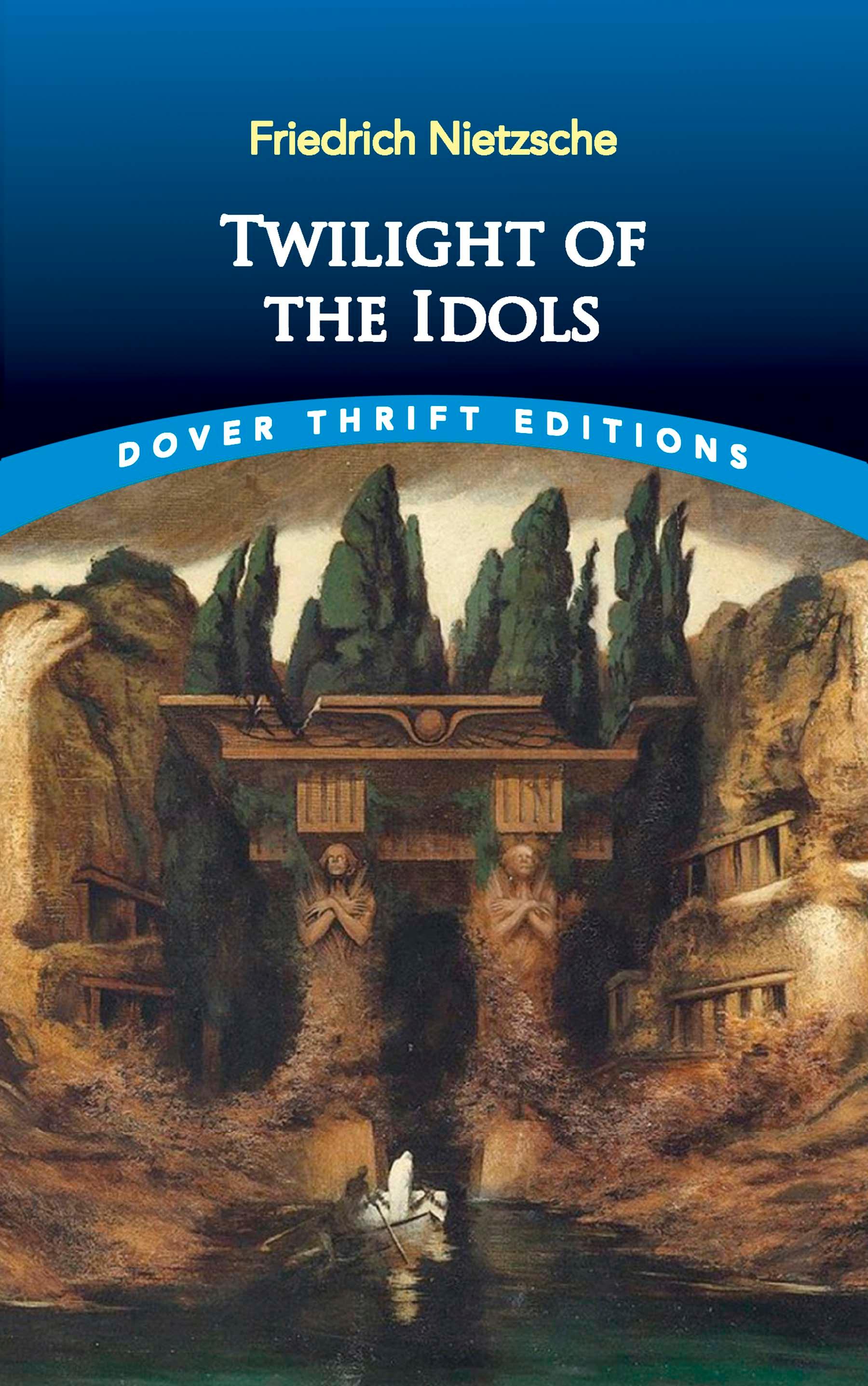
"Twilight of the Idols means that the old truth is on its last legs," declared Friedrich Nietzsche in this 1889 polemic. Forceful in his language and profound in his message, the philosopher delivered the nineteenth century's most devastating attack on Christianity. Intended by Nietzsche as a general introduction to his philosophy, it assails the "idols" of Western philosophy and culture, including the concepts of Socratic rationality and Christian morality.
Written while Nietzsche was at the peak of his powers, less than a year before the onset of the insanity that gripped him until his death in 1900, this work's proximity to the end of the author's career renders it a distinctive portrait from his later period. The source of the famous dictum, "Whatever does not kill me makes me stronger," it blazes with provocative, inflammatory rhetoric that challenges readers to reexamine what they worship and why.
Written while Nietzsche was at the peak of his powers, less than a year before the onset of the insanity that gripped him until his death in 1900, this work's proximity to the end of the author's career renders it a distinctive portrait from his later period. The source of the famous dictum, "Whatever does not kill me makes me stronger," it blazes with provocative, inflammatory rhetoric that challenges readers to reexamine what they worship and why.
Paga fácilmente con tarjeta, Klarna, Apple Pay o Google Pay. ¿No estás contento? Siempre tienes 14 días de garantía de devolución. Lee más en nuestros términos. Si tienes preguntas, escríbenos a hello@memmo.org.
Memmo hace que estudiar sea más fácil, estés donde estés. Aquí tienes tus libros de texto y herramientas de estudio inteligentes en un solo lugar: resúmenes, quizzes, podcasts y flashcards. Y también a Ted, tu compañero de estudio que responde a todo lo que te preguntes. Más de 50 000 estudiantes ya estudian aquí. Está hecho para que aprendas más rápido y te estreses menos.
También te podría gustar
Comprar el libro0