
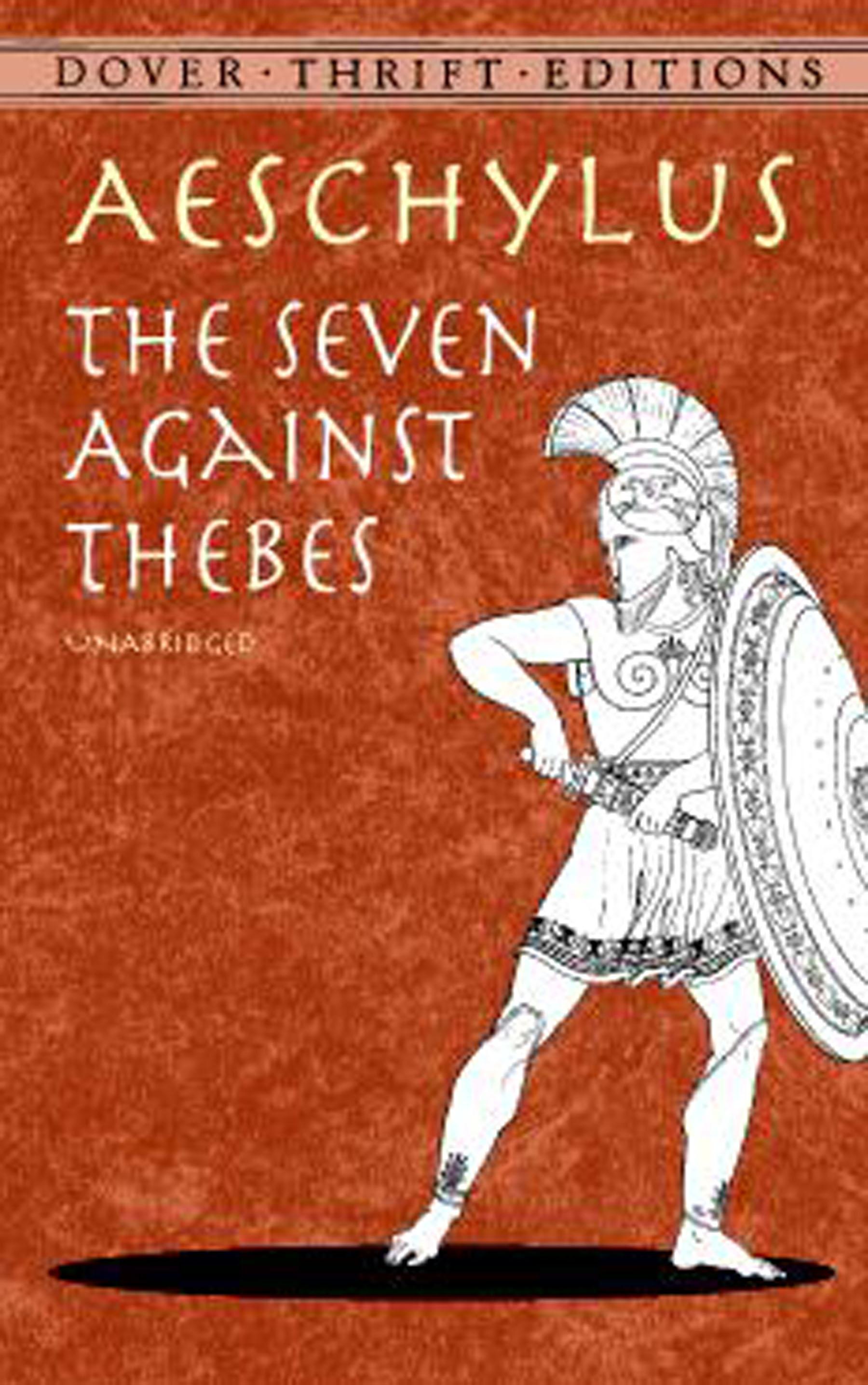
Often called the father of Greek tragedy, Aeschylus (525–456 B.C.) was the earliest and possibly the greatest of the Greek tragic poets. Altogether he may have written as many as 90 plays (including satyr plays as well as tragedies), but only seven have survived.
The Seven Against Thebes (first produced in 467 B.C.) was the final play in a trilogy (the other two are lost) dramatizing the well-known legend of Laius and his son Oedipus. In this culminating play, Oedipus is dead after his banishment from Thebes, and his two sons vie for the crown. The victor, Eteocles, expels his brother, Polynices, who flees to Argos and recruits a force of seven champions to lead an assault on Thebes. The tragic outcome is the fulfillment of the curse of Oedipus — that his sons should divide their inheritance with the sword.
Although Sophocles' treatment of the Oedipus legend is better known, the dialogue and imagery in Aeschylus's play retain an immediacy that resonates with modern readers and audiences. The result is a deeply moving theatrical milestone that is essential reading for students of literature, drama, and the classics.
Paga fácilmente con tarjeta, Klarna, Apple Pay o Google Pay. ¿No estás contento? Siempre tienes 14 días de garantía de devolución. Lee más en nuestros términos. Si tienes preguntas, escríbenos a hello@memmo.org.
Memmo hace que estudiar sea más fácil, estés donde estés. Aquí tienes tus libros de texto y herramientas de estudio inteligentes en un solo lugar: resúmenes, quizzes, podcasts y flashcards. Y también a Ted, tu compañero de estudio que responde a todo lo que te preguntes. Más de 50 000 estudiantes ya estudian aquí. Está hecho para que aprendas más rápido y te estreses menos.