
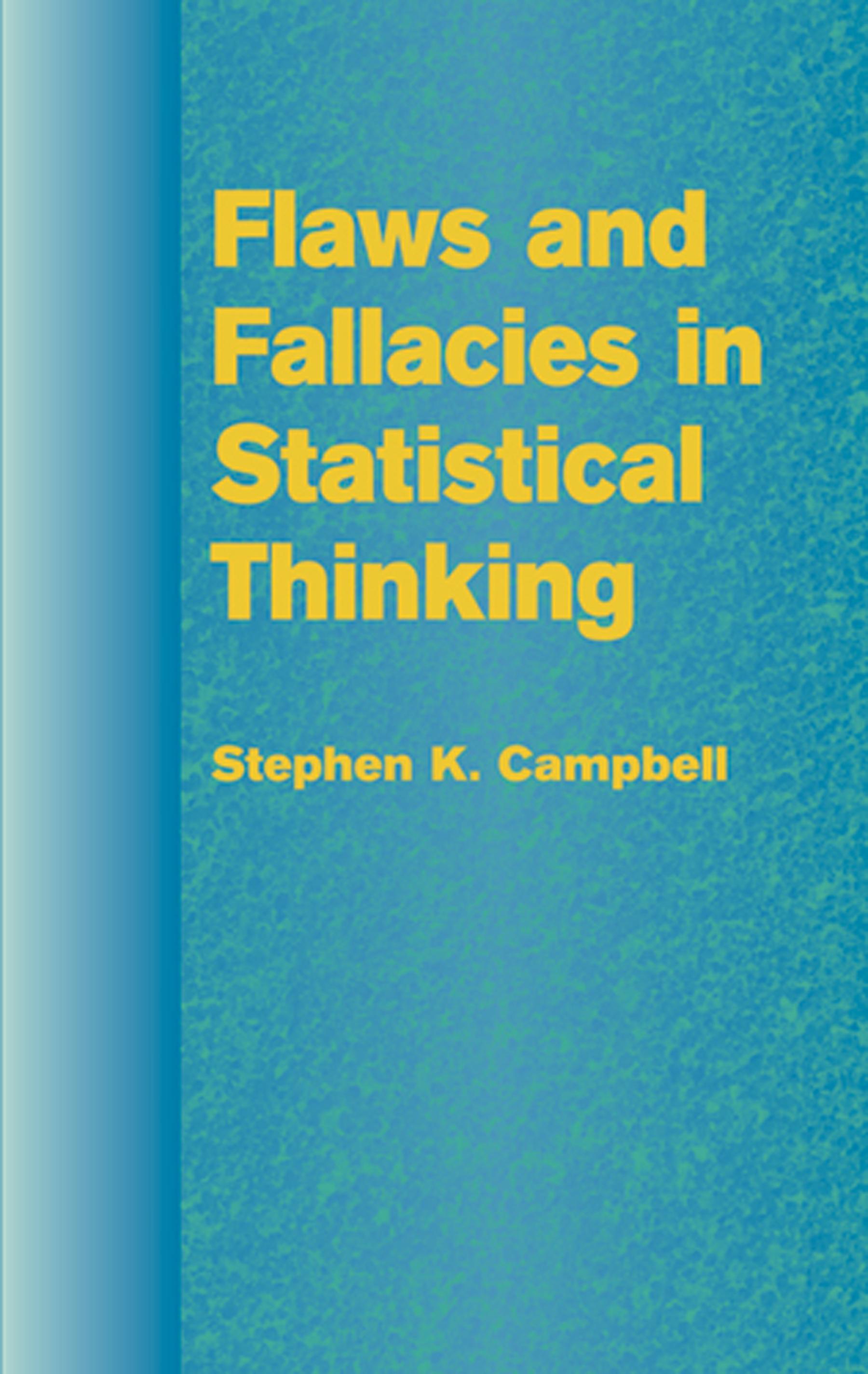
This book was written with a dual purpose: first, the author was motivated to relieve his distress over the faulty conclusions drawn from the frequent misuse of relatively simple statistical tools such as percents, graphs, and averages. Second, his objective was to create a nontechnical book that would help people make better-informed decisions by increasing their ability to judge the quality of statistical evidence. This volume achieves both, serving as a supplemental text for students taking their first course in statistics, and as a self-help guide for anyone wishing to evaluate statistical evidence more judiciously.
The sequence of topics corresponds with that of many beginning textbooks in statistics, and the terminology and treatment of subjects are based on the assumption that readers have had little or no prior exposure to statistics or formal mathematics. The author examines the perils of statistical ignorance, some problems in basic measurement and definition, and the prevalence of meaningless statistics, far-fetched estimates, cheating charts, and accommodating averages. He explains common pitfalls of statistical thinking such as ignoring dispersion, inflating percentages, drawing improper comparisons, jumping to conclusions, and making errors of probability and induction. Playful in tone but scrupulously accurate in nature, this text is equally valuable in and out of the classroom.
Paga fácilmente con tarjeta, Klarna, Apple Pay o Google Pay. ¿No estás contento? Siempre tienes 14 días de garantía de devolución. Lee más en nuestros términos. Si tienes preguntas, escríbenos a hello@memmo.org.
Memmo hace que estudiar sea más fácil, estés donde estés. Aquí tienes tus libros de texto y herramientas de estudio inteligentes en un solo lugar: resúmenes, quizzes, podcasts y flashcards. Y también a Ted, tu compañero de estudio que responde a todo lo que te preguntes. Más de 50 000 estudiantes ya estudian aquí. Está hecho para que aprendas más rápido y te estreses menos.