
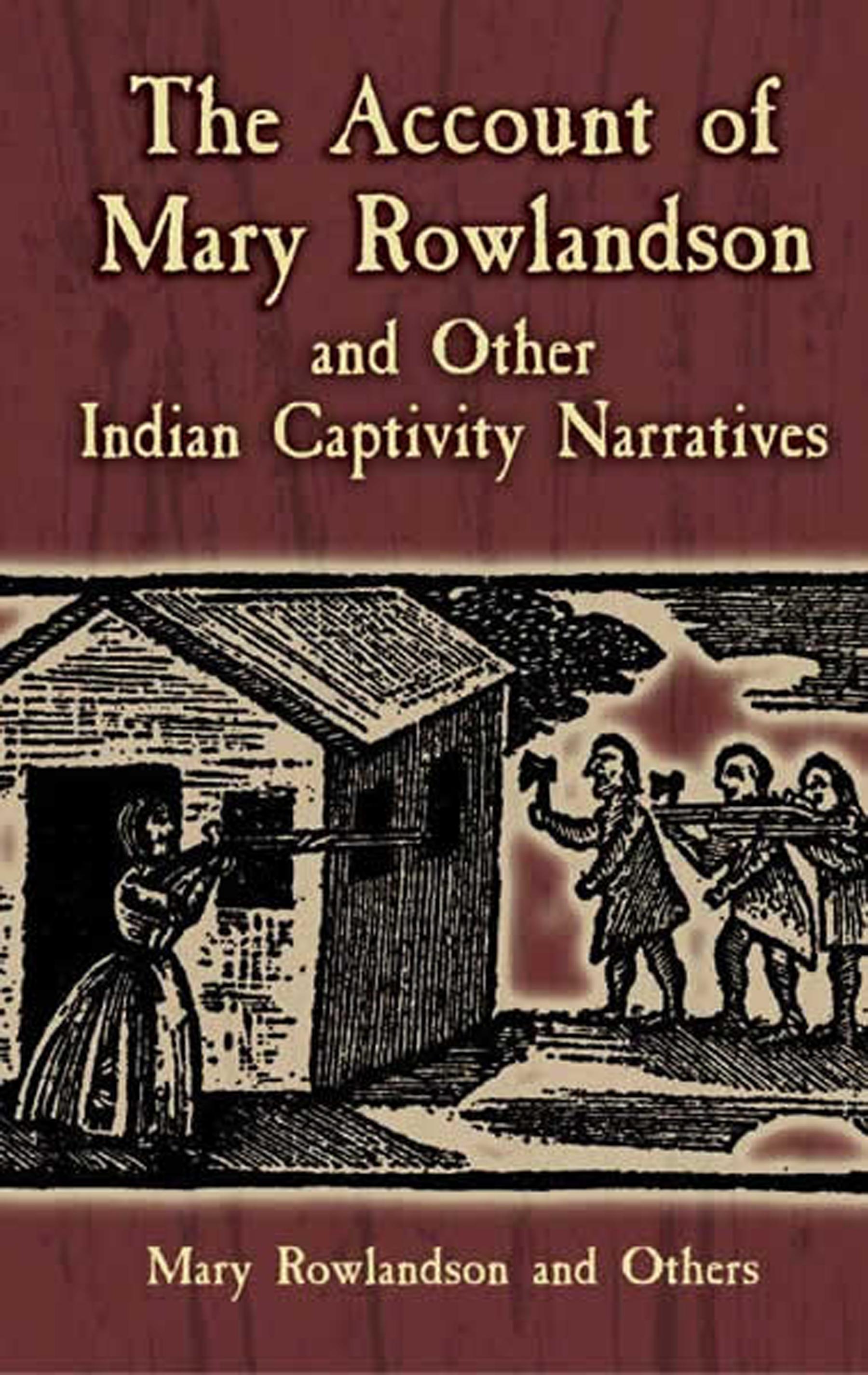
The wife of a minister in a small frontier town west of Boston, Mary Rowlandson was forced to leave her house in the late winter of 1676 after marauding Indians set the building on fire. "I had often before this said," she later wrote, "that if the Indians should come, I should chuse rather to be killed by them than taken alive but when it came to the tryal my mind changed; their glittering weapons so daunted my spirit, that I chose rather to go along . . . than to end my days."
Thus began Mary Rowlandson's account of her arduous journey as a servant to her captors, the Narragansett Indians. The most celebrated such document in American history, her record of the three months she spent in captivity tells of hardship and suffering, but also includes invaluable observations on Native American life and customs. The text is notable, as well, for conveying an understanding of her captors as individuals who not only suffered and faced difficult decisions but were also, at times, sympathetic humans (one of her abductors gave her a Bible taken during an earlier raid).
An immediate bestseller when first published in 1682, Rowlandson's narrative is widely regarded today as a classic--the first in a series of "captivity narratives" in which women, seized by Indians, survived against overwhelming odds. Of special interest to historians and students of Native American culture, Rowlandson's astounding account — accompanied by three other famous narratives of captivity — will also thrill the most avid of adventure enthusiasts.
Thus began Mary Rowlandson's account of her arduous journey as a servant to her captors, the Narragansett Indians. The most celebrated such document in American history, her record of the three months she spent in captivity tells of hardship and suffering, but also includes invaluable observations on Native American life and customs. The text is notable, as well, for conveying an understanding of her captors as individuals who not only suffered and faced difficult decisions but were also, at times, sympathetic humans (one of her abductors gave her a Bible taken during an earlier raid).
An immediate bestseller when first published in 1682, Rowlandson's narrative is widely regarded today as a classic--the first in a series of "captivity narratives" in which women, seized by Indians, survived against overwhelming odds. Of special interest to historians and students of Native American culture, Rowlandson's astounding account — accompanied by three other famous narratives of captivity — will also thrill the most avid of adventure enthusiasts.
Paga fácilmente con tarjeta, Klarna, Apple Pay o Google Pay. ¿No estás contento? Siempre tienes 14 días de garantía de devolución. Lee más en nuestros términos. Si tienes preguntas, escríbenos a hello@memmo.org.
Memmo hace que estudiar sea más fácil, estés donde estés. Aquí tienes tus libros de texto y herramientas de estudio inteligentes en un solo lugar: resúmenes, quizzes, podcasts y flashcards. Y también a Ted, tu compañero de estudio que responde a todo lo que te preguntes. Más de 50 000 estudiantes ya estudian aquí. Está hecho para que aprendas más rápido y te estreses menos.
También te podría gustar
Comprar el libro0