
A new understanding of cognitive development from the perspective of neuroscience
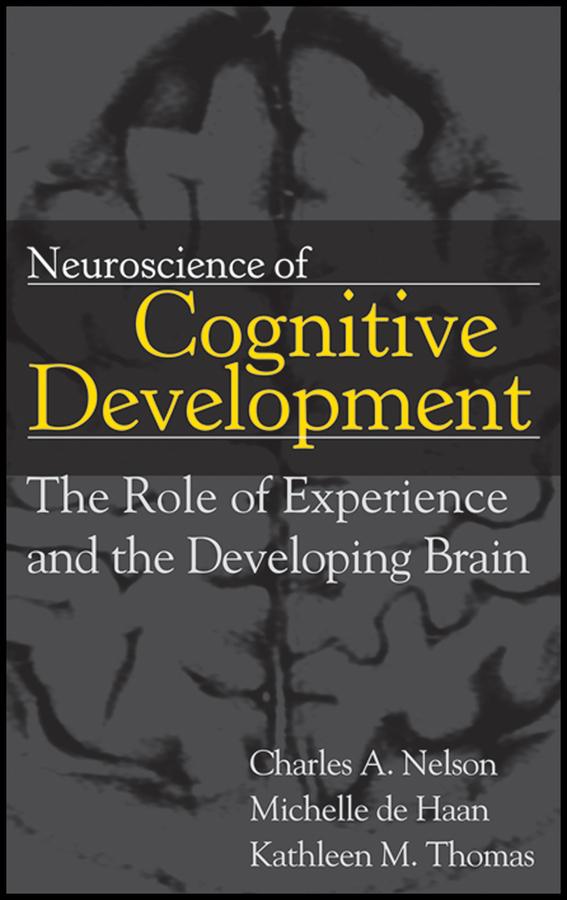
This book provides a state-of-the-art understanding of the neural bases of cognitive development. Although the field of developmental cognitive neuroscience is still in its infancy, the authors effectively demonstrate that our understanding of cognitive development is and will be vastly improved as the mechanisms underlying development are elucidated.
The authors begin by establishing the value of considering neuroscience in order to understand child development and then provide an overview of brain development. They include a critical discussion of experience-dependent changes in the brain. The authors explore whether the mechanisms underlying developmental plasticity differ from those underlying adult plasticity, and more fundamentally, what distinguishes plasticity from development.
Having armed the reader with key neuroscience basics, the book begins its examination of the neural bases of cognitive development by examining the methods employed by professionals in developmental cognitive neuroscience. Following a brief historical overview, the authors discuss behavioral, anatomic, metabolic, and electrophysiological methods. Finally, the book explores specific content areas, focusing on those areas where there is a significant body of knowledge on the neural underpinnings of cognitive development, including:
* Declarative and non-declarative memory and learning
* Spatial cognition
* Object recognition
* Social cognition
* Speech and language development
* Attention development
For cognitive and developmental psychologists, as well as students in developmental psychology, neuroscience, and cognitive development, the authors' view of behavioral development from the perspective of neuroscience sheds new light on the mechanisms that underlie how the brain functions and how a child learns and behaves.
This book provides a state-of-the-art understanding of the neural bases of cognitive development. Although the field of developmental cognitive neuroscience is still in its infancy, the authors effectively demonstrate that our understanding of cognitive development is and will be vastly improved as the mechanisms underlying development are elucidated.
The authors begin by establishing the value of considering neuroscience in order to understand child development and then provide an overview of brain development. They include a critical discussion of experience-dependent changes in the brain. The authors explore whether the mechanisms underlying developmental plasticity differ from those underlying adult plasticity, and more fundamentally, what distinguishes plasticity from development.
Having armed the reader with key neuroscience basics, the book begins its examination of the neural bases of cognitive development by examining the methods employed by professionals in developmental cognitive neuroscience. Following a brief historical overview, the authors discuss behavioral, anatomic, metabolic, and electrophysiological methods. Finally, the book explores specific content areas, focusing on those areas where there is a significant body of knowledge on the neural underpinnings of cognitive development, including:
* Declarative and non-declarative memory and learning
* Spatial cognition
* Object recognition
* Social cognition
* Speech and language development
* Attention development
For cognitive and developmental psychologists, as well as students in developmental psychology, neuroscience, and cognitive development, the authors' view of behavioral development from the perspective of neuroscience sheds new light on the mechanisms that underlie how the brain functions and how a child learns and behaves.
Paga fácilmente con tarjeta, Klarna, Apple Pay o Google Pay. ¿No estás contento? Siempre tienes 14 días de garantía de devolución. Lee más en nuestros términos. Si tienes preguntas, escríbenos a hello@memmo.org.
Memmo hace que estudiar sea más fácil, estés donde estés. Aquí tienes tus libros de texto y herramientas de estudio inteligentes en un solo lugar: resúmenes, quizzes, podcasts y flashcards. Y también a Ted, tu compañero de estudio que responde a todo lo que te preguntes. Más de 50 000 estudiantes ya estudian aquí. Está hecho para que aprendas más rápido y te estreses menos.