
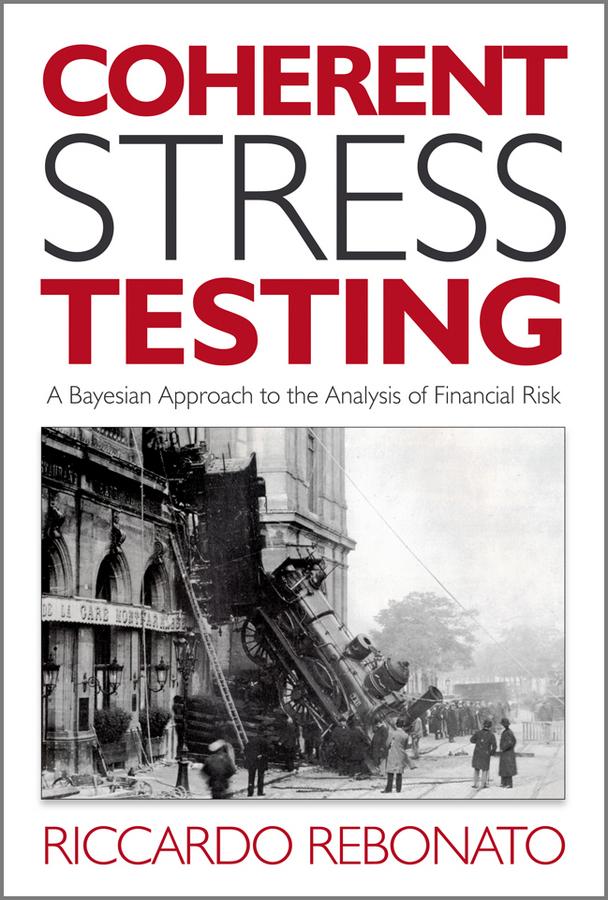
Based on the author's extensive work, research and presentations in the area, the book fills a gap in quantitative risk management by introducing a new and very intuitively appealing approach to stress testing based on expert judgement and Bayesian networks. It constitutes a radical departure from the traditional statistical methodologies based on Economic Capital or Extreme-Value-Theory approaches.
The book is split into four parts. Part I looks at stress testing and at its role in modern risk management. It discusses the distinctions between risk and uncertainty, the different types of probability that are used in risk management today and for which tasks they are best used. Stress testing is positioned as a bridge between the statistical areas where VaR can be effective and the domain of total Keynesian uncertainty. Part II lays down the quantitative foundations for the concepts described in the rest of the book. Part III takes readers through the application of the tools discussed in part II, and introduces two different systematic approaches to obtaining a coherent stress testing output that can satisfy the needs of industry users and regulators. In part IV the author addresses more practical questions such as embedding the suggestions of the book into a viable governance structure.
Paga fácilmente con tarjeta, Klarna, Apple Pay o Google Pay. ¿No estás contento? Siempre tienes 14 días de garantía de devolución. Lee más en nuestros términos. Si tienes preguntas, escríbenos a hello@memmo.org.
Memmo hace que estudiar sea más fácil, estés donde estés. Aquí tienes tus libros de texto y herramientas de estudio inteligentes en un solo lugar: resúmenes, quizzes, podcasts y flashcards. Y también a Ted, tu compañero de estudio que responde a todo lo que te preguntes. Más de 50 000 estudiantes ya estudian aquí. Está hecho para que aprendas más rápido y te estreses menos.