
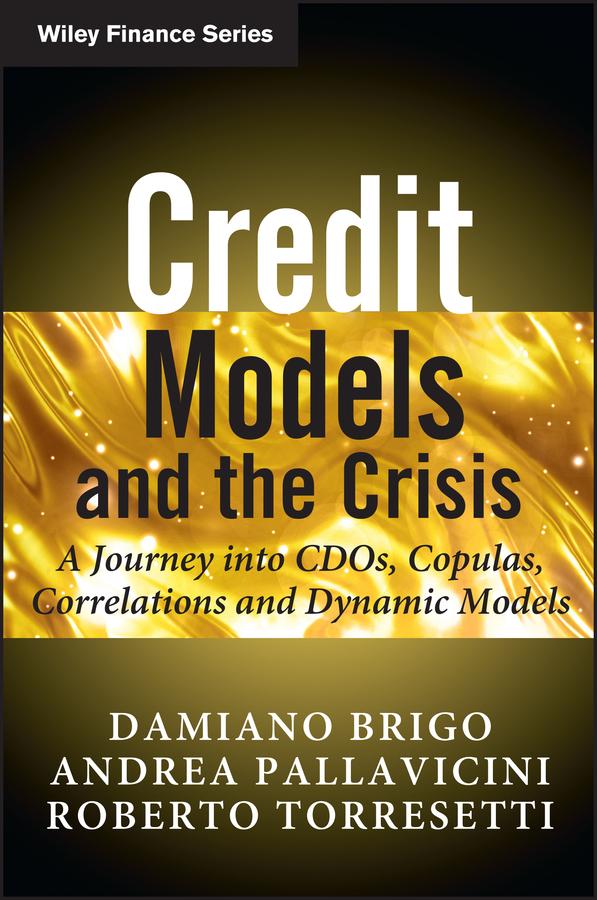
Credit Models and the Crisis is a succinct but technical analysis of the key aspects of the credit derivatives modeling problems, tracing the development (and flaws) of new quantitative methods for credit derivatives and CDOs up to and through the credit crisis. Responding to the immediate need for clarity in the market and academic research environments, this book follows the development of credit derivatives and CDOs at a technical level, analyzing the impact, strengths and weaknesses of methods ranging from the introduction of the Gaussian Copula model and the related implied correlations to the introduction of arbitrage-free dynamic loss models capable of calibrating all the tranches for all the maturities at the same time. It also illustrates the implied copula, a method that can consistently account for CDOs with different attachment and detachment points but not for different maturities, and explains why the Gaussian Copula model is still used in its base correlation formulation.
The book reports both alarming pre-crisis research and market examples, as well as commentary through history, using data up to the end of 2009, making it an important addition to modern derivatives literature. With banks and regulators struggling to fully analyze at a technical level, many of the flaws in modern financial models, it will be indispensable for quantitative practitioners and academics who want to develop stable and functional models in the future.
Paga fácilmente con tarjeta, Klarna, Apple Pay o Google Pay. ¿No estás contento? Siempre tienes 14 días de garantía de devolución. Lee más en nuestros términos. Si tienes preguntas, escríbenos a hello@memmo.org.
Memmo hace que estudiar sea más fácil, estés donde estés. Aquí tienes tus libros de texto y herramientas de estudio inteligentes en un solo lugar: resúmenes, quizzes, podcasts y flashcards. Y también a Ted, tu compañero de estudio que responde a todo lo que te preguntes. Más de 50 000 estudiantes ya estudian aquí. Está hecho para que aprendas más rápido y te estreses menos.