
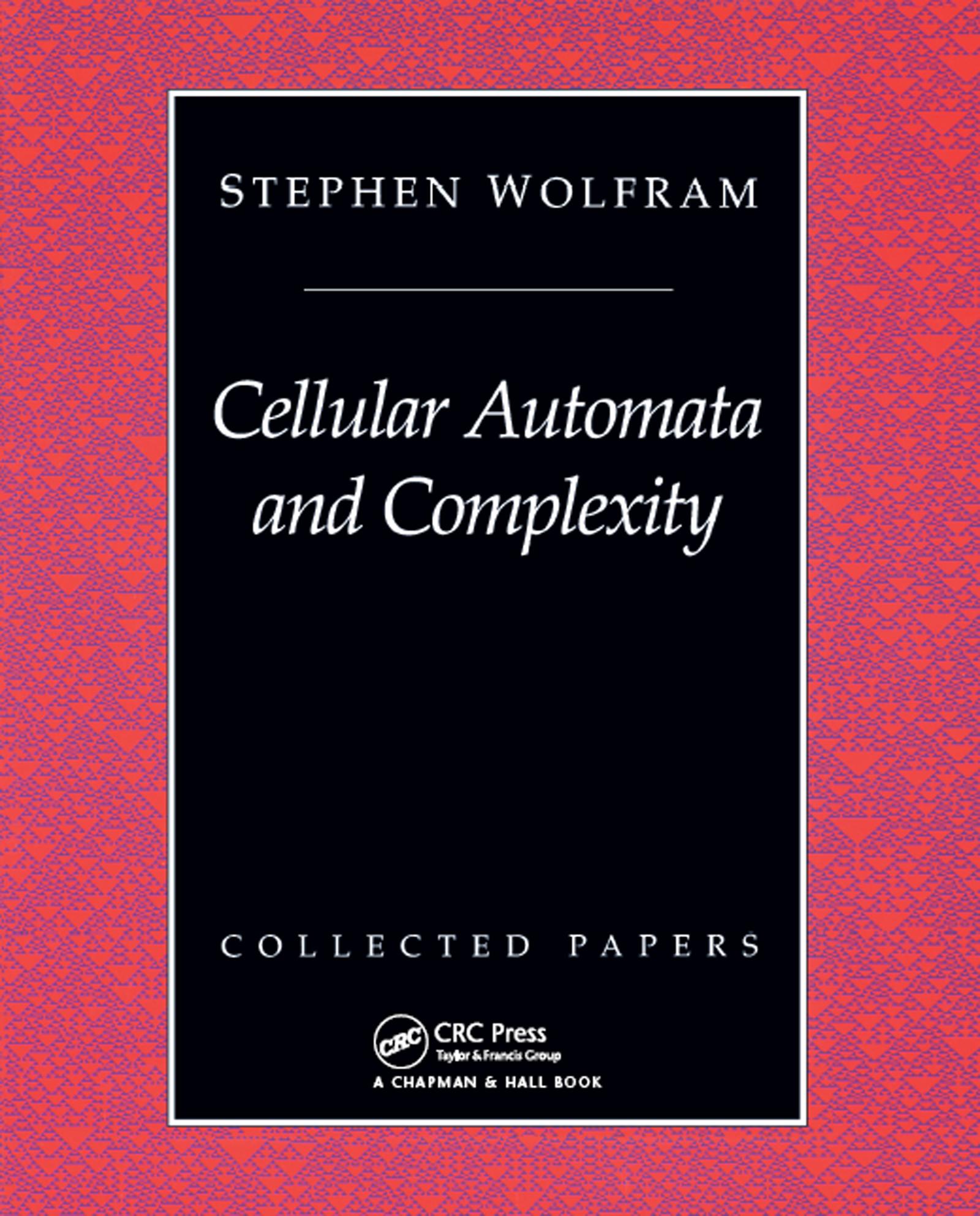
Are mathematical equations the best way to model nature? For many years it had been assumed that they were. But in the early 1980s, Stephen Wolfram made the radical proposal that one should instead build models that are based directly on simple computer programs. Wolfram made a detailed study of a class of such models known as cellular automata, and discovered a remarkable fact: that even when the underlying rules are very simple, the behaviour they produce can be highly complex, and can mimic many features of what we see in nature. And based on this result, Wolfram began a program of research to develop what he called A Science of Complexity."The results of Wolfram's work found many applications, from the so-called Wolfram Classification central to fields such as artificial life, to new ideas about cryptography and fluid dynamics. This book is a collection of Wolfram's original papers on cellular automata and complexity. Some of these papers are widely known in the scientific community others have never been published before. Together, the papers provide a highly readable account of what has become a major new field of science, with important implications for physics, biology, economics, computer science and many other areas.
Paga fácilmente con tarjeta, Klarna, Apple Pay o Google Pay. ¿No estás contento? Siempre tienes 14 días de garantía de devolución. Lee más en nuestros términos. Si tienes preguntas, escríbenos a hello@memmo.org.
Memmo hace que estudiar sea más fácil, estés donde estés. Aquí tienes tus libros de texto y herramientas de estudio inteligentes en un solo lugar: resúmenes, quizzes, podcasts y flashcards. Y también a Ted, tu compañero de estudio que responde a todo lo que te preguntes. Más de 50 000 estudiantes ya estudian aquí. Está hecho para que aprendas más rápido y te estreses menos.
También te podría gustar
Comprar el libro0