
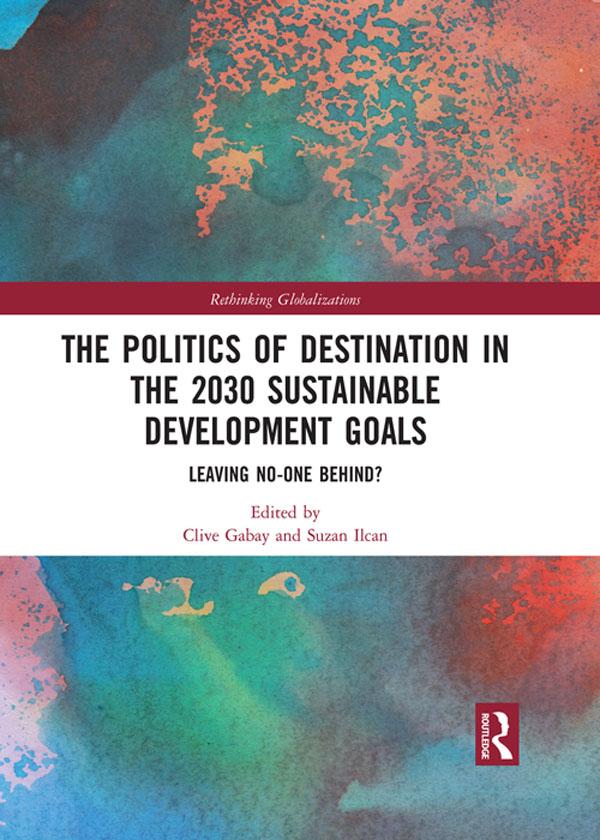
This book represents an unusual intervention in debates about the nature of contemporary international development, where the majority of scholarship tends to concern itself with measuring or collating goal performance. Through a series of analyses of the United Nations Sustainable Development Goals, this book explores development as a political construct, and is concerned with the kinds of epistemological, hegemonic, or politico-economic assumptions built into contemporary development policy, and the ensuing effectiveness the SDGs will have in terms of addressing or perpetuating the historical impoverishment of large groups of people living in poverty. The contributors to the book take issue with many of the assumptions upon which SDGs rest, while also broadening the conversation to pay attention to knowledge production, modernity, colonialism, exclusion, citizenship, and other conceptual insights. In this context, the book raises questions about the discourses and practices of the SDGs, especially in relation to how they can: define the limits of what can be said and what can be done; shape development logics through notions of division and forms of exclusion; construct political problems as technical problems; create certain spaces of imagination as a field of activity; and endorse particular ideas and forms of knowledge in models for sustainable development.
This book was originally published as a special issue of Globalizations.
Paga fácilmente con tarjeta, Klarna, Apple Pay o Google Pay. ¿No estás contento? Siempre tienes 14 días de garantía de devolución. Lee más en nuestros términos. Si tienes preguntas, escríbenos a hello@memmo.org.
Memmo hace que estudiar sea más fácil, estés donde estés. Aquí tienes tus libros de texto y herramientas de estudio inteligentes en un solo lugar: resúmenes, quizzes, podcasts y flashcards. Y también a Ted, tu compañero de estudio que responde a todo lo que te preguntes. Más de 50 000 estudiantes ya estudian aquí. Está hecho para que aprendas más rápido y te estreses menos.