
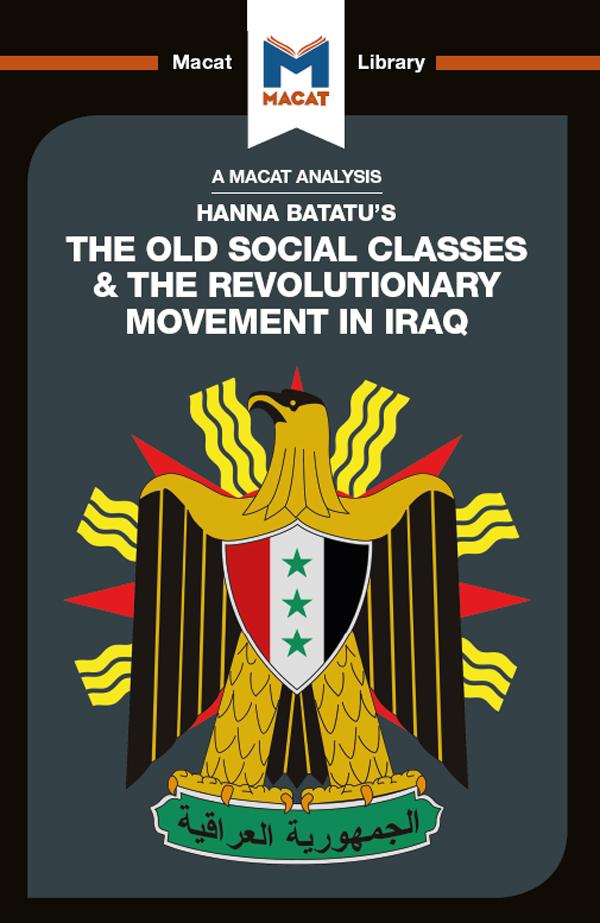
How do you solve a problem like understanding Iraq? For Hanna Batatu, the solution to this conundrum lay in generating alternative possibilities that effectively side-stepped the conventional wisdom of the time.
Historians had long held that Iraq – like other artificial creations of ex-colonial European powers, who drew lines onto the world map that ignored longstanding tribal, ethnic and religious ties – was best understood by delving into its political and religious history. Batatu used the problem solving skills of asking productive questions and generating alternative possibilities to argue that Iraq’s history was better understood through the lens of a Marxist analysis focused on socio-economic history.The Old Social Classes concludes that the divisions present in Iraq – and exposed by the revolutionary movements of the 1950s – are those characterized by the struggle for control over property and the means of production. Additionally, Batatu sought to establish that the most important political movements of the time, notably the nationalist Ba'athists and the pan-Arab Free Officers Movement, had their origins in a homegrown communist ideology inspired by local conditions and local inequality. By posing new questions – and by undertaking a vast amount of research in primary sources, a rarity in the history of this region – Batatu was able to produce a strong, new solution to a longstanding historiographical puzzle.
Paga fácilmente con tarjeta, Klarna, Apple Pay o Google Pay. ¿No estás contento? Siempre tienes 14 días de garantía de devolución. Lee más en nuestros términos. Si tienes preguntas, escríbenos a hello@memmo.org.
Memmo hace que estudiar sea más fácil, estés donde estés. Aquí tienes tus libros de texto y herramientas de estudio inteligentes en un solo lugar: resúmenes, quizzes, podcasts y flashcards. Y también a Ted, tu compañero de estudio que responde a todo lo que te preguntes. Más de 50 000 estudiantes ya estudian aquí. Está hecho para que aprendas más rápido y te estreses menos.