
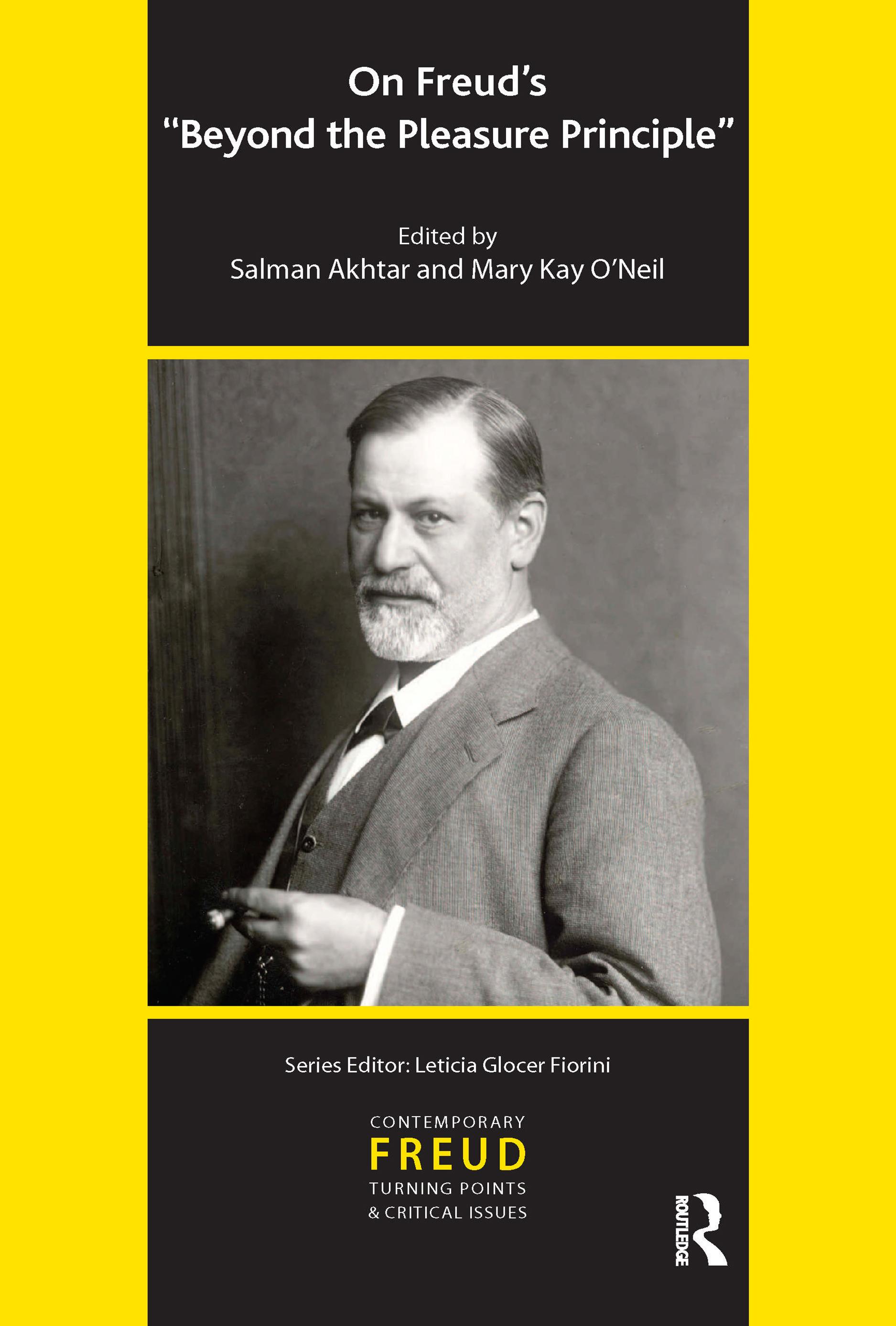
Freud's Beyond the Pleasure Principle constitutes a major landmark and a real turning point in the evolution of psychoanalytic theory. Pushing aside the primacy of the tension-discharge-gratification model of mental dynamics, this work introduced the notion of a "daemonic force" within all human beings that slowly but insistently seeks psychic inactivity, inertia, and death. Politely dismissed by some as a pseudo-biological speculation and rapturously espoused by others as a bold conceptual advance, "death instinct" became a stepping stone to the latter conceptualizations of mind's attacks on itself, negative narcissism, addiction to near-death, and the utter destruction of meaning in some clinical situations. The concept also served as a bridge between the quintessentially Western psychoanalysis and the Eastern perspectives on life and death. These diverse and rich connotations of the proposal are elucidated in On Freud's "Beyond the Pleasure Principle". Other consequences of Freud's 1920 paper - namely, the marginalization of ego instincts and the "upgrading" of aggression in the scheme of things - are also addressed.
Paga fácilmente con tarjeta, Klarna, Apple Pay o Google Pay. ¿No estás contento? Siempre tienes 14 días de garantía de devolución. Lee más en nuestros términos. Si tienes preguntas, escríbenos a hello@memmo.org.
Memmo hace que estudiar sea más fácil, estés donde estés. Aquí tienes tus libros de texto y herramientas de estudio inteligentes en un solo lugar: resúmenes, quizzes, podcasts y flashcards. Y también a Ted, tu compañero de estudio que responde a todo lo que te preguntes. Más de 50 000 estudiantes ya estudian aquí. Está hecho para que aprendas más rápido y te estreses menos.
También te podría gustar
Comprar el libro0