
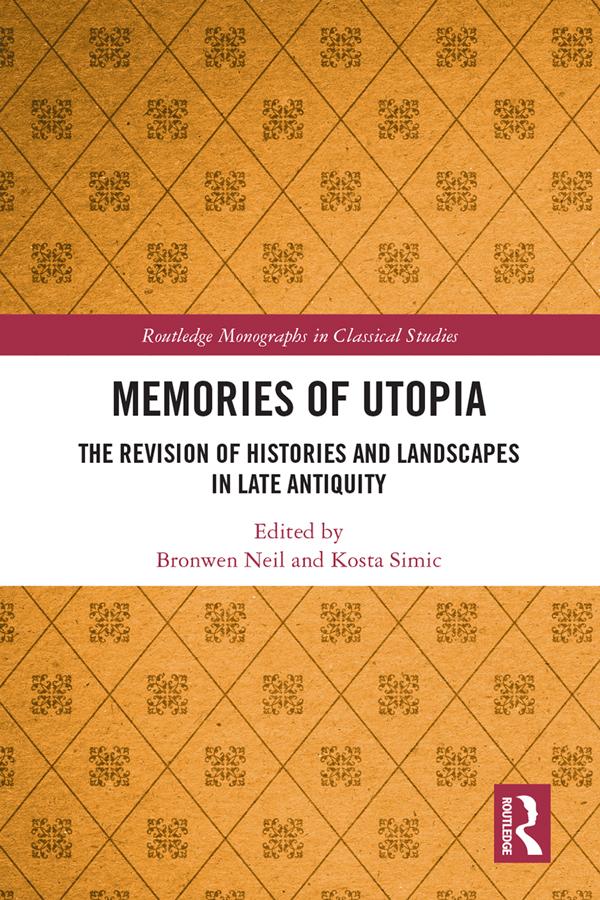
These essays examine how various communities remembered and commemorated their shared past through the lens of utopia and its corollary, dystopia, providing a framework for the reinterpretation of rapidly changing religious, cultural, and political realities of the turbulent period from 300 to 750 CE.
The common theme of the chapters is the utopian ideals of religious groups, whether these are inscribed on the body, on the landscape, in texts, or on other cultural objects. The volume is the first to apply this conceptual framework to Late Antiquity, when historically significant conflicts arose between the adherents of four major religious identities: Greaco-Roman 'pagans', newly dominant Christians; diaspora Jews, who were more or less persecuted, depending on the current regime; and the emerging religion and power of Islam. Late Antiquity was thus a period when dystopian realities competed with memories of a mythical Golden Age, variously conceived according to the religious identity of the group. The contributors come from a range of disciplines, including cultural studies, religious studies, ancient history, and art history, and employ both theoretical and empirical approaches. This volume is unique in the range of evidence it draws upon, both visual and textual, to support the basic argument that utopia in Late Antiquity, whether conceived spiritually, artistically, or politically, was a place of the past but also of the future, even of the afterlife.
Memories of Utopia will be of interest to historians, archaeologists, and art historians of the later Roman Empire, and those working on religion in Late Antiquity and Byzantium.
Paga fácilmente con tarjeta, Klarna, Apple Pay o Google Pay. ¿No estás contento? Siempre tienes 14 días de garantía de devolución. Lee más en nuestros términos. Si tienes preguntas, escríbenos a hello@memmo.org.
Memmo hace que estudiar sea más fácil, estés donde estés. Aquí tienes tus libros de texto y herramientas de estudio inteligentes en un solo lugar: resúmenes, quizzes, podcasts y flashcards. Y también a Ted, tu compañero de estudio que responde a todo lo que te preguntes. Más de 50 000 estudiantes ya estudian aquí. Está hecho para que aprendas más rápido y te estreses menos.