
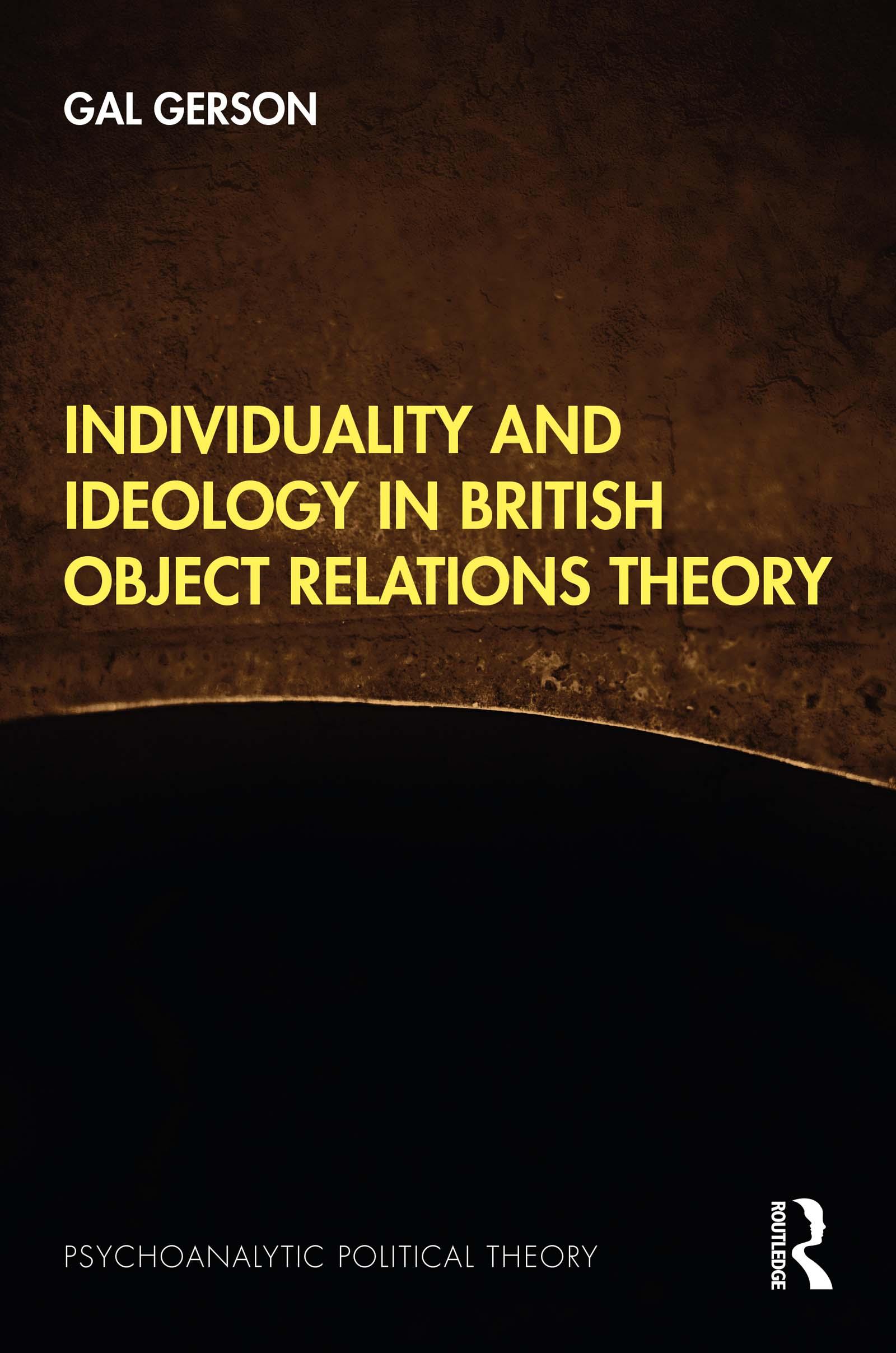
Following the work of prominent object relations theorists, such as Fairbairn, Suttie and Winnicott, Gal Gerson explores the correlation between analytical theory and intellectual environment in two ways. He notes the impact that the British object relations school had on both psychology and wider culture, and suggests that the school’s outlook involved more than a clinical choice.
Gerson first interprets the object relations model as a political theory that completes a certain internal development within liberalism. He later outlines the relationship between the analytical theory and the historical setting in which it formed and took root. By engaging with these questions, Gerson demonstrates the deeper structure and implications of object relation theory for social philosophy. This allows him to answer questions such as: ‘What kind of social arrangements do we endorse when we accept object relations theory as a fair description of mind?’; ‘What beliefs about power, individuality, and household structure do we take in? What do we give up when doing so?’; and, lastly, ‘What does it say about contemporary advanced societies that they have taken in much of the theory’s content?’
Proposing a novel rethinking of human nature, Individuality and Ideology in British Object Relations Theory provides much-needed insight into how this school of psychoanalytic theory has impacted contemporary social and political life.
Paga fácilmente con tarjeta, Klarna, Apple Pay o Google Pay. ¿No estás contento? Siempre tienes 14 días de garantía de devolución. Lee más en nuestros términos. Si tienes preguntas, escríbenos a hello@memmo.org.
Memmo hace que estudiar sea más fácil, estés donde estés. Aquí tienes tus libros de texto y herramientas de estudio inteligentes en un solo lugar: resúmenes, quizzes, podcasts y flashcards. Y también a Ted, tu compañero de estudio que responde a todo lo que te preguntes. Más de 50 000 estudiantes ya estudian aquí. Está hecho para que aprendas más rápido y te estreses menos.