
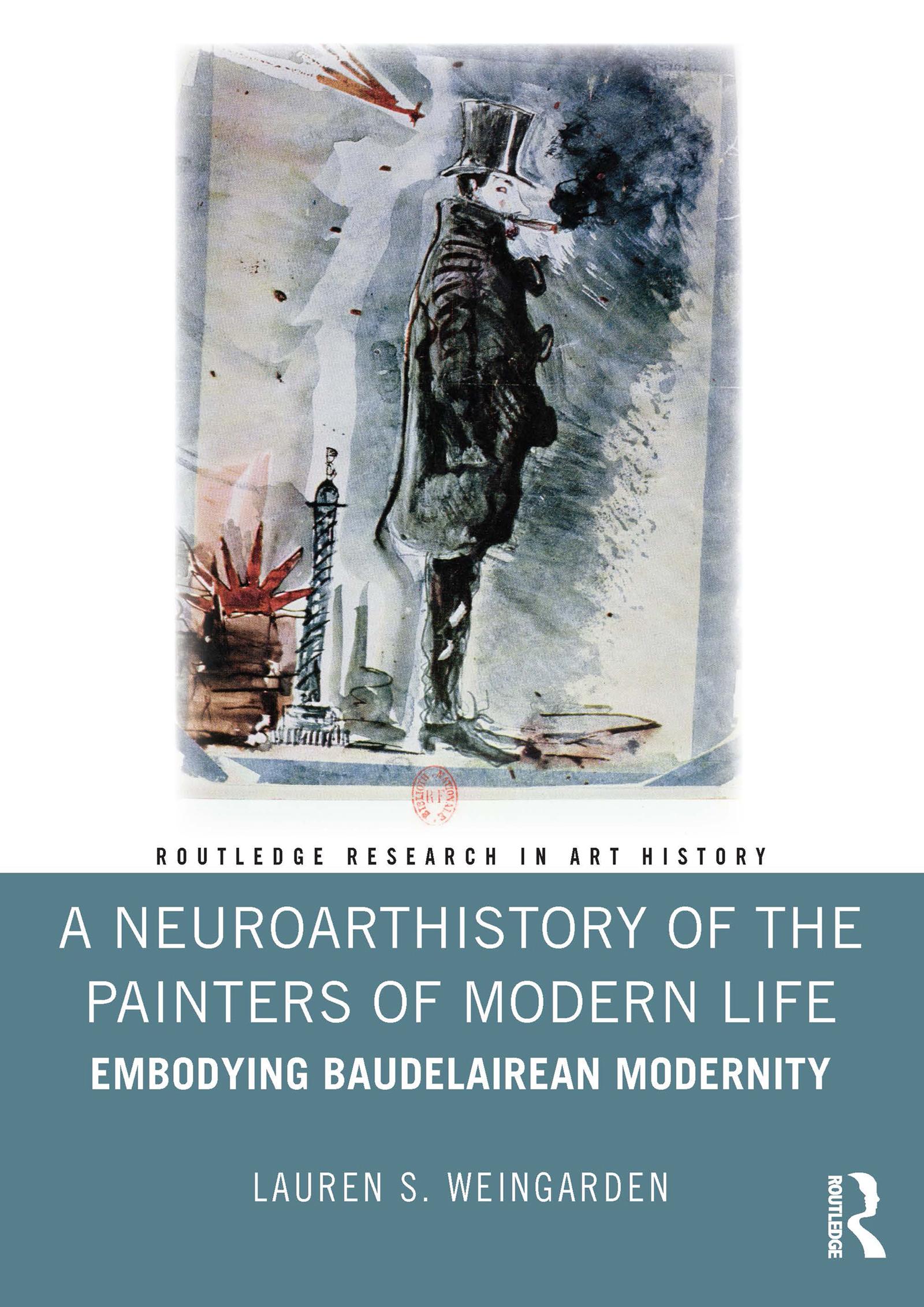
Using a transdisciplinary method combining art history, literary studies, and neuroaesthetics, this book examines the modern urban experience of nineteenth-century Paris through language and images of fragmentation and transformation.
The volume includes new empirical research conducted in collaboration with neuropsychologists, which tracks present-day viewers’ physical and psychological responses to nineteenth-century painting and photography, thus providing data to model an experiential aesthetic for Baudelairean modernity. Weingarden reframes our understanding of Haussmannization, the demolition and rebuilding of the city into a modern metropolis, as witnessed by nineteenth-century Parisians, while also shedding new light on writers’ responses, particularly those of Charles Baudelaire, and of visual artists like Édouard Manet, who contemplated and theorized this modernity and its impact. Using a unique word-and-image methodology, the author illustrates the development of ironic parody as a pictorial device that represents the rupture, fragmentation, and transmutation experienced by the artists and their viewers, revealing how art historians can utilize nineteenth-century neuropsychological practices and current neuroscience methods to reconstruct the lived, embodied experiences of nineteenth-century Paris.
This book will be of interest to students and scholars working in art history, modern art, urban studies and neuropsychology.
Paga fácilmente con tarjeta, Klarna, Apple Pay o Google Pay. ¿No estás contento? Siempre tienes 14 días de garantía de devolución. Lee más en nuestros términos. Si tienes preguntas, escríbenos a hello@memmo.org.
Memmo hace que estudiar sea más fácil, estés donde estés. Aquí tienes tus libros de texto y herramientas de estudio inteligentes en un solo lugar: resúmenes, quizzes, podcasts y flashcards. Y también a Ted, tu compañero de estudio que responde a todo lo que te preguntes. Más de 50 000 estudiantes ya estudian aquí. Está hecho para que aprendas más rápido y te estreses menos.