
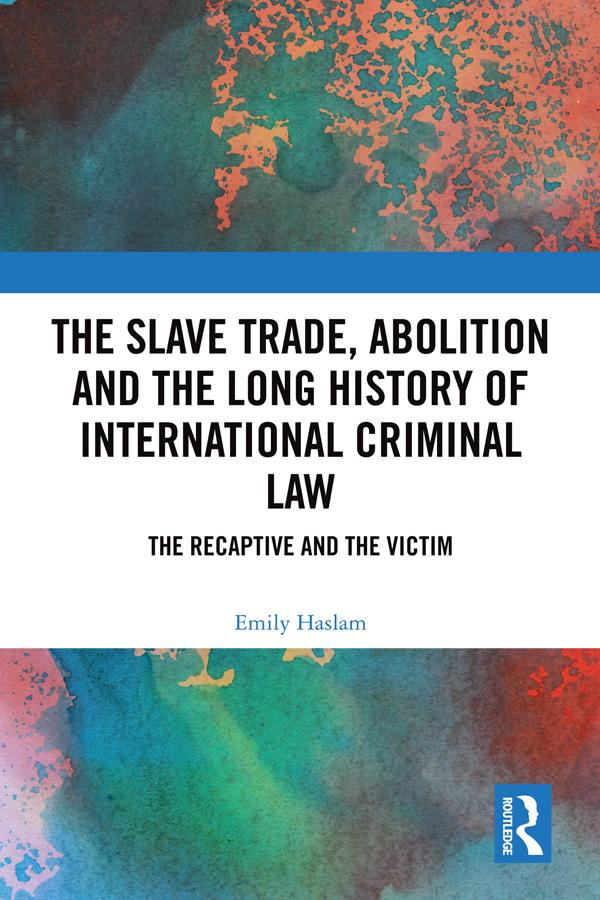
Modern international criminal law typically traces its origins to the twentieth-century Nuremberg and Tokyo trials, excluding the slave trade and abolition. Yet, as this book shows, the slave trade and abolition resound in international criminal law in multiple ways. Its central focus lies in a close examination of the often-controversial litigation, in the first part of the nineteenth century, arising from British efforts to capture slave ships, much of it before Mixed Commissions. With archival-based research into this litigation, it explores the legal construction of so-called ‘recaptives’ (slaves found on board captured slave ships). The book argues that, notwithstanding its promise of freedom, the law actually constructed recaptives restrictively. In particular, it focused on questions of intervention rather than recaptives’ rights. At the same time it shows how a critical reading of the archive reveals that recaptives contributed to litigation in important, but hitherto largely unrecognized, ways. The book is, however, not simply a contribution to the history of international law. Efforts to deliver justice through international criminal law continue to face considerable challenges and raise testing questions about the construction – and alternative construction – of victims.
By inscribing the recaptive in international criminal legal history, the book offers an original contribution to these contentious issues and a reflection on critical international criminal legal history writing and its accompanying methodological and political choices.
Paga fácilmente con tarjeta, Klarna, Apple Pay o Google Pay. ¿No estás contento? Siempre tienes 14 días de garantía de devolución. Lee más en nuestros términos. Si tienes preguntas, escríbenos a hello@memmo.org.
Memmo hace que estudiar sea más fácil, estés donde estés. Aquí tienes tus libros de texto y herramientas de estudio inteligentes en un solo lugar: resúmenes, quizzes, podcasts y flashcards. Y también a Ted, tu compañero de estudio que responde a todo lo que te preguntes. Más de 50 000 estudiantes ya estudian aquí. Está hecho para que aprendas más rápido y te estreses menos.