
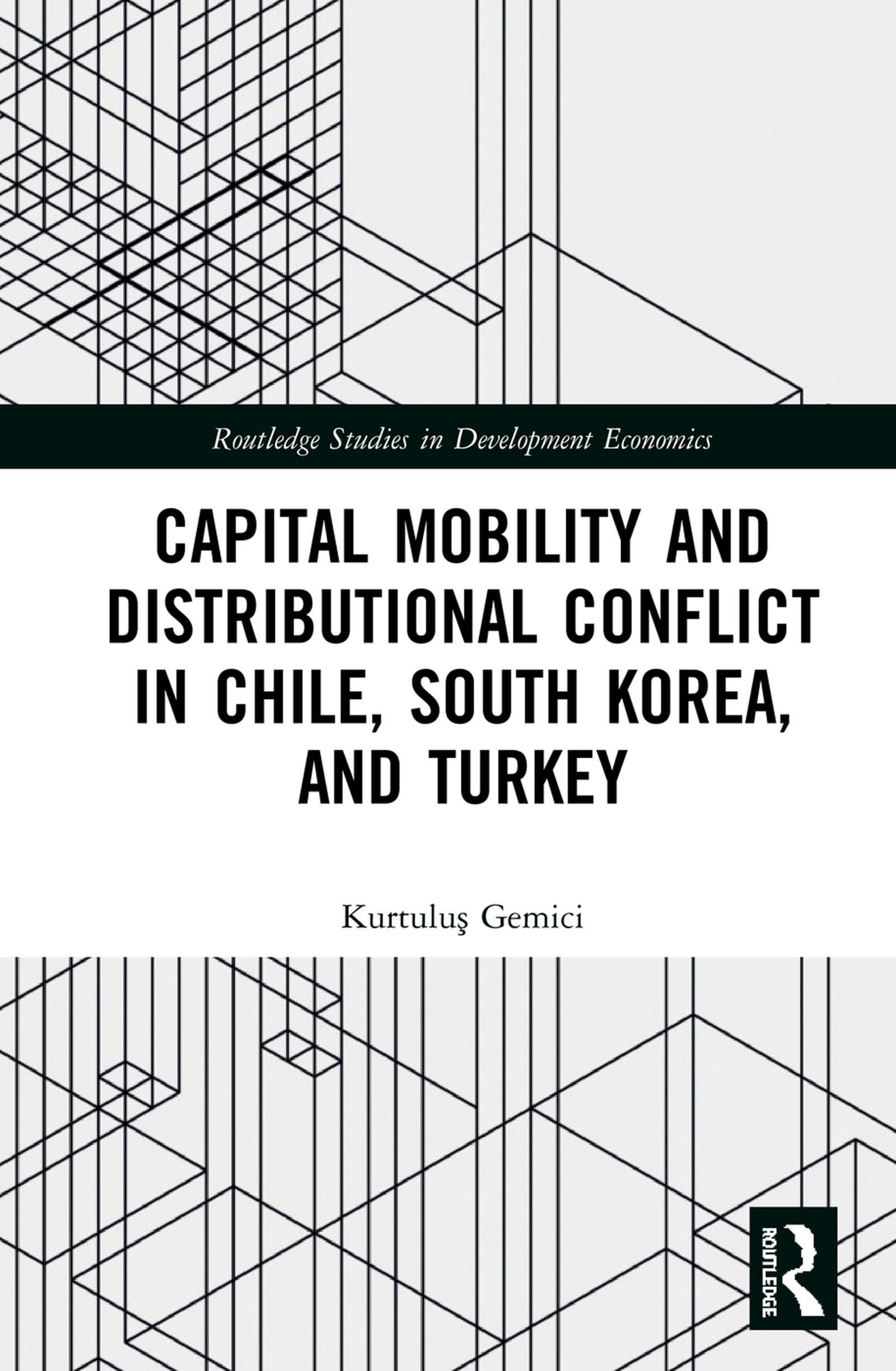
Why did many emerging countries pursue risky financial opening policies in a reckless manner, even after the painful example of the Latin American debt crisis? Unlike trade liberalization, which has mostly been beneficial in emerging countries, the removal of capital controls has led to boom-bust patterns in many countries. It is not simply driven by class or sectoral interests, nor is it just a result of ideational changes in policy-making circles, or international pressure. Gemici argues that to fully understand the motivation for these policies, we need to take into account distributional struggles prior to their enactment.
In this book, Gemici shows that conflictual distributional relations significantly increase the likelihood of capital account liberalization. Through in-depth comparative case studies, he also demonstrates that countries which liberalize in the most comprehensive manner tend to be the countries characterized by a high degree of distributional conflict. The case studies – Argentina, Chile, South Korea , and Turkey – have been chosen to maximise variation in distributional relations and to escape regional clustering, showing quite different trajectories of capital account liberalization.
This will be of great interest to readers in sociology, international political economy and heterodox economics, as well as specialists in the countries examined.
Paga fácilmente con tarjeta, Klarna, Apple Pay o Google Pay. ¿No estás contento? Siempre tienes 14 días de garantía de devolución. Lee más en nuestros términos. Si tienes preguntas, escríbenos a hello@memmo.org.
Memmo hace que estudiar sea más fácil, estés donde estés. Aquí tienes tus libros de texto y herramientas de estudio inteligentes en un solo lugar: resúmenes, quizzes, podcasts y flashcards. Y también a Ted, tu compañero de estudio que responde a todo lo que te preguntes. Más de 50 000 estudiantes ya estudian aquí. Está hecho para que aprendas más rápido y te estreses menos.