
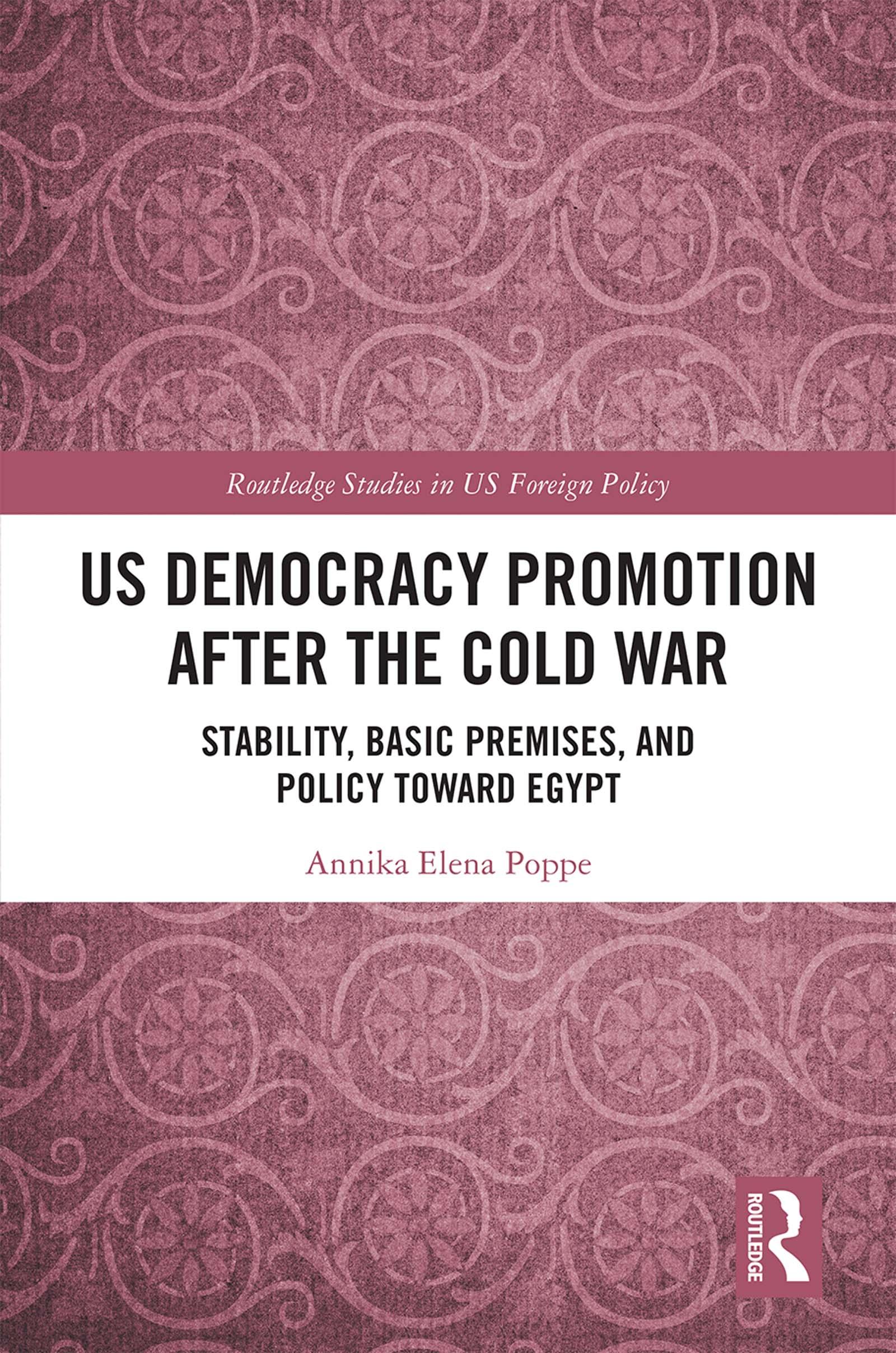
This book explores the often assumed but so far not examined proposition that a particular U.S. culture influences U.S. foreign policy behavior or, more concretely, that widely shared basic assumptions embraced by members of the U.S. administration have a notable impact on foreign policy-making.
Publicly professed beliefs regarding America’s role in the world and about democracy’s universal appeal – despite much contestation – go to the heart of U.S. national identity. Employing extensive foreign policy text analysis as well as using the case study of U.S.-Egyptian bilateral relations during the Clinton, Bush junior, and Obama administrations, it shows that basic assumptions matter in U.S. democracy promotion in general, and the book operationalizes them in detail as well as employs qualitative content analysis to assess their validity and variation.
The research presented lies at the intersection of International Relations, U.S. foreign policy, regional studies, and democracy promotion. The specific focus on the domestic ‘cultural’ angle for the study of foreign policy and this dimension’s operationalization makes it a creative crossover study and a unique contribution to these overlapping fields.
Paga fácilmente con tarjeta, Klarna, Apple Pay o Google Pay. ¿No estás contento? Siempre tienes 14 días de garantía de devolución. Lee más en nuestros términos. Si tienes preguntas, escríbenos a hello@memmo.org.
Memmo hace que estudiar sea más fácil, estés donde estés. Aquí tienes tus libros de texto y herramientas de estudio inteligentes en un solo lugar: resúmenes, quizzes, podcasts y flashcards. Y también a Ted, tu compañero de estudio que responde a todo lo que te preguntes. Más de 50 000 estudiantes ya estudian aquí. Está hecho para que aprendas más rápido y te estreses menos.