
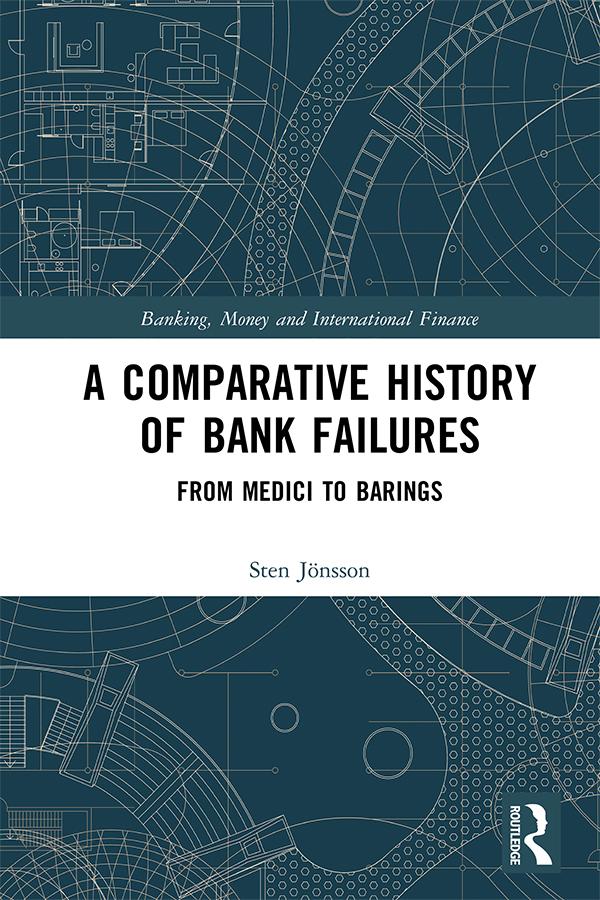
Starting with Medici and Fugger and ending with Barings and Royal Bank of Scotland under neo-liberal de-regulation, the author gives an account of how a number of banks failed over a 500 year-period. The author offers an explanation of the leading ideas about the world and good society at the time, and summarizes this narrative using Streeck & Schmitter’s three bases for regulation of society: Community (spontaneous solidarity), State (hierarchical control), and Market (dispersed competition).
The bank failures are presented in the context of social philosophies of the day (scholasticism, mercantilism, neo-liberalism, and libertarianism), and the changing business practices (Bills of Exchange, rents and financial instruments of various kinds). The dominating explanation of financial crises has been market-related. Here, the author argues that managerial failures are an important contributor. He demonstrates the failure of management to act on early signals such as existential risk, strategic stress syndrome, and lack of proper oversight by top management. The author encourages a return to ethical principles for banks, suggesting that his ethical aspect should be at the core of the credit process of banks in the future.
With its interdisciplinary approach, this book will be an important contribution to the discussion surrounding bank failures. It will interest any scholar looking at the origins of financial crises and will be particularly useful for post-graduate students of economic and financial history, banking, finance and accounting.
Paga fácilmente con tarjeta, Klarna, Apple Pay o Google Pay. ¿No estás contento? Siempre tienes 14 días de garantía de devolución. Lee más en nuestros términos. Si tienes preguntas, escríbenos a hello@memmo.org.
Memmo hace que estudiar sea más fácil, estés donde estés. Aquí tienes tus libros de texto y herramientas de estudio inteligentes en un solo lugar: resúmenes, quizzes, podcasts y flashcards. Y también a Ted, tu compañero de estudio que responde a todo lo que te preguntes. Más de 50 000 estudiantes ya estudian aquí. Está hecho para que aprendas más rápido y te estreses menos.