
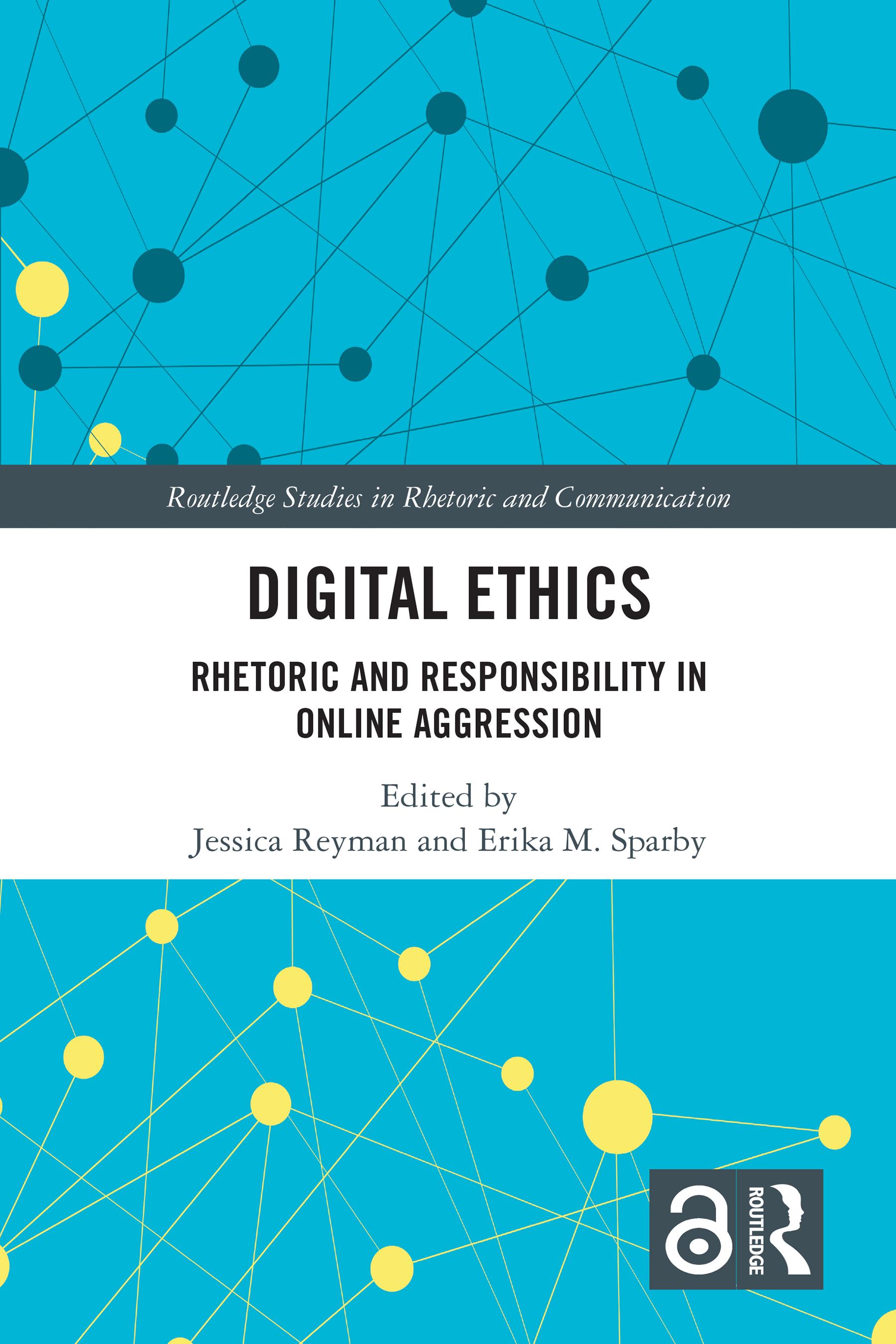
Digital Ethics delves into the shifting legal and ethical landscape in digital spaces and explores productive approaches for theorizing, understanding, and navigating through difficult ethical issues online.
Contributions from leading scholars address how changing technologies and media over the last decade have both created new ethical quandaries and reinforced old ones in rhetoric and writing studies. Through discussions of rhetorical theory, case studies and examples, research methods and methodologies, and pedagogical approaches and practical applications, this collection will further digital rhetoric scholars’ inquiry into digital ethics and writing instructors’ approaches to teaching ethics in the current technological moment.
A key contribution to the literature on ethical practices in digital spaces, this book will be of interest to researchers and teachers in the fields of digital rhetoric, composition, and writing studies.
Chapter 9 of this book is freely available as a downloadable Open Access PDF at http://www.taylorfrancis.com under a Creative Commons Attribution-Non Commercial-No Derivatives (CC-BY-NC-ND) 4.0 license.
Paga fácilmente con tarjeta, Klarna, Apple Pay o Google Pay. ¿No estás contento? Siempre tienes 14 días de garantía de devolución. Lee más en nuestros términos. Si tienes preguntas, escríbenos a hello@memmo.org.
Memmo hace que estudiar sea más fácil, estés donde estés. Aquí tienes tus libros de texto y herramientas de estudio inteligentes en un solo lugar: resúmenes, quizzes, podcasts y flashcards. Y también a Ted, tu compañero de estudio que responde a todo lo que te preguntes. Más de 50 000 estudiantes ya estudian aquí. Está hecho para que aprendas más rápido y te estreses menos.