
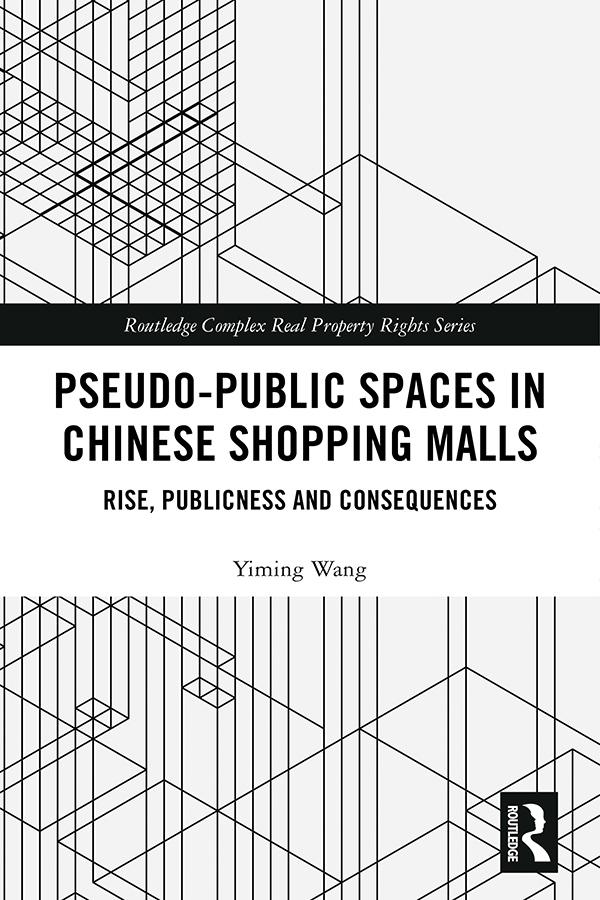
Shopping malls in China create a new pseudo-public urban space which is under the control of private or quasi-public power structure. As they are open for public use, mediated by the co-mingling of private property rights and public meanings of urban space, the rise, publicness and consequences of the boom in the construction of shopping malls raises major questions in spatial political economy and magnifies existing theoretical debates between the natural and conventional schools of property rights.
In examining these issues this book develops a theoretical framework starting with a critique of the socio-spatial debate between two influential bodies of work represented by the work of Henri Lefebvre and David Harvey. Drawing on the framework, the book examines why pseudo-public spaces have been growing so rapidly in China since the 1980s; assesses to what degree pseudo-public spaces are public, and how they affect the publicness of Chinese cities; and explores the consequences of their rise.
Findings of this book provide insights that can help to better understand Chinese urbanism and also have the potential to inform urban policy in China. This book will be of interest to academics and researchers in both Chinese studies and urban studies.
Paga fácilmente con tarjeta, Klarna, Apple Pay o Google Pay. ¿No estás contento? Siempre tienes 14 días de garantía de devolución. Lee más en nuestros términos. Si tienes preguntas, escríbenos a hello@memmo.org.
Memmo hace que estudiar sea más fácil, estés donde estés. Aquí tienes tus libros de texto y herramientas de estudio inteligentes en un solo lugar: resúmenes, quizzes, podcasts y flashcards. Y también a Ted, tu compañero de estudio que responde a todo lo que te preguntes. Más de 50 000 estudiantes ya estudian aquí. Está hecho para que aprendas más rápido y te estreses menos.