
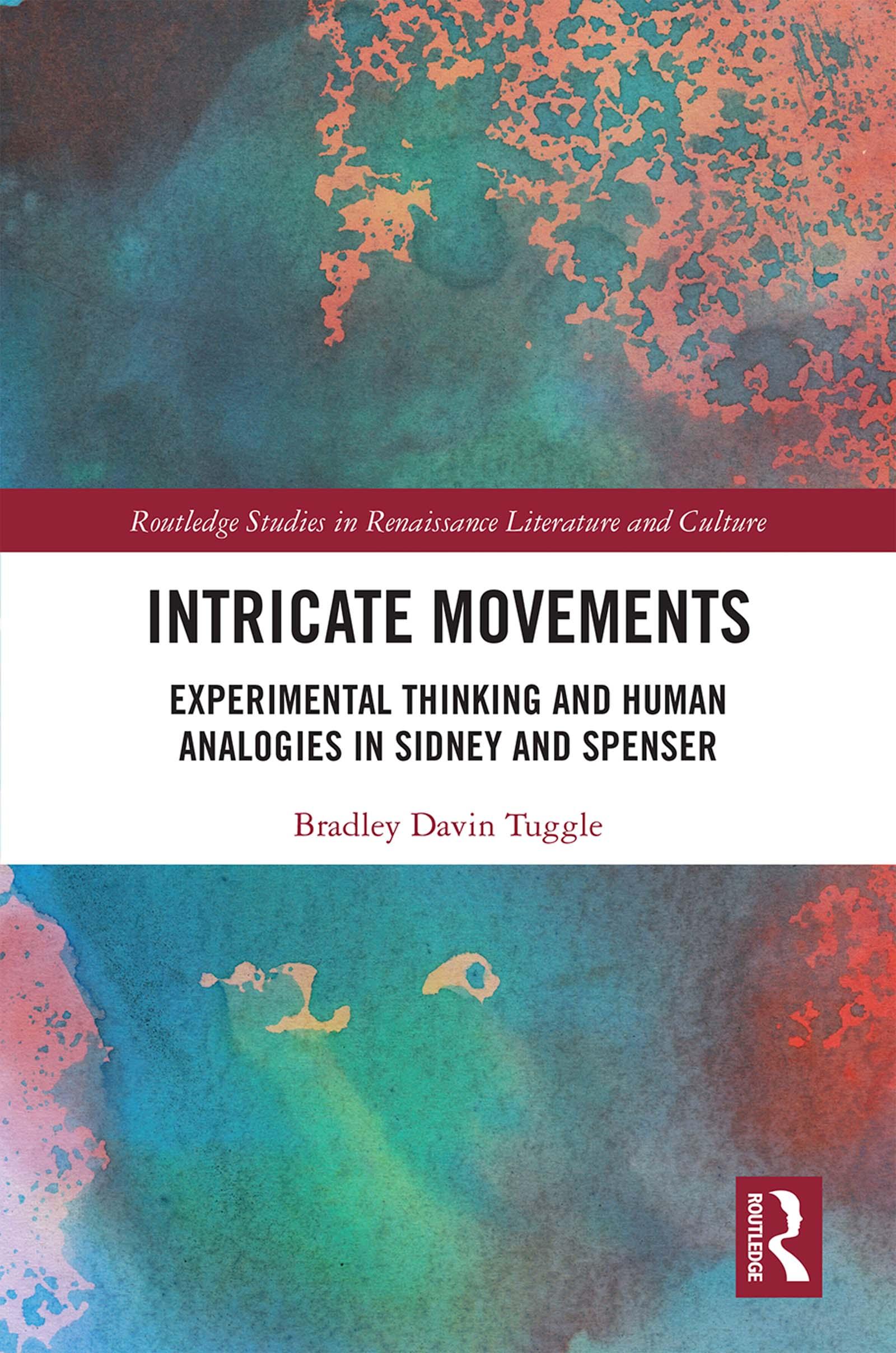
Renaissance humanism takes as one of its subjects for inquiry the category of the human itself. As Intricate Movements: Experimental Thinking and Human Analogies in Sidney and Spenser shows, late sixteenth-century English poets found some remarkably radical ways to interrogate and redefine the status of humans.
The recent vogue for posthumanist theory encourages a view of non-human objects and animals in Renaissance literature as pathways to essentially anti-humanist thought. On the contrary, this book argues that Sidney, Spenser, and their contemporaries employ animals, earth, buildings, and fictions as analogies employed toward a better understanding of what makes humans a special category, both ontologically and ethically. Horses and riders are studied by Sidney as a way to understand readers and writers; the 1580 Dover Straits Earthquake provides Spenser and Gabriel Harvey an opportunity to explore human emotion; liturgical spaces are represented by Sidney and Spenser in order to reassess human community; and fictional persons are interrogated by Spenser as models for human interpersonal epistemology.
This volume seeks to return critical assessments of the period's engagement with the non-human back to human concerns. Focusing on several early modern analogies between human and non-human entities, Intricate Movements argues Sidney's and Spenser's thinking about the human is both radically experimental and, ultimately, humane.
Paga fácilmente con tarjeta, Klarna, Apple Pay o Google Pay. ¿No estás contento? Siempre tienes 14 días de garantía de devolución. Lee más en nuestros términos. Si tienes preguntas, escríbenos a hello@memmo.org.
Memmo hace que estudiar sea más fácil, estés donde estés. Aquí tienes tus libros de texto y herramientas de estudio inteligentes en un solo lugar: resúmenes, quizzes, podcasts y flashcards. Y también a Ted, tu compañero de estudio que responde a todo lo que te preguntes. Más de 50 000 estudiantes ya estudian aquí. Está hecho para que aprendas más rápido y te estreses menos.