
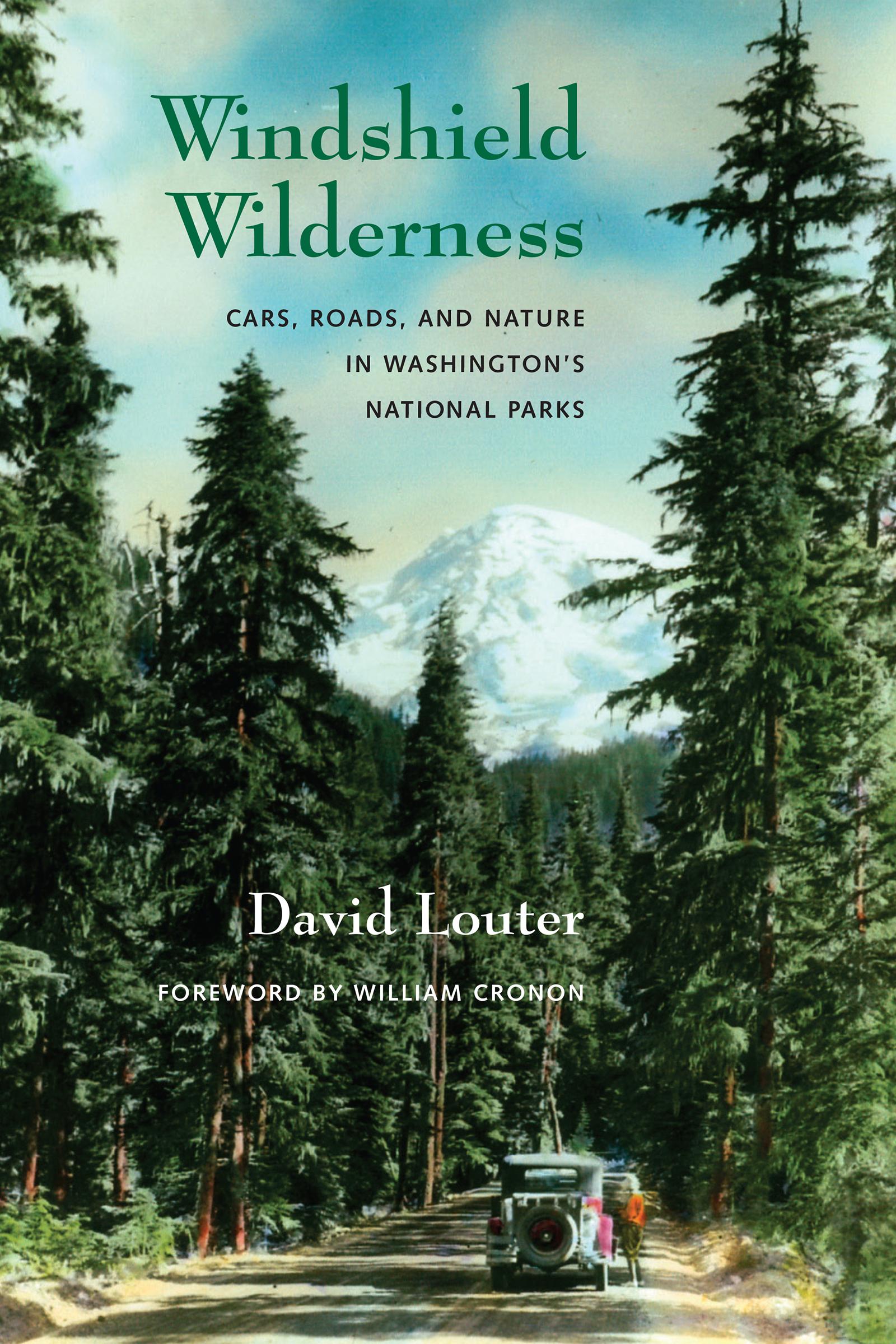
In his engaging book Windshield Wilderness, David Louter explores the relationship between automobiles and national parks, and how together they have shaped our ideas of wilderness. National parks, he argues, did not develop as places set aside from the modern world, but rather came to be known and appreciated through technological progress in the form of cars and roads, leaving an enduring legacy of knowing nature through machines.
With a lively style and striking illustrations, Louter traces the history of Washington State’s national parks -- Mount Rainier, Olympic, and North Cascades -- to illustrate shifting ideas of wilderness as scenic, as roadless, and as ecological reserve. He reminds us that we cannot understand national parks without recognizing that cars have been central to how people experience and interpret their meaning, and especially how they perceive them as wild places.
Windshield Wilderness explores what few histories of national parks address: what it means to view parks from the road and through a windshield. Building upon recent interpretations of wilderness as a cultural construct rather than as a pure state of nature, the story of autos in parks presents the preservation of wilderness as a dynamic and nuanced process.Windshield Wilderness illuminates the difficulty of separating human-modified landscapes from natural ones, encouraging us to recognize our connections with nature in national parks.
Paga fácilmente con tarjeta, Klarna, Apple Pay o Google Pay. ¿No estás contento? Siempre tienes 14 días de garantía de devolución. Lee más en nuestros términos. Si tienes preguntas, escríbenos a hello@memmo.org.
Memmo hace que estudiar sea más fácil, estés donde estés. Aquí tienes tus libros de texto y herramientas de estudio inteligentes en un solo lugar: resúmenes, quizzes, podcasts y flashcards. Y también a Ted, tu compañero de estudio que responde a todo lo que te preguntes. Más de 50 000 estudiantes ya estudian aquí. Está hecho para que aprendas más rápido y te estreses menos.