
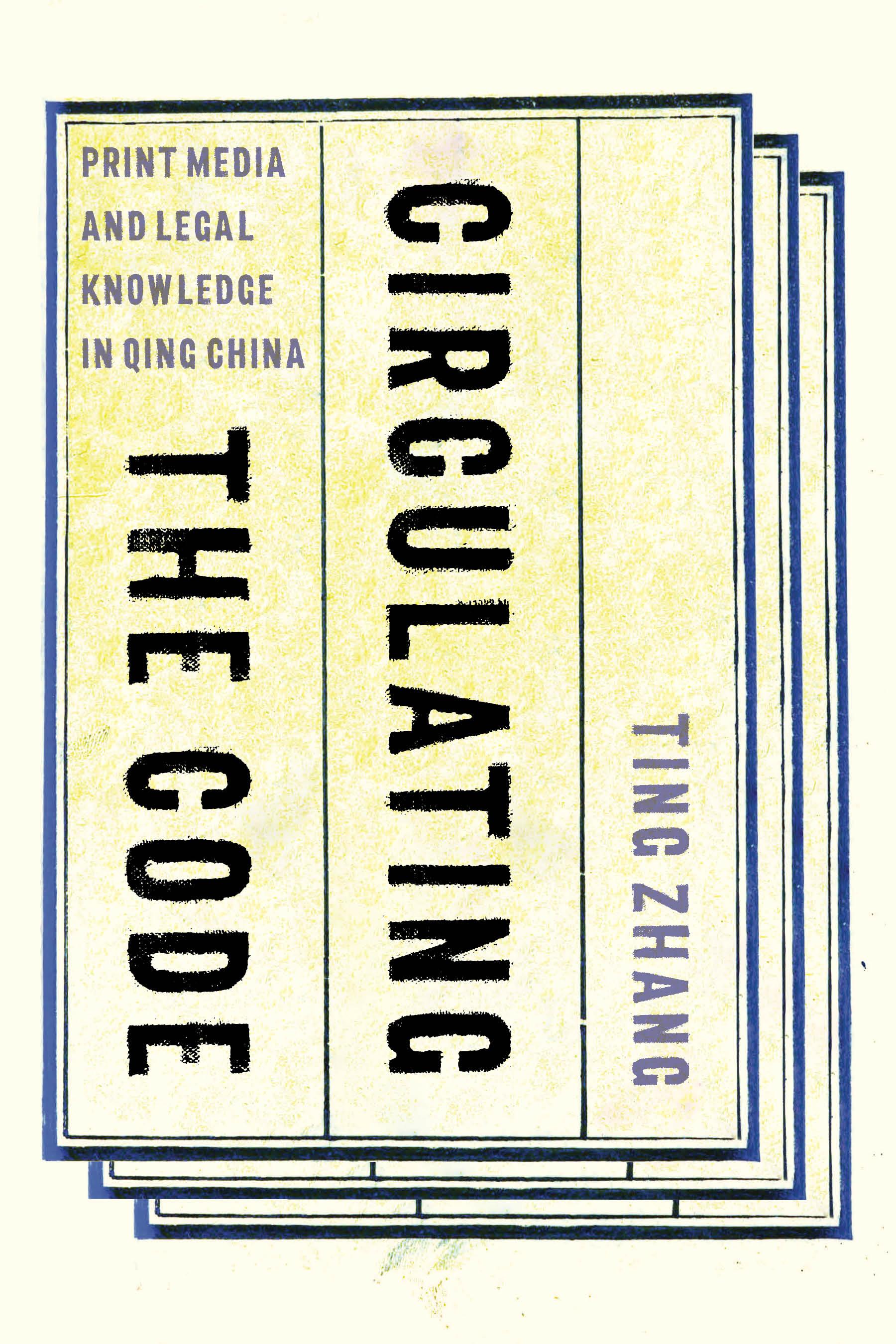
Contrary to longtime assumptions about the insular nature of imperial China’s legal system, Circulating the Code demonstrates that in the Qing dynasty (1644–1911) most legal books were commercially published and available to anyone who could afford to buy them. Publishers not only extended circulation of the dynastic code and other legal texts but also enhanced the judicial authority of case precedents and unofficial legal commentaries by making them more broadly available in convenient formats. As a result, the laws no longer represented privileged knowledge monopolized by the imperial state and elites. Trade in commercial legal imprints contributed to the formation of a new legal culture that included the free flow of accurate information, the rise of nonofficial legal experts, a large law-savvy population, and a high litigation rate.
Comparing different official and commercial editions of the Qing Code, popular handbooks for amateur legal practitioners, and manuals for community legal lectures, Ting Zhang demonstrates how the dissemination of legal information transformed Chinese law, judicial authority, and popular legal consciousness.
Paga fácilmente con tarjeta, Klarna, Apple Pay o Google Pay. ¿No estás contento? Siempre tienes 14 días de garantía de devolución. Lee más en nuestros términos. Si tienes preguntas, escríbenos a hello@memmo.org.
Memmo hace que estudiar sea más fácil, estés donde estés. Aquí tienes tus libros de texto y herramientas de estudio inteligentes en un solo lugar: resúmenes, quizzes, podcasts y flashcards. Y también a Ted, tu compañero de estudio que responde a todo lo que te preguntes. Más de 50 000 estudiantes ya estudian aquí. Está hecho para que aprendas más rápido y te estreses menos.