
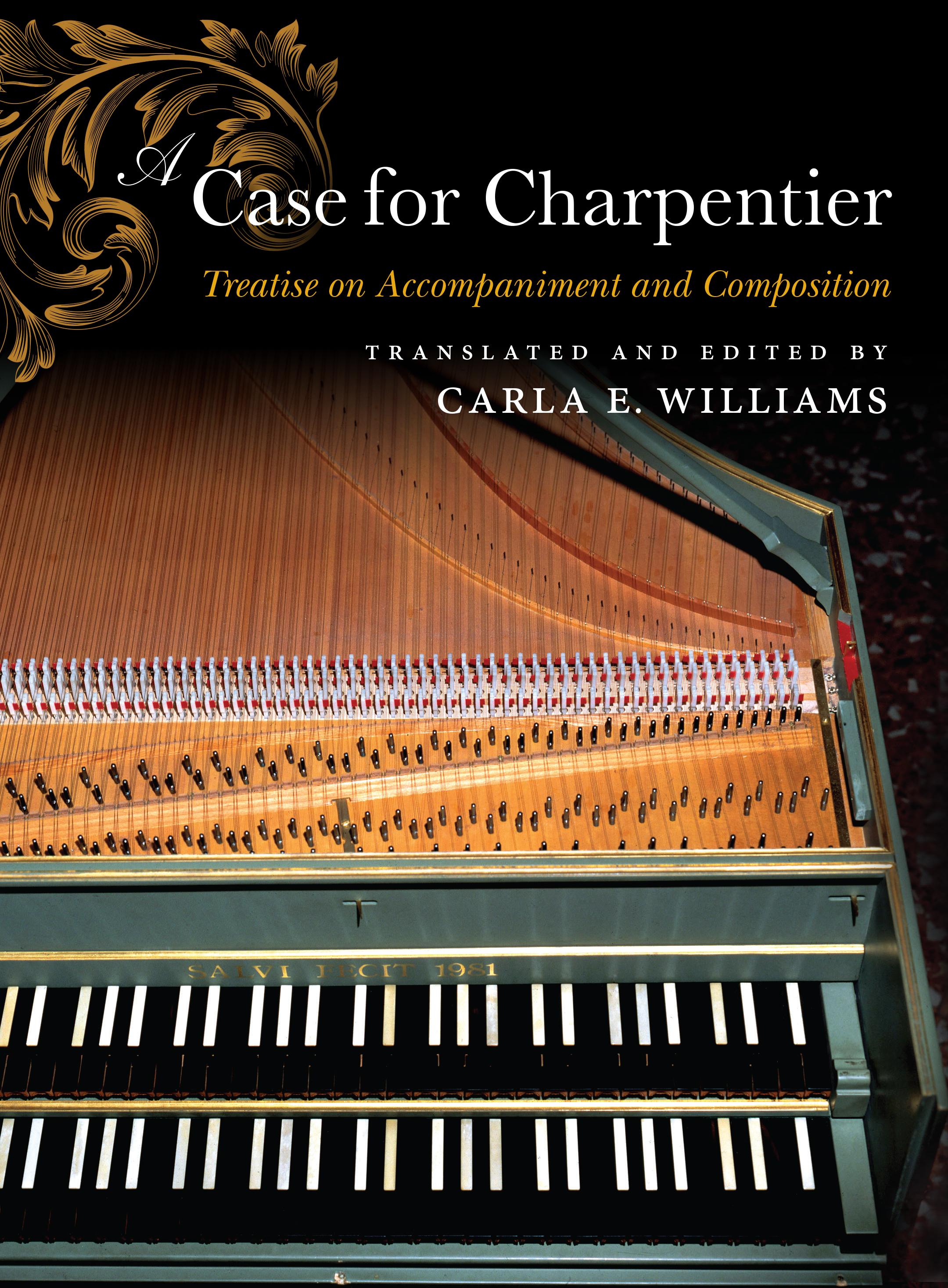
Who originally authored the anonymous, undated French manuscript Traité d'accompagnement et de composition?
Carla E. Williams tackles this mystery while providing the first English translation of this rare manuscript, which resides in the collections of the Lilly Library at Indiana University Bloomington. A Case for Charpentier presents a side-by-side transcription and translation of the treatise along with an introduction that offers historical context. In the manuscript itself, late 17th-century and early 18th-century writers discuss principal musical elements of composition including major and minor modes, the fundamental chords of both modes, dissonances and consonances, meter, tempo, and continuo realization, as well as basse continue. While these writers have not been formally identified, Williams argues that the handwriting of one is that of composer Marc-Antoine Charpentier. By providing a full physical description of the manuscript, along with comparisons of Charpentier's other writings and his handwriting, Williams sheds new light on both the treatise and Charpentier's theoretical writings.
With this translation, Williams not only shares invaluable insights into the pedagogical approaches for composition and continuo realization in late 17th-century France but also finally makes Traité d'accompagnement et de composition available to a broader audience.
Paga fácilmente con tarjeta, Klarna, Apple Pay o Google Pay. ¿No estás contento? Siempre tienes 14 días de garantía de devolución. Lee más en nuestros términos. Si tienes preguntas, escríbenos a hello@memmo.org.
Memmo hace que estudiar sea más fácil, estés donde estés. Aquí tienes tus libros de texto y herramientas de estudio inteligentes en un solo lugar: resúmenes, quizzes, podcasts y flashcards. Y también a Ted, tu compañero de estudio que responde a todo lo que te preguntes. Más de 50 000 estudiantes ya estudian aquí. Está hecho para que aprendas más rápido y te estreses menos.