
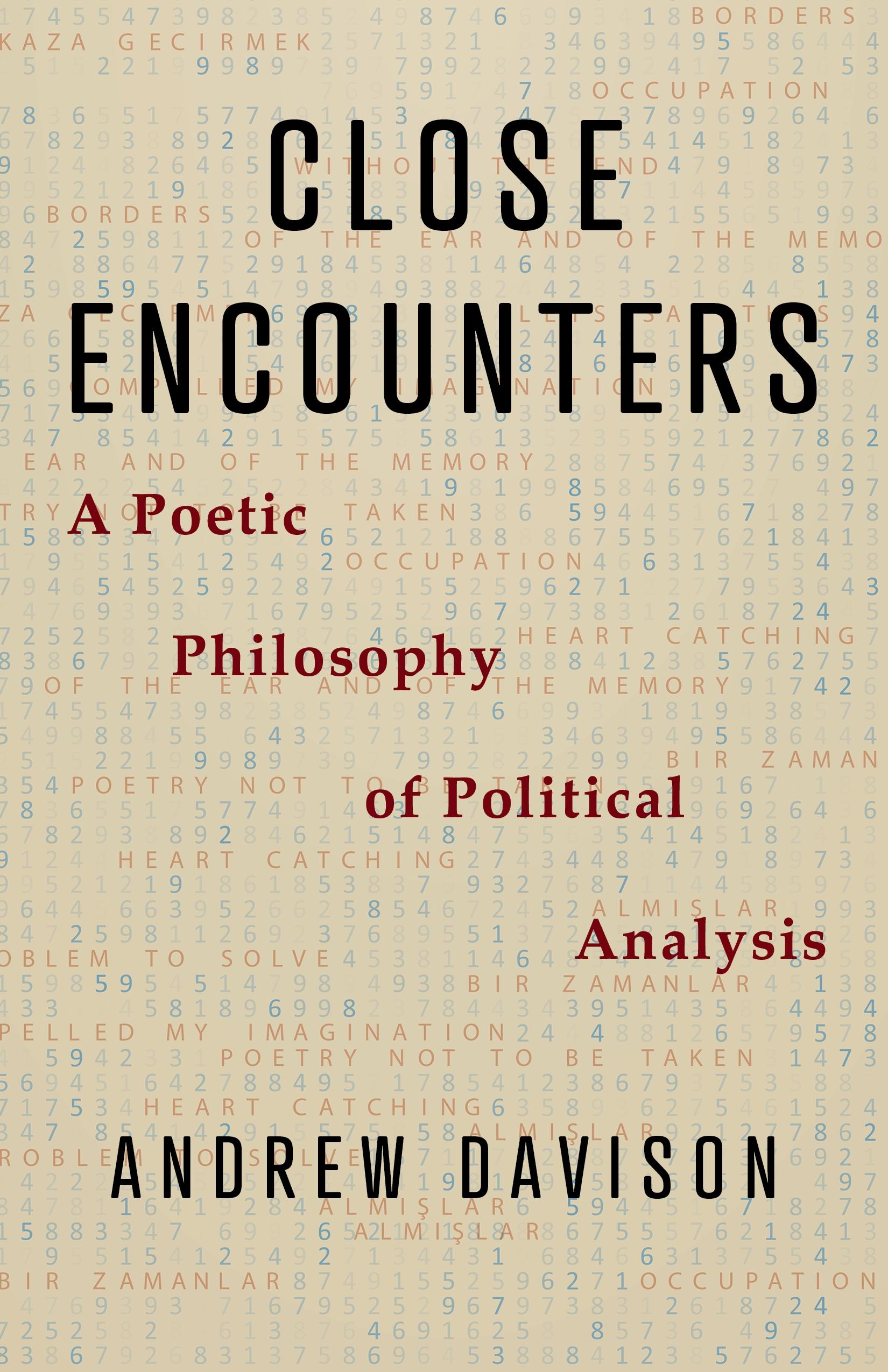
What would it look like to approach data with the care and attentiveness that we bring to a poem? Andrew Davison proposes a new philosophy of data modeled on the affective and ethical qualities of the encounter between a reader and a literary text and demonstrates its significance for understanding urgent social and political issues.
In a cross-disciplinary engagement with philosophical, literary, and political-theoretical accounts of poetic experience, Close Encounters challenges the philosophical underpinnings of dominant approaches to data analysis. Instead, Davison argues, social scientists should treat their data with the same close attention and ethical responsibility that are accorded to literary texts. In this view, quantitative and qualitative data are not only collected, coded, or constructed—they are entrusted to the care of their recipient. Such attunement yields original insight into silenced, erased, and neglected subaltern dimensions of the data. Davison demonstrates how this methodology provides fresh perspective on pressing topics such as immigration, border politics, torture, war, Trumpism, violent political speech, medical care, criminal justice, algorithmic governance, and the COVID-19 pandemic. Bringing together a strikingly original theorization of data with a rich array of examples, Close Encounters shows why the skills and methods of literary inquiry are essential to ethically sensitive data analysis.
Paga fácilmente con tarjeta, Klarna, Apple Pay o Google Pay. ¿No estás contento? Siempre tienes 14 días de garantía de devolución. Lee más en nuestros términos. Si tienes preguntas, escríbenos a hello@memmo.org.
Memmo hace que estudiar sea más fácil, estés donde estés. Aquí tienes tus libros de texto y herramientas de estudio inteligentes en un solo lugar: resúmenes, quizzes, podcasts y flashcards. Y también a Ted, tu compañero de estudio que responde a todo lo que te preguntes. Más de 50 000 estudiantes ya estudian aquí. Está hecho para que aprendas más rápido y te estreses menos.