
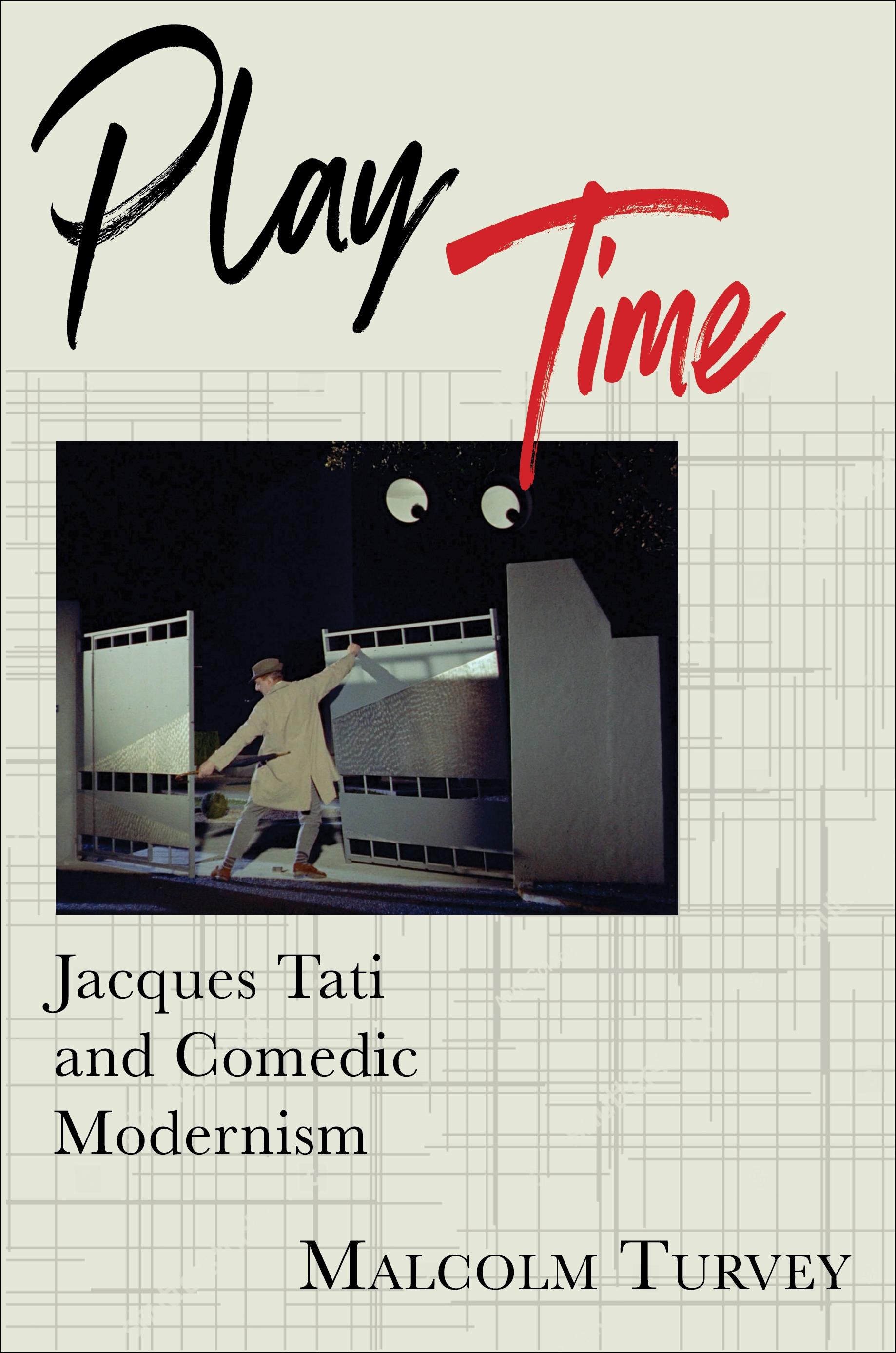
Jacques Tati is widely regarded as one of the greatest postwar European filmmakers. He made innovative and challenging comedies while achieving international box office success and attaining a devoted following. In Play Time, Malcolm Turvey examines Tati’s unique comedic style and evaluates its significance for the history of film and modernism.
Turvey argues that Tati captured elite and general audiences alike by combining a modernist aesthetic with slapstick routines, gag structures, and other established traditions of mainstream film comedy. Considering films such as Monsieur Hulot’s Holiday (1953), Mon Oncle (1958), Play Time (1967), and Trafic (1971), Turvey shows how Tati drew on the rich legacy of comic silent film while modernizing its conventions in order to encourage his viewers to adopt a playful attitude toward the modern world. Turvey also analyzes Tati’s sardonic view of the bourgeoisie and his complex and multifaceted satire of modern life. Tati's singular and enduring achievement, Turvey concludes, was to translate the democratic ideals of the postwar avant-garde into mainstream film comedy, crafting a genuinely popular modernism. Richly illustrated with images from the director’s films, Play Time offers an illuminating and original understanding of Tati’s work.
Paga fácilmente con tarjeta, Klarna, Apple Pay o Google Pay. ¿No estás contento? Siempre tienes 14 días de garantía de devolución. Lee más en nuestros términos. Si tienes preguntas, escríbenos a hello@memmo.org.
Memmo hace que estudiar sea más fácil, estés donde estés. Aquí tienes tus libros de texto y herramientas de estudio inteligentes en un solo lugar: resúmenes, quizzes, podcasts y flashcards. Y también a Ted, tu compañero de estudio que responde a todo lo que te preguntes. Más de 50 000 estudiantes ya estudian aquí. Está hecho para que aprendas más rápido y te estreses menos.