
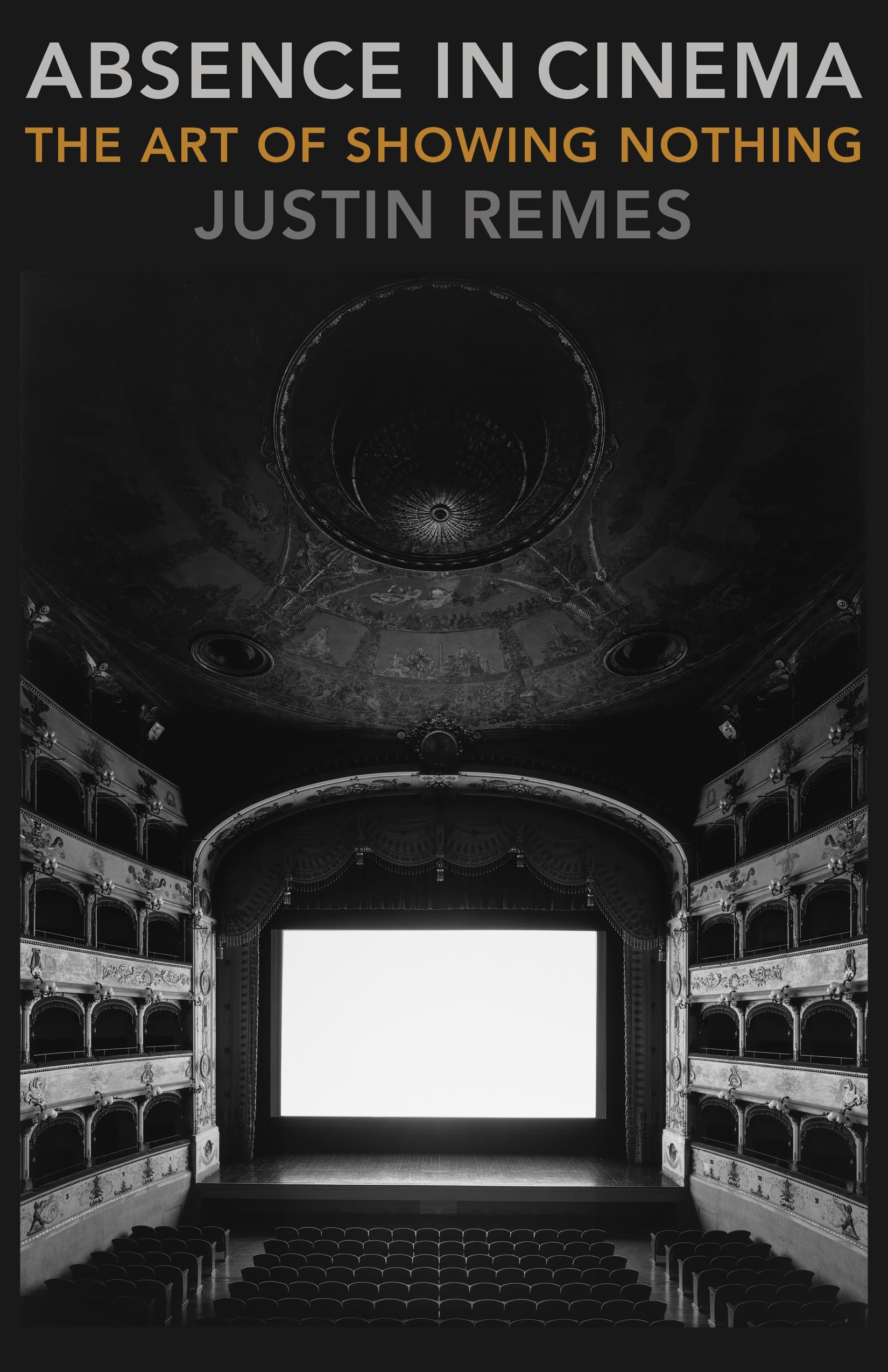
Absence has played a crucial role in the history of avant-garde aesthetics, from the blank canvases of Robert Rauschenberg to Yves Klein’s invisible paintings, from the “silent” music of John Cage to Samuel Beckett’s minimalist theater. Yet little attention has been given to the important role of absence in cinema. In the first book to focus on cinematic absence, Justin Remes demonstrates how omissions of expected elements can spur viewers to interpret and understand the nature of film in new ways.
While most film criticism focuses on what is present, such as images on the screen and music and dialogue on the soundtrack, Remes contends that what is missing is an essential part of the cinematic experience. He examines films without images—such as Walter Ruttmann’s Weekend (1930), a montage of sounds recorded in Berlin—and films without sound—such as Stan Brakhage’s Window Water Baby Moving (1959), which documents the birth of the filmmaker’s first child. He also examines found footage films that erase elements from preexisting films such as Naomi Uman’s removed (1999), which uses nail polish and bleach to blot out all the women from a pornographic film, and Martin Arnold’s Deanimated (2002), which digitally eliminates images and sounds from a Bela Lugosi B movie. Remes maps out the effects and significations of filmic voids while grappling with their implications for film theory. Through a careful analysis of a broad array of avant-garde works, Absence in Cinema reveals that films must be understood not only in terms of what they show but also what they withhold.
Paga fácilmente con tarjeta, Klarna, Apple Pay o Google Pay. ¿No estás contento? Siempre tienes 14 días de garantía de devolución. Lee más en nuestros términos. Si tienes preguntas, escríbenos a hello@memmo.org.
Memmo hace que estudiar sea más fácil, estés donde estés. Aquí tienes tus libros de texto y herramientas de estudio inteligentes en un solo lugar: resúmenes, quizzes, podcasts y flashcards. Y también a Ted, tu compañero de estudio que responde a todo lo que te preguntes. Más de 50 000 estudiantes ya estudian aquí. Está hecho para que aprendas más rápido y te estreses menos.