
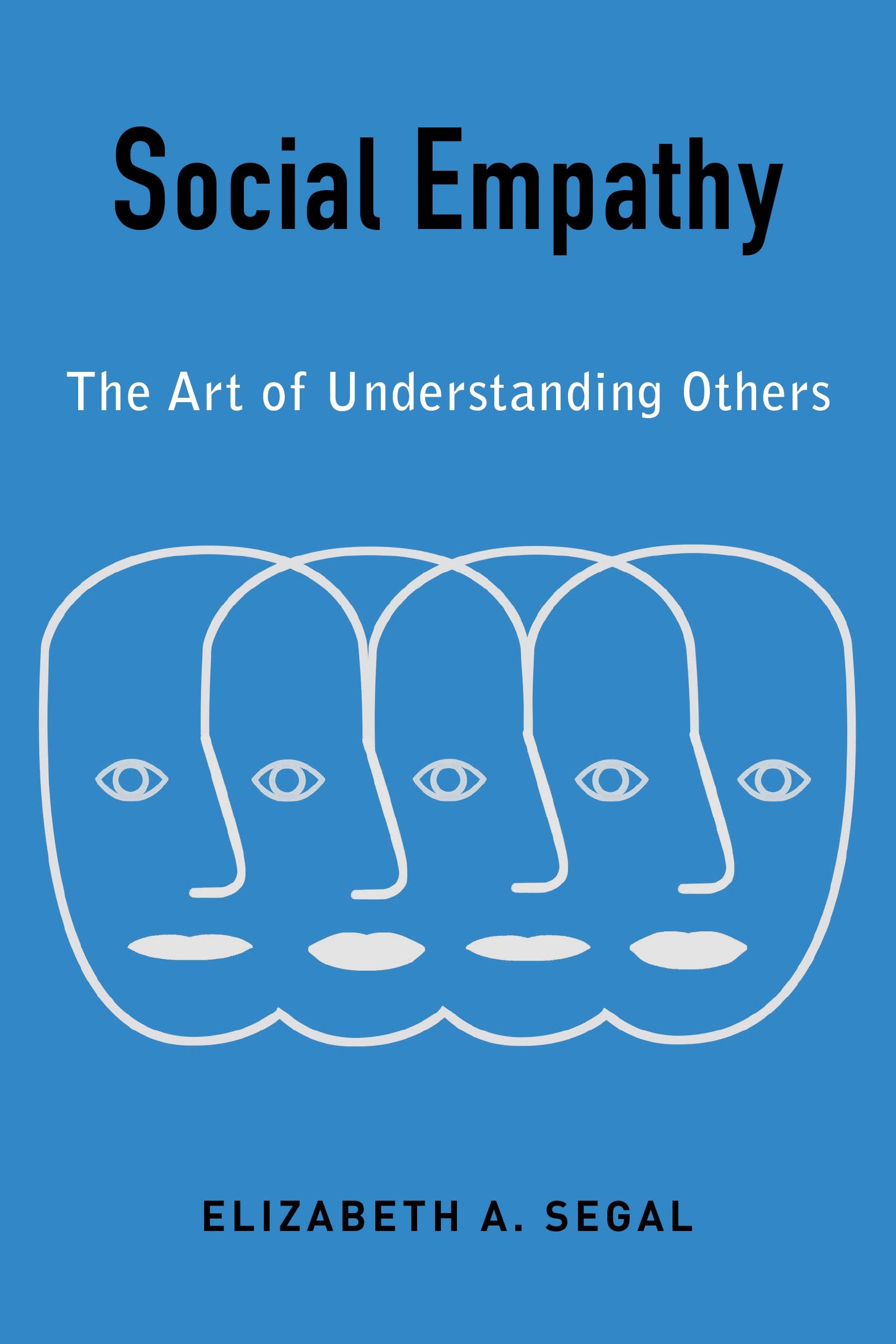
Our ability to understand others and help others understand us is essential to our individual and collective well-being. Yet there are many barriers that keep us from walking in the shoes of others: fear, skepticism, and power structures that separate us from those outside our narrow groups. To progress in a multicultural world and ensure our common good, we need to overcome these obstacles. Our best hope can be found in the skill of empathy.
In Social Empathy, Elizabeth A. Segal explains how we can develop our ability to understand one another and have compassion toward different social groups. When we are socially empathic, we not only imagine what it is like to be another person, but we consider their social, economic, and political circumstances and what shaped them. Segal explains the evolutionary and learned components of interpersonal and social empathy, including neurobiological factors and the role of social structures. Ultimately, empathy is not only a part of interpersonal relations: it is fundamental to interactions between different social groups and can be a way to bridge diverse people and communities. A clear and useful explanation of an often misunderstood concept, Social Empathy brings together sociology, psychology, social work, and cognitive neuroscience to illustrate how to become better advocates for justice.
Paga fácilmente con tarjeta, Klarna, Apple Pay o Google Pay. ¿No estás contento? Siempre tienes 14 días de garantía de devolución. Lee más en nuestros términos. Si tienes preguntas, escríbenos a hello@memmo.org.
Memmo hace que estudiar sea más fácil, estés donde estés. Aquí tienes tus libros de texto y herramientas de estudio inteligentes en un solo lugar: resúmenes, quizzes, podcasts y flashcards. Y también a Ted, tu compañero de estudio que responde a todo lo que te preguntes. Más de 50 000 estudiantes ya estudian aquí. Está hecho para que aprendas más rápido y te estreses menos.