
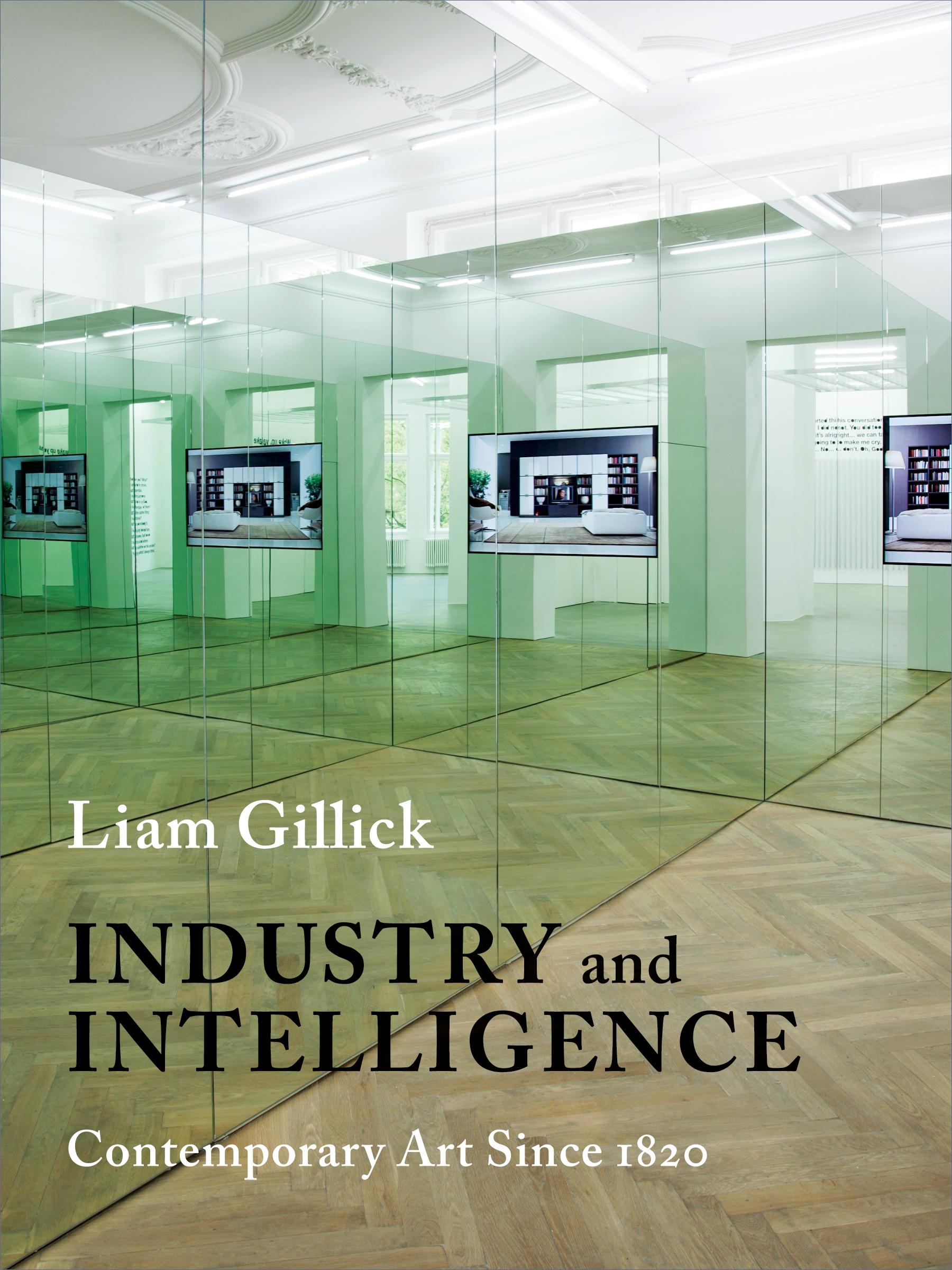
The history of modern art is often told through aesthetic breakthroughs that sync well with cultural and political change. From Courbet to Picasso, from Malevich to Warhol, it is accepted that art tracks the disruptions of industrialization, fascism, revolution, and war. Yet filtering the history of modern art only through catastrophic events cannot account for the subtle developments that lead to the profound confusion at the heart of contemporary art.
In Industry and Intelligence, the artist Liam Gillick writes a nuanced genealogy to help us appreciate contemporary art's engagement with history even when it seems apathetic or blind to current events. Taking a broad view of artistic creation from 1820 to today, Gillick follows the response of artists to incremental developments in science, politics, and technology. The great innovations and dislocations of the nineteenth and twentieth centuries have their place in this timeline, but their traces are alternately amplified and diminished as Gillick moves through artistic reactions to liberalism, mass manufacturing, psychology, nuclear physics, automobiles, and a host of other advances. He intimately ties the origins of contemporary art to the social and technological adjustments of modern life, which artists struggled to incorporate truthfully into their works.
Paga fácilmente con tarjeta, Klarna, Apple Pay o Google Pay. ¿No estás contento? Siempre tienes 14 días de garantía de devolución. Lee más en nuestros términos. Si tienes preguntas, escríbenos a hello@memmo.org.
Memmo hace que estudiar sea más fácil, estés donde estés. Aquí tienes tus libros de texto y herramientas de estudio inteligentes en un solo lugar: resúmenes, quizzes, podcasts y flashcards. Y también a Ted, tu compañero de estudio que responde a todo lo que te preguntes. Más de 50 000 estudiantes ya estudian aquí. Está hecho para que aprendas más rápido y te estreses menos.